Fiber optic networks do not build themselves. Before a single cable gets strung or a trench gets dug, months of careful planning happen behind the scenes. This planning process is called OSP engineering, and it determines whether your telecommunications project stays on budget, on schedule, and built to spec.
Understanding the key phases of OSP engineering helps project owners, utilities, and telecommunications providers make smarter decisions. Whether you are expanding broadband coverage or upgrading existing infrastructure, knowing what happens at each stage keeps your project moving forward.
What Is OSP Engineering?
OSP refers to all the telecommunications infrastructure that exists outside of buildings. This includes fiber optic cables, conduit, utility poles, splice closures, distribution hubs, pedestals, and every foot of right-of-way those assets occupy. Think of OSP engineering as the blueprint phase for your fiber network. Just as an architect designs a building before construction begins, OSP engineers design the network before crews start installing cables and equipment. In other words, OSP engineering is the discipline of designing, surveying, documenting, and permitting this infrastructure. It creates the technical foundation that construction crews follow in the field.
The scope of OSP work goes far beyond drawing lines on a map. A complete OSP engineering engagement includes route analysis, field surveys, CAD plan set production, GIS geodatabase development, permitting packages, make-ready coordination, and post-construction as-built documentation.
U.S. broadband providers invested $89.6 billion in communications infrastructure in 2024, according to USTelecom's 2024 Broadband Capex Report, with fiber network expansion among the primary destinations for that capital. In addition, nearly half of network operators surveyed by the Fiber Broadband Association reported material project delays in 2025, and projects that rush planning face permit rejections, schedule slippage, and construction rework.
Phase 1: High-Level Design (HLD)
High-Level Design is the planning phase. This is where engineers establish the big picture before diving into details. During HLD, the engineering team defines the network architecture. They determine where the fiber will go, what kind of network it will be, where nodes will sit, and how the distribution system will work. The team analyzes aerial imagery, publicly available GIS data, and preliminary field reconnaissance to make these decisions.
What HLD Produces
The HLD phase delivers several key outputs:
- Route maps showing the proposed fiber path
- Node placement diagrams identifying where equipment will be located
- Architecture schematics outlining the network structure
- Preliminary cost estimates for budgeting purposes
- Serving area boundaries defining coverage zones
At this stage, cost estimates typically carry a margin of plus or minus 25%. That margin tightens significantly once field survey data confirms actual conditions on the ground.
Why HLD Matters
HLD sets the direction for everything that follows. A well-executed HLD identifies potential problems early, when they are cheap to fix. Route conflicts, permitting challenges, and capacity constraints all surface during this phase. Projects that rush through HLD often discover problems during construction, when changes cost ten times more to address. Taking time to get HLD right saves money and headaches down the road.
In our work with telecommunications clients, we have seen projects stall for months because HLD did not account for railroad crossings or utility conflicts. These issues are much easier to resolve on paper than in the field.
Phase 2: Low-Level Design (LLD)
Low-Level Design is where the project becomes construction-ready. LLD translates the HLD architecture into specific engineering documents that field crews can follow. This phase requires actual field survey data. Engineers cannot produce legitimate pole schedules or splice diagrams from aerial imagery alone. Someone has to walk the route, record pole IDs and heights, collect GPS coordinates, document existing attachments, and capture all of that information in a structured format.
What LLD Produces
The LLD phase delivers detailed construction documents:
- Pole schedules with verified heights, clearances, and attachment specifications
- Splice diagrams showing fiber assignments at every closure
- AutoCAD plan sheets at construction scale (typically 1 inch equals 50 or 100 feet)
- Bills of materials down to the hardware count
- Permit packages for state DOT, railroad crossings, and municipal right-of-way
- Make-ready documentation for pole modifications
The Critical Role of Field Survey
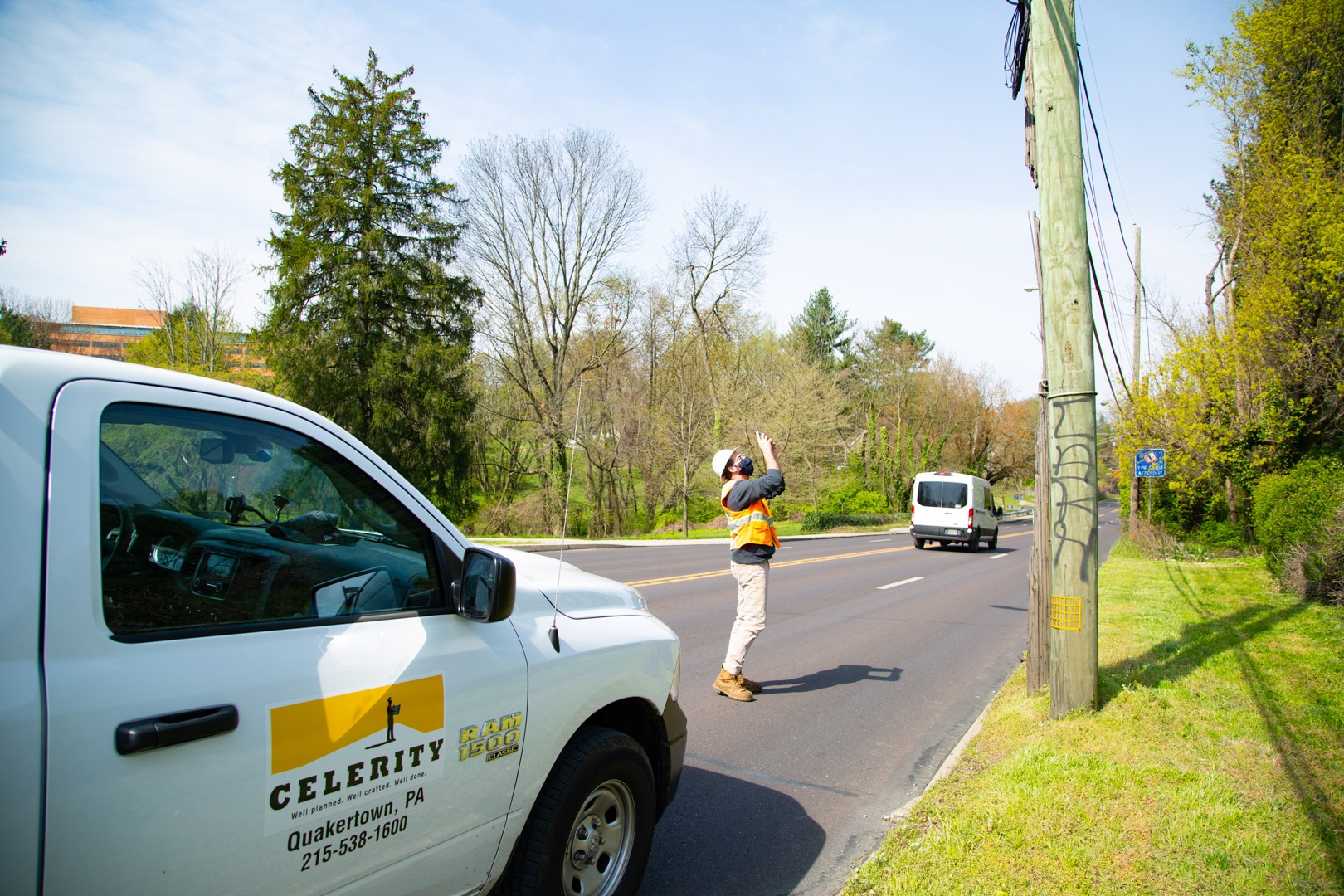
Field survey, sometimes called OSP fielding, connects HLD to LLD. Survey crews walk the proposed route and collect the data that makes construction documents accurate.
A survey crew records pole IDs and heights with laser measurement tools. They collect GPS coordinates with sub-meter accuracy. They document existing attachments and clearances. They identify obstacles and route deviations. All of this information feeds directly into the engineering documents.
Field survey data accuracy determines everything downstream. Wrong pole heights, missing attachment records, or inaccurate GPS coordinates cascade through the entire project. What looks like a construction problem often traces back to a data problem that should have been caught during the survey.
Phase 3: Construction Handoff
Construction Handoff is the transition point where engineering work transfers to field crews. This phase determines whether all that careful planning actually translates into successful construction.
A proper construction handoff is not just handing over a stack of documents. It is a controlled process that ensures crews have everything they need to build the network as designed.
What a Construction Handoff Package Includes
A complete handoff package contains:
- Approved LLD drawings with the current revision status
- Pole schedules with all specifications verified
- Splice plans showing fiber assignments
- Permits tied to specific route segments
- Make-ready completion records confirming pole modifications are done
- Bills of materials matched to each work area
- Route specifications with any special conditions noted
Best Practices for Construction Handoff
The most successful projects treat handoff as a process, not an event. Here is what that looks like in practice:
- Define scope and release boundaries early. Identify the exact route limits, structures, drawing issue, and approval status for each handoff package. Crews need to know what they are authorized to build and what remains on hold.
- Tie permitting to design objects. Connect permits, owner comments, inspections, and restrictions to the specific route segments they affect. This keeps make-ready, construction, and closeout traceable.
- Use a staged handoff model. Release the job in phases or work areas instead of waiting for one final turnover. This keeps construction moving while engineering completes remaining sections.
- Collect documentation progressively. Do not wait until construction ends to compile as-built drawings, test reports, and inspection records. Gathering this information during the job catches gaps while they can still be fixed.
After Construction: As-Built Documentation
The OSP engineering team's job does not end when construction starts. As-built documentation updates plan sheets to reflect what was actually built. GIS geodatabases get updated. Redlines get reconciled. This final documentation step often gets cut when projects run over schedule. That is a mistake. Your network's long-term maintainability depends on accurate as-built records. Five years from now, when someone needs to find a splice point or trace a cable route, they will rely on those records.
Why Each Phase Matters for Your Fiber Project
Each phase of OSP engineering builds on the one before it. Skip a step or rush through it, and problems multiply downstream.
- HLD without proper planning leads to route conflicts, permit rejections, and cost overruns when field conditions differ from assumptions.
- LLD without accurate field data produces construction documents that do not match reality. Crews waste time hunting for poles that are not where drawings say they should be.
- Construction handoff without proper documentation leaves crews guessing about specifications, permits, and material requirements. That leads to rework, delays, and quality issues.
The projects that move fastest through construction are the ones that invested time in thorough engineering upfront. They identified problems on paper, resolved conflicts before mobilization, and gave crews clear documentation to follow.
Ready to discuss your OSP engineering project? Reach out to Celerity to learn how our OSP engineering team can help you plan, design, and build with confidence.
—FAQs About OSP Engineering
What is the difference between HLD and LLD in fiber optic design?
- High-Level Design (HLD) is the planning phase that establishes network architecture, route corridors, node placement, and preliminary cost estimates. Low-Level Design (LLD) converts the HLD into construction-ready documents with pole-by-pole specifications, splice diagrams, attachment heights, and detailed bills of materials. HLD answers "what are we building?" while LLD answers "exactly how do we build it?"
What is included in a construction handoff package?
- A construction handoff package includes approved LLD drawings, pole schedules with verified specifications, splice plans showing fiber assignments, all required permits, make-ready completion records, bills of materials, and route specifications with any special conditions. This package gives field crews everything they need to build the network as designed.
How long does OSP engineering take for a fiber project?
- Timeline depends on route miles, terrain complexity, and existing plant data. A straightforward rural aerial build of 20 to 30 miles with flat terrain and a single pole owner might complete HLD through LLD in 10 to 14 weeks. Projects with mountain terrain, multiple pole owners, railroad crossings, or complex permitting requirements can take 6 to 9 months.
What services does Celerity offer for OSP engineering?
- Celerity provides comprehensive OSP engineering services including strand and conduit mapping, make-ready assessments, pole application processing, permitting, and construction documentation. Celerity serves telecommunications companies, electric utilities, educational institutions, and government organizations with end-to-end fiber infrastructure solutions from front-end engineering through closeout documentation.
Why is field survey data so important for OSP engineering?
- Field survey data provides the ground truth that makes construction documents accurate. Survey crews verify pole heights, record existing attachments, collect GPS coordinates, and identify obstacles that aerial imagery cannot capture. Inaccurate field data leads to construction documents that do not match reality, causing delays, rework, and cost overruns.
What happens if OSP engineering is rushed or incomplete?
- Rushing OSP engineering creates problems that multiply during construction. Incomplete HLD leads to route conflicts and permit rejections. Inaccurate LLD produces construction documents that crews cannot follow. Missing handoff documentation leaves field teams guessing about specifications. Projects that invest in thorough engineering upfront move faster through construction and avoid costly rework.