August 26, 2026

What Does a Telecommunications Contractor Do? A Complete Guide for Network Owners

The fiber optic network connecting your business to the world did not appear by magic. Behind every reliable connection sits months of planning, miles of cable, and teams of skilled professionals who make it all work. These professionals are telecommunications contractors, and their role in building modern infrastructure has never been more critical.

With fiber broadband now reaching over 60% of U.S. households and 2025 setting an all-time record for network deployment, understanding what these contractors do helps organizations make smarter decisions about their connectivity investments.

Understanding the Role of a Telecommunications Contractor

A telecommunications contractor is a specialized company that designs, builds, installs, and maintains communication networks. Think of them as the architects and builders of the digital highway system. They handle the physical infrastructure that makes phone calls, internet access, and data transmission possible.

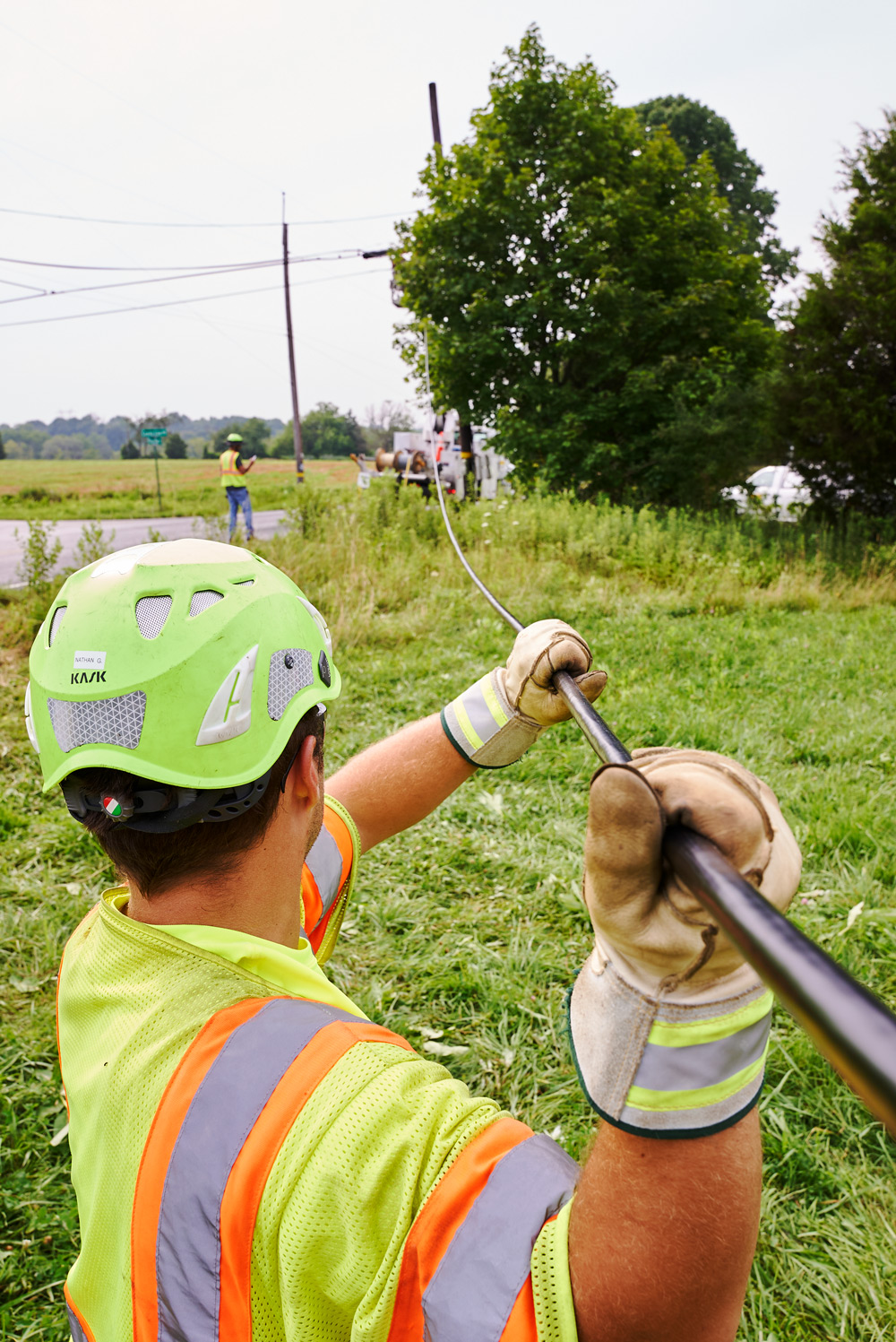
These contractors work across multiple environments. Some focus on outside plant (OSP) construction, which includes everything installed outdoors: underground cables, aerial lines on poles, and the equipment that connects them. Others specialize in wireless infrastructure, building the fiber backhaul that supports cell towers and 5G networks.

The scope of work varies widely. A telecommunications contractor might spend one week installing fiber optic cables beneath city streets using horizontal directional drilling. The next week, that same team could be splicing fiber strands in a rural area to bring broadband to underserved communities.

What separates professional contractors from general construction firms is their specialized expertise. Fiber optic work requires precision measured in microns. A single poorly executed splice can degrade network performance for thousands of users. This technical depth is why carriers, utilities, and enterprises rely on dedicated telecommunications contractors rather than general contractors.

Core Services Telecommunications Contractors Provide

Telecommunications contractors offer a range of interconnected services that span the entire network lifecycle. Understanding these services helps organizations identify what they need and evaluate potential partners effectively.

Engineering and Network Design

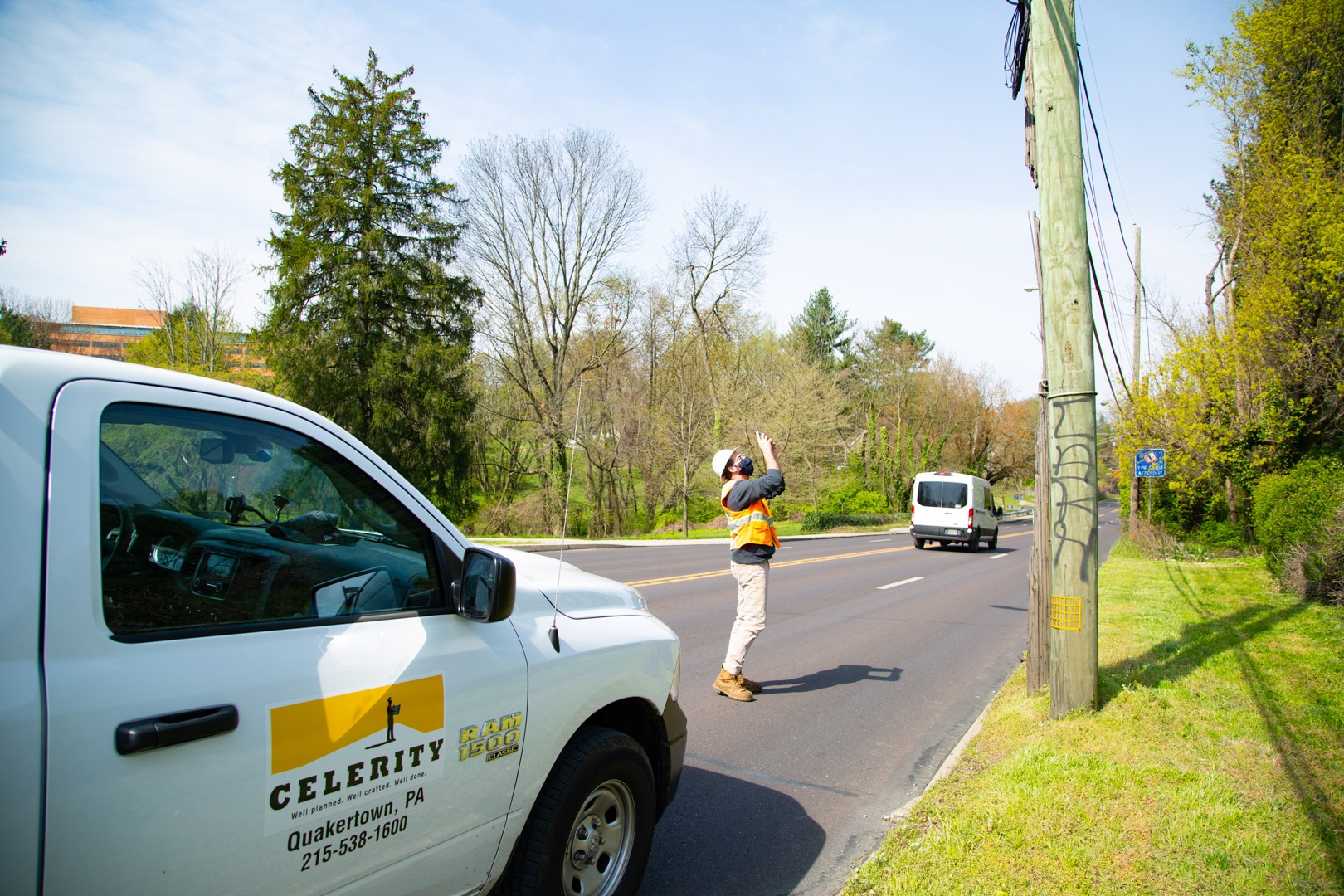
Before any cable goes into the ground, contractors perform detailed engineering work. This includes route surveys to identify the best paths for cable runs, feasibility studies to assess construction challenges, and network characterization planning to ensure the finished system meets performance requirements.

Good engineering prevents expensive problems later. A thorough survey identifies underground utilities, soil conditions, and permit requirements before construction begins. Skipping this step often leads to costly delays and change orders.

Aerial and Underground Construction

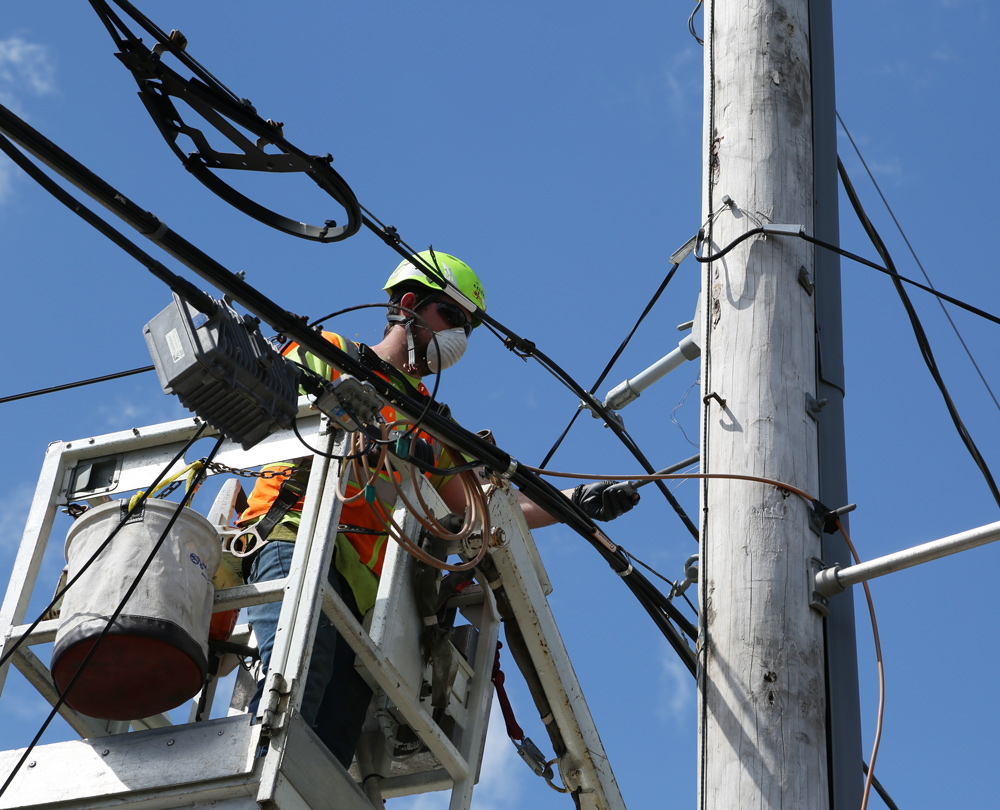
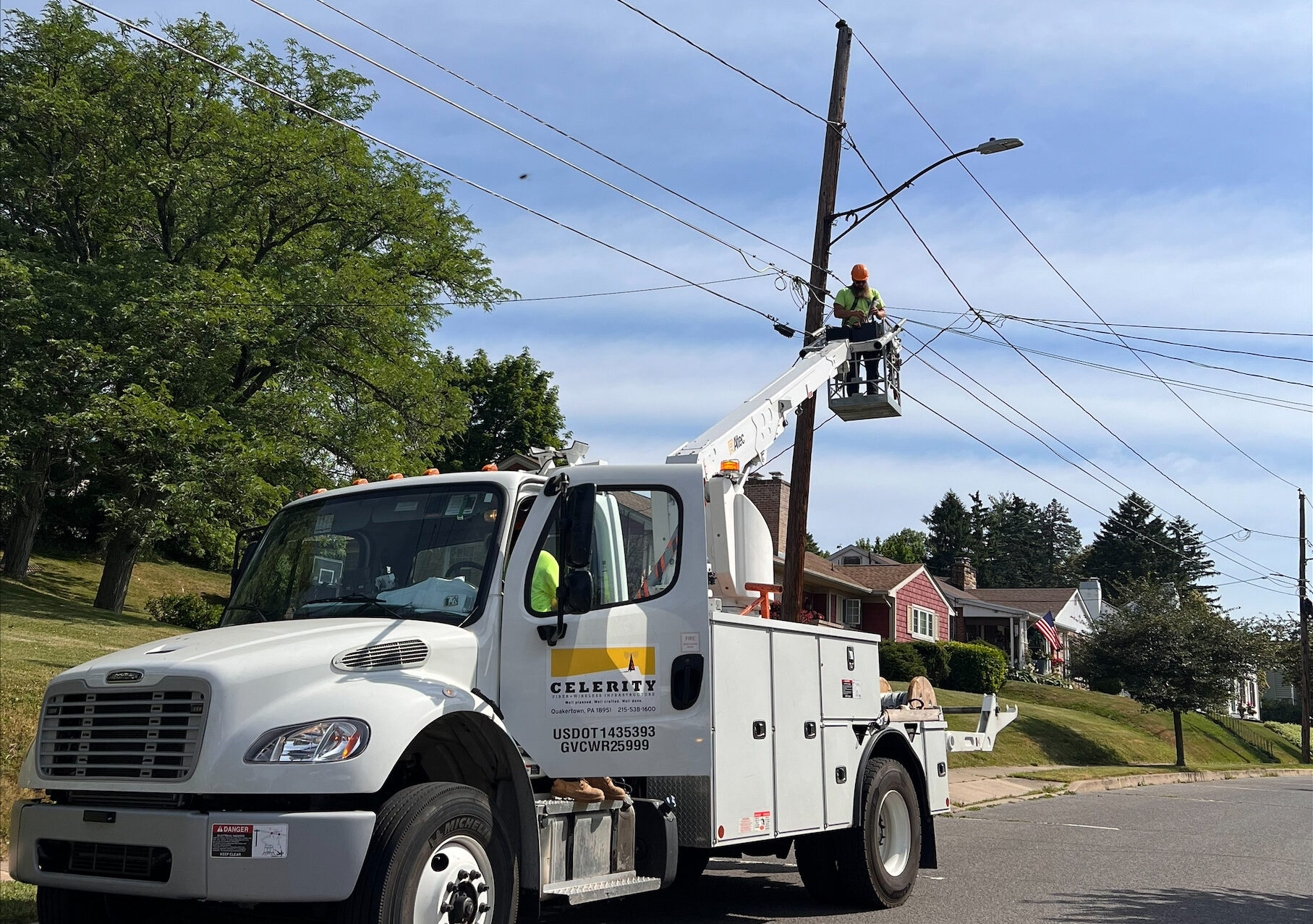
The physical construction phase involves two primary methods: aerial installation on existing poles and underground placement through trenching or directional drilling.

Aerial construction typically costs less and moves faster when pole infrastructure already exists. Underground construction offers better protection from weather and physical damage but requires more extensive civil works.

Modern contractors use horizontal directional drilling (HDD) to install cables beneath roads, rivers, and other obstacles without surface disruption. This technique minimizes traffic impacts and reduces restoration costs compared to traditional open-cut trenching.

Fiber Optic Splicing and Testing

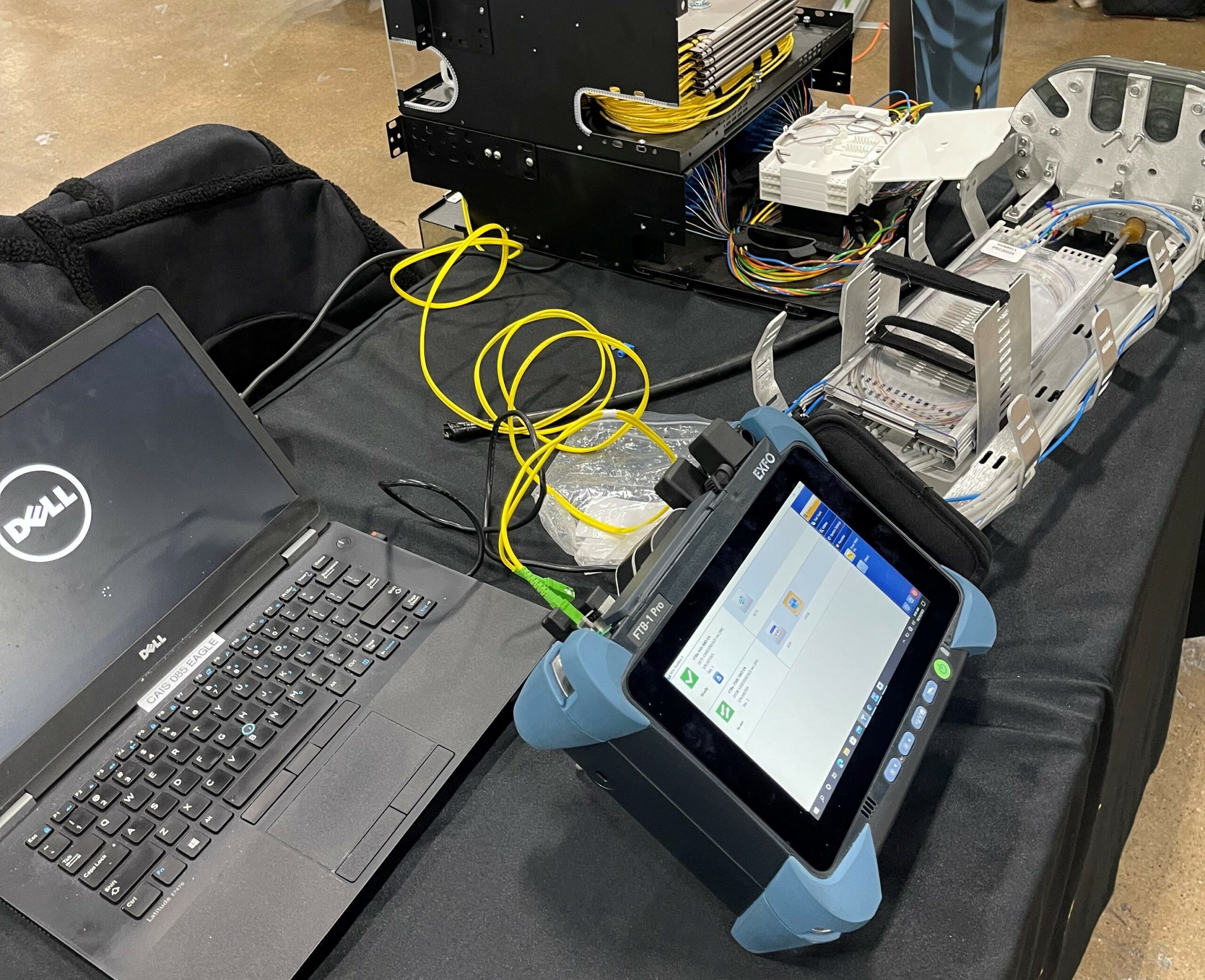
Once cables are in place, technicians splice individual fiber strands together using fusion splicing equipment. This process requires clean room conditions and specialized training. A quality splice introduces minimal signal loss and lasts for decades.

Testing follows splicing to verify network performance. Contractors use optical time-domain reflectometers (OTDRs) to measure cable length, locate faults, and confirm splice quality. Power meter and light source testing validates end-to-end signal transmission.

Advanced characterization testing goes further, measuring optical return loss, chromatic dispersion, and polarization mode dispersion. These tests matter most for high-capacity networks where even small imperfections affect performance.

Maintenance and Emergency Restoration

Networks require ongoing care. Preventive maintenance programs catch problems before they cause outages. Regular fiber audits reconcile documentation with actual field conditions, ensuring records stay accurate as networks evolve.

When damage occurs, whether from construction accidents, severe weather, or equipment failure, emergency restoration services get networks back online quickly. Contractors with 24/7 response capabilities minimize downtime and its associated costs.

The Telecom Infrastructure Project Lifecycle

Successful network projects follow a predictable sequence. Understanding this lifecycle helps organizations plan timelines, allocate budgets, and set realistic expectations.

Phase 1: Planning and Engineering

The project begins with detailed planning. Engineers survey proposed routes, identify obstacles, and design solutions. This phase produces construction drawings, material lists, and permit applications. Rushing through planning almost always creates problems during construction.

Phase 2: Permitting and Coordination

Telecommunications construction requires permits from multiple authorities: municipalities, state agencies, railroads, and private property owners. Experienced contractors know local requirements and maintain relationships that smooth the approval process. Permit delays are among the most common causes of project schedule slippage.

Phase 3: Civil Works and Construction

With permits in hand, construction crews mobilize. Civil works include trenching, conduit installation, manhole construction, and pole attachment. This phase is the most visible and often the most weather-dependent.

Phase 4: Cable Installation and Splicing

Crews pull or blow fiber optic cables through conduits and splice them at designated points. Documentation during this phase is critical. Accurate splice records and cable routing information support future maintenance and troubleshooting.

Phase 5: Testing and Commissioning

Comprehensive testing validates that the installed network meets specifications. Test results become part of the permanent project record. Any deficiencies identified during testing get corrected before handover.

Phase 6: Documentation and Handover

The contractor delivers as-built drawings, test results, and maintenance documentation to the network owner. Quality documentation supports efficient operations for years to come.

Phase 7: Operations and Maintenance

Many contractors offer ongoing maintenance services after construction. These arrangements range from on-call emergency response to comprehensive managed services that handle all routine maintenance.

How to Choose the Right Telecommunications Contractor

Selecting the right contractor significantly impacts project success. Several factors deserve careful evaluation.

Safety Record and Certifications

Telecommunications construction involves real hazards: working at heights, operating heavy equipment, and handling electrical systems. Request safety statistics and verify certifications. Contractors with strong safety cultures protect their workers and reduce project risk.

Industry certifications from organizations like the Fiber Optic Association indicate that technicians have demonstrated competency through standardized testing.

Equipment and Workforce

Contractors who own their equipment and employ their technicians directly typically deliver more consistent quality than those relying heavily on subcontractors. Ask about crew composition and equipment ownership.

Documentation Practices

Poor documentation creates long-term headaches. Evaluate sample deliverables from previous projects. Quality contractors produce clear, accurate records that support efficient network operations.

Financial Stability

Large infrastructure projects span months or years. Verify that potential contractors have the financial strength to complete your project without disruption.

Why Fiber and Wireless Infrastructure Matters Now

The telecommunications industry is experiencing unprecedented growth. The Fiber Broadband Association reports that 11.8 million U.S. homes gained fiber access in 2025 alone, setting an all-time deployment record. Total fiber passings now approach 100 million.

Federal programs like the $42.45 billion Broadband Equity, Access and Deployment (BEAD) initiative are accelerating construction in underserved areas. At least 18 states have BEAD-funded fiber projects currently under construction.

This growth creates both opportunity and challenge. Organizations planning network projects face a competitive market for contractor services. Starting the selection process early and building relationships with qualified contractors improves outcomes.

The trend toward fiber dominance shows no signs of slowing. Industry projections indicate fiber will overtake cable as the dominant U.S. broadband delivery platform by 2028. Organizations investing in fiber infrastructure today are positioning themselves for decades of reliable connectivity.

Choosing the right telecommunications contractor gives network owners access to the engineering expertise, skilled workforce, specialized equipment, and documentation practices needed to build reliable infrastructure and protect it throughout its lifecycle. Contact Celerity Integrated Services to discuss how its end-to-end engineering, construction, fiber splicing, testing, maintenance, and emergency restoration capabilities can support your next telecommunications infrastructure project.

August 19, 2026

Smart City Fiber Network: Choosing the Right Infrastructure Partner

Imagine a city where traffic lights adjust in real time to reduce congestion, where water leaks get detected before they flood streets, and where emergency responders receive instant alerts the moment a crisis unfolds.

This is not science fiction. It is the promise of smart cities, and it all runs on one critical piece of infrastructure most people never see: fiber optic networks.

City planners, utility managers, and telecom providers are learning a hard lesson, though. The technology is only as good as the team that builds it. Choosing the wrong infrastructure partner does not just delay projects. It can derail them entirely.

We explain what smart city fiber networks actually are, why they matter, and how organizations can find a partner capable of delivering one that works for decades.

What Is a Smart City Fiber Network?

A smart city fiber network is the digital backbone that connects every sensor, camera, traffic signal, and data center across an urban area. Think of it as the nervous system of a modern city transmitting massive amounts of data at the speed of light.

Unlike traditional copper networks, fiber optic cables use pulses of light to carry information. This means:

  • Faster speeds: Fiber delivers gigabit connectivity, supporting everything from HD surveillance to real-time traffic management.
  • Lower latency: Data travels almost instantaneously, which is critical for applications like autonomous vehicles and emergency response systems.
  • Greater reliability: Fiber is immune to electromagnetic interference and can withstand harsh weather conditions.
  • Future-proof capacity: A single fiber strand can be upgraded to handle 400 Gbps or more without replacing the physical cable.

According to the Fiber Broadband Association, 76.5 million U.S. homes (56.5% of all households) were serviceable by fiber as of late 2024, representing a 13% year-over-year increase. That growth is accelerating as municipalities recognize fiber's role in powering smart city applications.

Why Fiber Is the Backbone of Every Smart City

Smart cities are not just about flashy technology. They are about solving real problems that affect people every day: reducing traffic deaths, cutting energy waste, improving public safety, and closing the digital divide. Smart city systems attack these problems directly. Sensors and connected infrastructure give traffic engineers the data to redesign dangerous corridors. Smart meters and automated grid controls help utilities spot waste and respond to outages faster. Connected emergency networks route responders to the scene with greater speed and accuracy. Expanded fiber access brings high-speed connectivity to communities that the market has long overlooked. 

The global smart cities market is projected to reach $4.06 trillion by 2031, growing at a 15.65% compound annual rate. Behind every one of those smart city applications is a fiber network that must be designed, permitted, constructed, and maintained with precision. However, there is a catch: Building that network is far more complex than laying cable in the ground.

The Hidden Risks of Choosing the Wrong Infrastructure Partner

Fiber construction is not a commodity service. It requires specialized engineering, regulatory expertise, and field crews trained in everything from aerial construction to underground directional drilling.

When municipalities or telecom providers choose the wrong partner, the consequences are severe:

  1. Project Delays
    Permitting alone can stall projects for months. Partners unfamiliar with local utility pole owners, right-of-way requirements, or railroad crossings often underestimate timelines leaving cities waiting while costs escalate.
  2. Budget Overruns
    Make-ready assessments, pole attachment licenses, and unexpected field conditions can blow budgets wide open. Inexperienced contractors frequently miss these costs in initial proposals.
  3. Poor Documentation
    A fiber network is only as useful as its records. Without accurate as-built documentation, future maintenance becomes a guessing game and emergency repairs take longer than they should.
  4. Stranded Assets
    Cities have invested millions in fiber infrastructure that sits underutilized because the network was not designed for scalability or properly integrated with existing systems.
  5. Long-Term Reliability Issues
    Sloppy splicing, inadequate testing, or shortcuts during construction lead to network failures years down the road exactly when smart city applications are most critical.

Celerity works with municipal clients and regional fiber providers, to rescue projects after other contractors walked away mid-build. The common thread? A lack of upfront planning and a partner who disappeared once construction wrapped up.

What to Look for in a Fiber Infrastructure Partner

Not all fiber contractors are created equal. Here is what separates a true infrastructure partner from a vendor who is just chasing the next job:

  • End-to-End Capabilities- The best partners handle every phase: feasibility studies, OSP engineering, permitting, aerial and underground construction, splicing, testing, and ongoing maintenance. Fragmented responsibility creates gaps where problems hide.
  • Deep Regulatory Expertise- Each jurisdiction has unique requirements. Pole attachment applications, railroad crossings, PennDOT permits, municipal right-of-way agreements. Partners with established relationships navigate these faster and with fewer surprises.
  • Meticulous Documentation- Quality construction means nothing without records that future teams can use. Look for partners who deliver complete as-built packages, splice diagrams, and network documentation in both digital and hard copy formats.
  • Long-Term Commitment- Smart city networks are not one-time projects. They require ongoing inspections, emergency restoration services, and preventative maintenance. Choose a partner who will be there five, ten, or twenty years from now.
  • Safety-First Culture- Fiber construction involves working at heights, in confined spaces, and near live utilities. Partners with rigorous safety programs protect their crews—and your project timeline.

How Celerity Delivers Smart City Fiber Networks That Last

At Celerity we have spent more than 20 years building fiber optic and wireless infrastructure for telecommunications companies, utilities, universities, and municipalities across the country. Our philosophy is simple: Well Planned. Well Crafted. Well Done.

That means we do not just show up with trucks and cable. We start with feasibility studies that forecast costs, timelines, and risks before a single permit is filed. Our OSP engineering team handles strand mapping, make-ready assessments, and pole attachment applications with the precision that comes from decades of experience.

When construction begins, our crews execute aerial and underground builds with craftsmanship that meets the most stringent specifications. Every splice is tested. Every cable is documented. Every closeout package is delivered so your team can manage the network with confidence.

And when the project is complete? We do not disappear. Our maintenance and emergency response services ensure your smart city network stays operational, day or night, storm or shine.

If you are planning a municipal fiber project, expanding a regional network, or exploring smart city applications, the time to choose the right infrastructure partner is now before the first permit is filed. Contact Celerity to discuss your next fiber project.

June 17, 2026

How to Connect Multi-Campus University Systems with Smart OSP Engineering

Universities don't run on good intentions. They run on bandwidth. Every lecture hall streaming video. Every research lab transferring massive datasets. Every residence hall full of students who expect instant connectivity. When a campus spans multiple locations (sometimes miles apart) the fiber network connecting them isn't just infrastructure. It's the backbone of its operations.

Connecting multi-campus systems is nothing like wiring a single building. The challenges multiply. The stakes get higher. And the margin for error shrinks to almost nothing. These challenges are what many facilities teams discover too late in the planning process.

So how does a university get it right? It starts with understanding what makes university OSP (Outside Plant) engineering fundamentally different, and what questions to ask before actual work begins. The fiber optic market is growing at a compound annual growth rate of 16.64% through 2034, according to industry analysts. Universities are racing to keep pace with bandwidth demands that seem to double every few years. But rushing a multi-campus buildout without proper OSP engineering creates problems that last decades.

Why Multi-Campus Fiber Networks Are Different

A single-campus network has one set of stakeholders, one terrain profile, and one construction timeline to manage. Multi-campus systems multiply every variable. They deal with different soil conditions at each location. Different building ages and entry point challenges. Different departmental priorities competing for attention. And often, different local permitting requirements depending on where each campus sits.

In our work with higher education clients, we've seen institutions inherit networks designed 15 years ago that can't support today's computing needs. The original engineers didn't plan for growth. They didn't build in redundancy. And now, retrofitting costs three times what doing it with all these variables taken into account would have cost originally.

The 5 Biggest OSP Challenges Universities Face

1. Terrain That Doesn't Cooperate

Every campus has obstacles such as historic quads, mature tree canopies, and underground utilities from decades ago that don't show up on satellite imagery. Rocky terrain is particularly challenging. One project we supported involved a campus built on Pennsylvania bedrock. Standard trenching wasn't an option. The engineering team had to design around geological surveys, using directional boring and strategic aerial segments to complete the backbone.

2. Academic Calendar Constraints

Campus construction schedules need to align with the academic calendar. Contractors cannot disrupt the main walkways during move-in weekend or operate heavy equipment near the library, for example, during finals. On university campuses, workable construction windows are often measured in weeks rather than months.

Effective OSP planning integrates the academic calendar into the project timeline from the start. Teams phase work during summer breaks, coordinate around major campus events, and prepare contingency plans when weather delays threaten to extend work into the fall semester.

3. Stakeholder Complexity

A corporate campus has one decision-maker. A university has dozens. IT wants maximum bandwidth. Facilities department wants minimal disruption. The provost wants the project done before the capital campaign launch. The grounds department wants to protect the historic elm trees. And everyone has veto power over something.

Successful multi-campus projects require a feasibility study that gets all stakeholders aligned before design begins. Otherwise, the redesign might involve multiple rounds.

4. Future-Proofing Uncertainty

How much bandwidth will a campus need in 2035? Nobody knows for certain. But the fiber installed today needs to handle whatever comes next. A 288-count fiber backbone costs marginally more than 144-count during installation. But adding capacity later means digging up the same routes again.

5. Budget Realities

An OSP infrastructure typically represents 60-70% of total network capital expenditure. Underground installation runs $5,000 to $20,000 per mile depending on conditions. The institutions that stay on budget are the ones that invest in thorough engineering upfront. Every dollar spent on route optimization and constructability analysis saves dollars during construction.

Planning A Multi-Campus Fiber Architecture

The most resilient university networks follow a three-tier hierarchical model:

  • Core Layer: The central data center or network operations center that serves as the hub for all campus connections.
  • Distribution Layer: Major buildings on each campus that aggregate traffic from surrounding structures.
  • Access Layer: Individual buildings, labs, and facilities that connect to their nearest distribution point.

This architecture creates natural redundancy. If one distribution node fails, traffic can reroute through alternate paths. For multi-campus systems, it also allows each location to operate semi-independently during maintenance windows.

The key decision is where to place the distribution nodes. They need to be:

  • Geographically central to the buildings they serve
  • Accessible for maintenance without disrupting campus operations
  • Protected from environmental risks (flooding, construction zones)
  • Connected to at least two independent pathways back to the core

Underground vs. Aerial: Making the Right Call

Every multi-campus project faces this question: is the fiber buried, or is it strung overhead?

Underground Advantages

Underground infrastructure provides several key advantages. It remains protected from weather, vehicle damage, and vandalism. It typically delivers a longer lifespan while requiring less maintenance. Once installed, it stays visually unobtrusive and preserves the surrounding aesthetic. In many historic districts, underground placement is also required.

Underground Challenges

Underground construction also presents several challenges. It often carries higher installation costs and requires a longer project timeline. Excavation can disrupt campus operations and daily activities during construction. Installation can also become more complex in rocky terrain or in utility corridors that are already congested.

Aerial Advantages

Aerial infrastructure offers several advantages. It can be installed more quickly, typically requires lower upfront costs, and allows easier access for repairs and maintenance. It also performs well in areas where existing pole infrastructure is already in place.

Aerial Challenges

Aerial deployment also comes with challenges. Because it remains exposed, it is more vulnerable to weather-related damage. It can affect campus aesthetics, often requires pole attachment agreements, and may have a shorter lifespan in harsh climates.

Most university projects use a hybrid approach. Underground for high-visibility areas and critical backbone routes. Aerial for back-of-campus connections and temporary construction phases. The right mix depends on specific conditions. A thorough engineering assessment maps every route option before recommending the optimal combination.

Real-World Success: Lessons from Complex Buildouts

One project that illustrates these principles involved connecting three separate campus locations for a major Pennsylvania university. The scope included:

  • 288-count fiber backbone across all three sites
  • Underground installation through rocky terrain
  • Coordination with ongoing campus construction
  • Redundant pathways for failover protection

The engineering team conducted geological surveys before finalizing routes. They identified areas where bedrock made trenching impractical and designed directional boring solutions. They scheduled major excavation during summer break and used fiber splicing techniques that minimized splice points along the route.

The project was completed on budget and the difference was investing time in planning before construction began.

Getting Started: Next Steps

If you're considering a multi-campus fiber buildout, here's where to begin:

  1. Audit your existing infrastructure. What fiber is already in the ground? What condition is it in? What capacity does it have?
  2. Map your bandwidth requirements. Not just today's needs—project forward 10-15 years. Include research computing, IoT expansion, and technologies that don't exist yet.
  3. Engage stakeholders early. Get IT, facilities, administration, and academic leadership aligned on priorities before you start designing.
  4. Commission a feasibility study. A thorough engineering assessment identifies obstacles, estimates costs, and creates realistic timelines.
  5. Choose partners with university experience. Multi-campus buildouts have unique challenges. Work with teams who've solved them before.

Getting it right matters. And it starts with asking the right questions. Celerity has supported complex fiber infrastructure projects for more than 20 years, including multi-campus university systems across the Northeast. Contact our engineering team to discuss your project.

Contact Us

Name

1 2 37
footer-logo

Subscribe to our newsletter to stay Well Connected with Celerity Integrated Services, Inc.

Contact Us

3500 AM Drive,
Quakertown, PA 18951

P 215 538 1600
F 215 538 1602

info@nextmiletech.com

proview

© 2025 Celerity Integrated Services. Privacy Policy. Site by Smith & Howell Design Co.

Back to top Arrow