August 19, 2026

Smart City Fiber Network: Choosing the Right Infrastructure Partner

Imagine a city where traffic lights adjust in real time to reduce congestion, where water leaks get detected before they flood streets, and where emergency responders receive instant alerts the moment a crisis unfolds.

This is not science fiction. It is the promise of smart cities, and it all runs on one critical piece of infrastructure most people never see: fiber optic networks.

City planners, utility managers, and telecom providers are learning a hard lesson, though. The technology is only as good as the team that builds it. Choosing the wrong infrastructure partner does not just delay projects. It can derail them entirely.

We explain what smart city fiber networks actually are, why they matter, and how organizations can find a partner capable of delivering one that works for decades.

What Is a Smart City Fiber Network?

A smart city fiber network is the digital backbone that connects every sensor, camera, traffic signal, and data center across an urban area. Think of it as the nervous system of a modern city transmitting massive amounts of data at the speed of light.

Unlike traditional copper networks, fiber optic cables use pulses of light to carry information. This means:

  • Faster speeds: Fiber delivers gigabit connectivity, supporting everything from HD surveillance to real-time traffic management.
  • Lower latency: Data travels almost instantaneously, which is critical for applications like autonomous vehicles and emergency response systems.
  • Greater reliability: Fiber is immune to electromagnetic interference and can withstand harsh weather conditions.
  • Future-proof capacity: A single fiber strand can be upgraded to handle 400 Gbps or more without replacing the physical cable.

According to the Fiber Broadband Association, 76.5 million U.S. homes (56.5% of all households) were serviceable by fiber as of late 2024, representing a 13% year-over-year increase. That growth is accelerating as municipalities recognize fiber's role in powering smart city applications.

Why Fiber Is the Backbone of Every Smart City

Smart cities are not just about flashy technology. They are about solving real problems that affect people every day: reducing traffic deaths, cutting energy waste, improving public safety, and closing the digital divide. Smart city systems attack these problems directly. Sensors and connected infrastructure give traffic engineers the data to redesign dangerous corridors. Smart meters and automated grid controls help utilities spot waste and respond to outages faster. Connected emergency networks route responders to the scene with greater speed and accuracy. Expanded fiber access brings high-speed connectivity to communities that the market has long overlooked. 

The global smart cities market is projected to reach $4.06 trillion by 2031, growing at a 15.65% compound annual rate. Behind every one of those smart city applications is a fiber network that must be designed, permitted, constructed, and maintained with precision. However, there is a catch: Building that network is far more complex than laying cable in the ground.

The Hidden Risks of Choosing the Wrong Infrastructure Partner

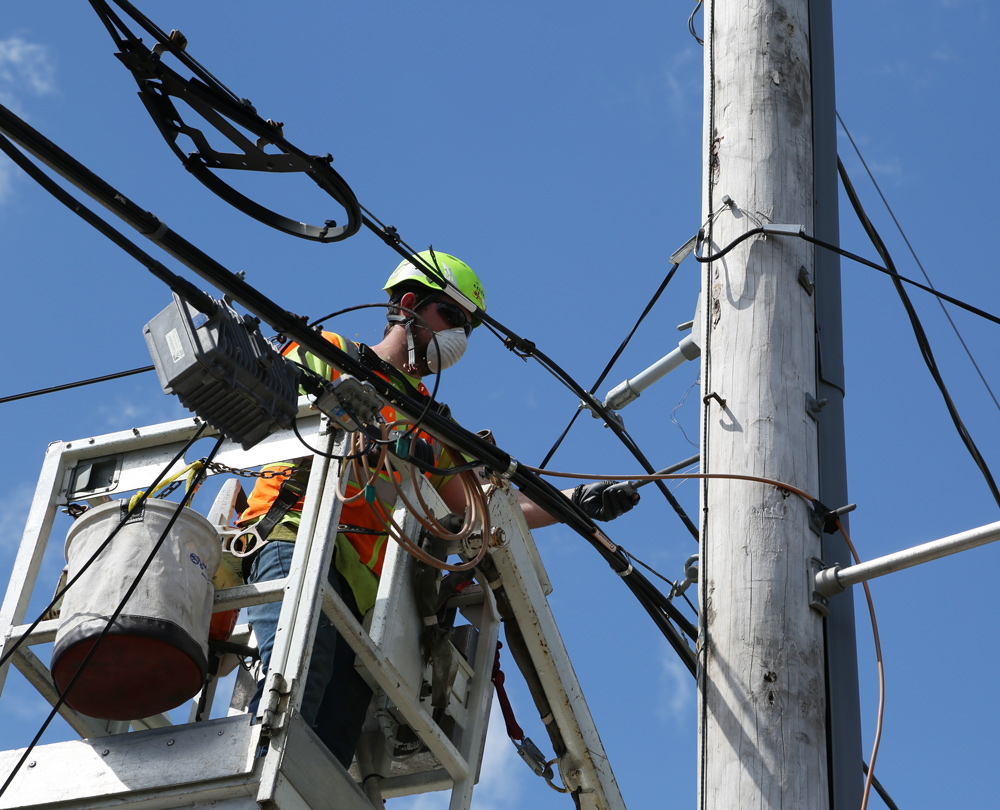
Fiber construction is not a commodity service. It requires specialized engineering, regulatory expertise, and field crews trained in everything from aerial construction to underground directional drilling.

When municipalities or telecom providers choose the wrong partner, the consequences are severe:

  1. Project Delays
    Permitting alone can stall projects for months. Partners unfamiliar with local utility pole owners, right-of-way requirements, or railroad crossings often underestimate timelines leaving cities waiting while costs escalate.
  2. Budget Overruns
    Make-ready assessments, pole attachment licenses, and unexpected field conditions can blow budgets wide open. Inexperienced contractors frequently miss these costs in initial proposals.
  3. Poor Documentation
    A fiber network is only as useful as its records. Without accurate as-built documentation, future maintenance becomes a guessing game and emergency repairs take longer than they should.
  4. Stranded Assets
    Cities have invested millions in fiber infrastructure that sits underutilized because the network was not designed for scalability or properly integrated with existing systems.
  5. Long-Term Reliability Issues
    Sloppy splicing, inadequate testing, or shortcuts during construction lead to network failures years down the road exactly when smart city applications are most critical.

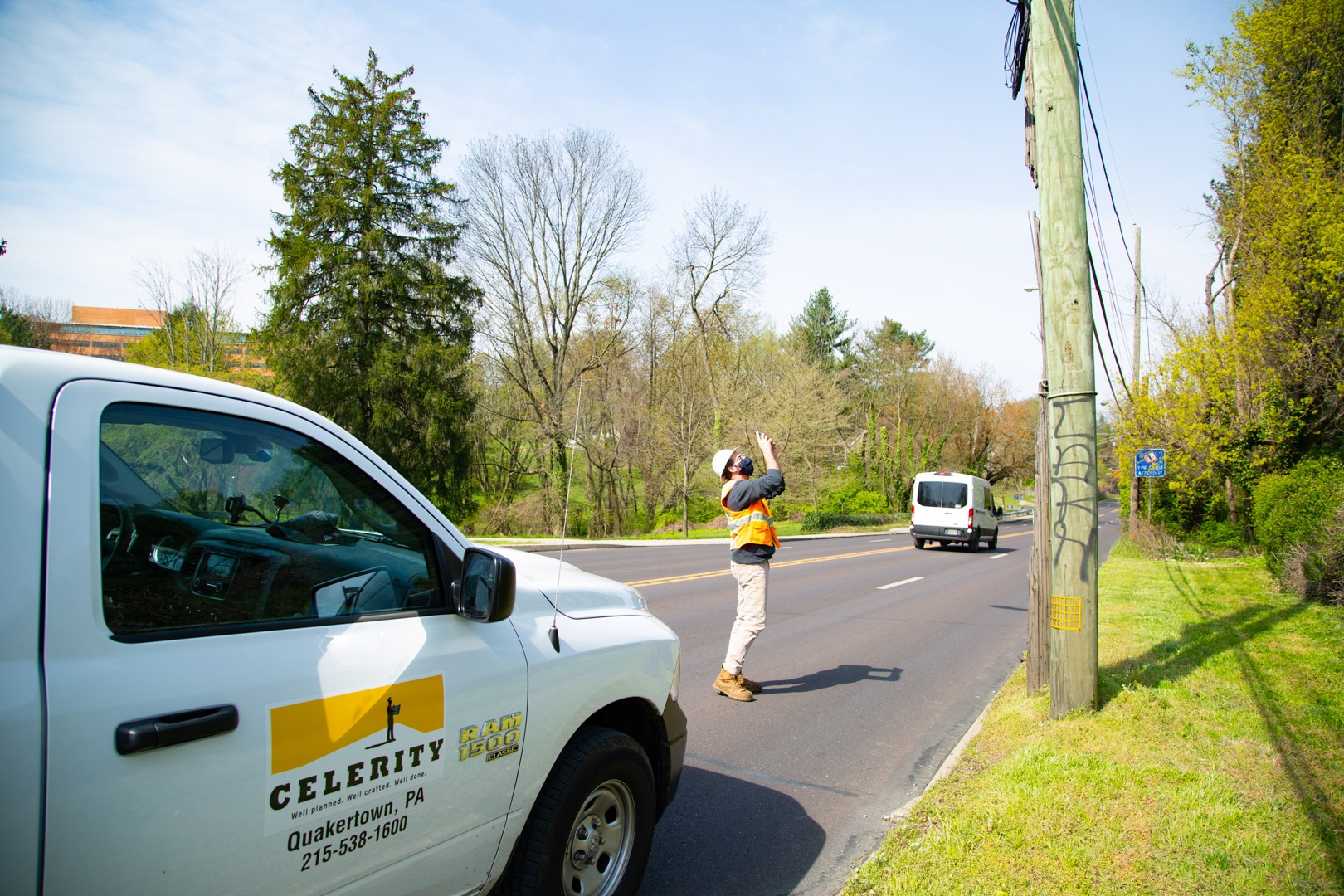
Celerity works with municipal clients and regional fiber providers, to rescue projects after other contractors walked away mid-build. The common thread? A lack of upfront planning and a partner who disappeared once construction wrapped up.

What to Look for in a Fiber Infrastructure Partner

Not all fiber contractors are created equal. Here is what separates a true infrastructure partner from a vendor who is just chasing the next job:

  • End-to-End Capabilities- The best partners handle every phase: feasibility studies, OSP engineering, permitting, aerial and underground construction, splicing, testing, and ongoing maintenance. Fragmented responsibility creates gaps where problems hide.
  • Deep Regulatory Expertise- Each jurisdiction has unique requirements. Pole attachment applications, railroad crossings, PennDOT permits, municipal right-of-way agreements. Partners with established relationships navigate these faster and with fewer surprises.
  • Meticulous Documentation- Quality construction means nothing without records that future teams can use. Look for partners who deliver complete as-built packages, splice diagrams, and network documentation in both digital and hard copy formats.
  • Long-Term Commitment- Smart city networks are not one-time projects. They require ongoing inspections, emergency restoration services, and preventative maintenance. Choose a partner who will be there five, ten, or twenty years from now.
  • Safety-First Culture- Fiber construction involves working at heights, in confined spaces, and near live utilities. Partners with rigorous safety programs protect their crews—and your project timeline.

How Celerity Delivers Smart City Fiber Networks That Last

At Celerity we have spent more than 20 years building fiber optic and wireless infrastructure for telecommunications companies, utilities, universities, and municipalities across the country. Our philosophy is simple: Well Planned. Well Crafted. Well Done.

That means we do not just show up with trucks and cable. We start with feasibility studies that forecast costs, timelines, and risks before a single permit is filed. Our OSP engineering team handles strand mapping, make-ready assessments, and pole attachment applications with the precision that comes from decades of experience.

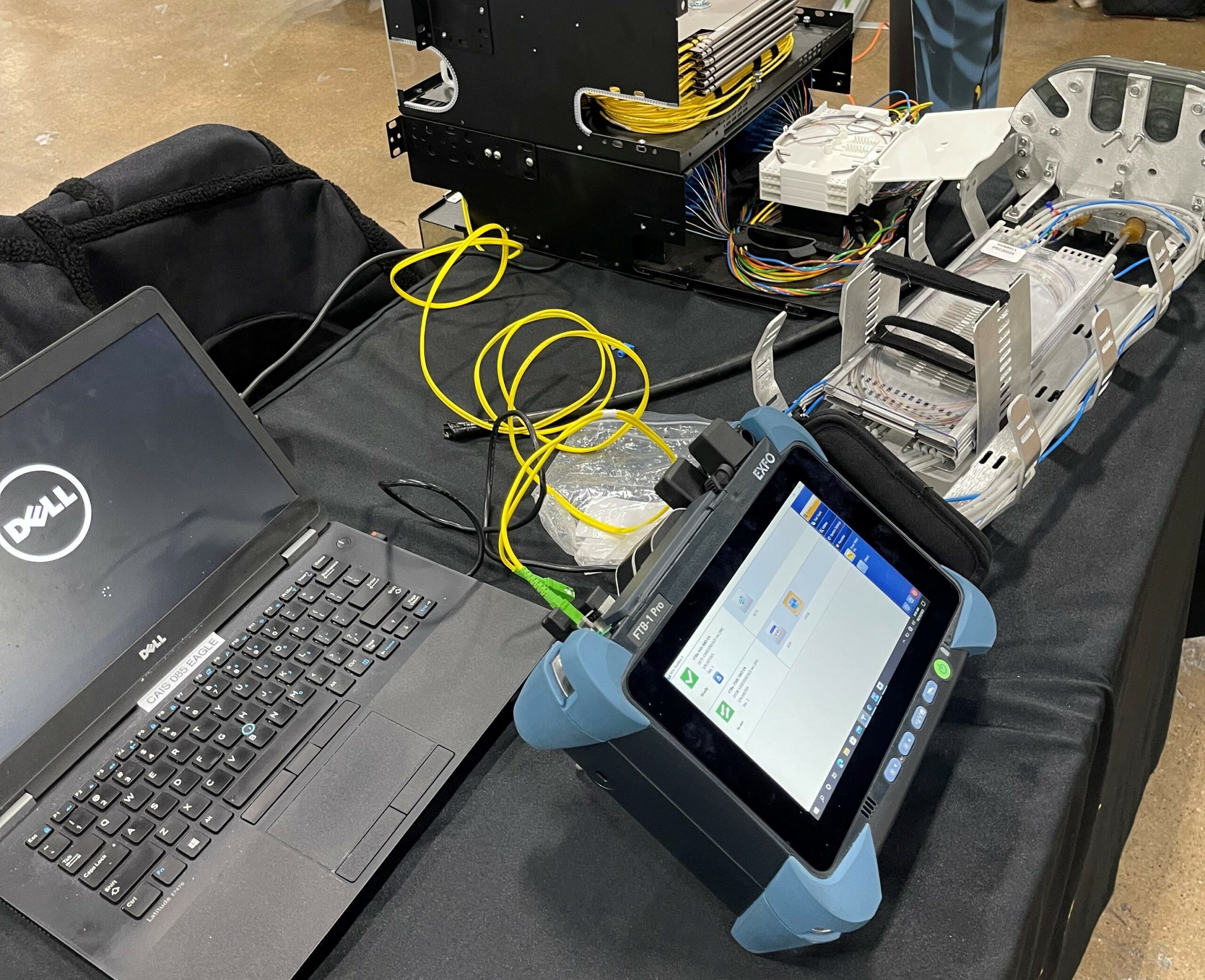
When construction begins, our crews execute aerial and underground builds with craftsmanship that meets the most stringent specifications. Every splice is tested. Every cable is documented. Every closeout package is delivered so your team can manage the network with confidence.

And when the project is complete? We do not disappear. Our maintenance and emergency response services ensure your smart city network stays operational, day or night, storm or shine.

If you are planning a municipal fiber project, expanding a regional network, or exploring smart city applications, the time to choose the right infrastructure partner is now before the first permit is filed. Contact Celerity to discuss your next fiber project.
June 3, 2026

How to Build a Business Case for Campus Fiber Ownership: A Guide for University IT and Finance Leaders

A campus network supports far more than connectivity. It powers research, online learning, administrative systems, student services, and the daily digital experience across the institution. Yet many universities still lease bandwidth from carriers, paying recurring fees while outside providers control capacity, upgrade timelines, and key network decisions.

Fiber ownership offers a different path. It starts with a question IT leaders and finance teams should evaluate together: what would change if the institution owned the fiber instead?
Building that business case requires both technical and financial discipline. When universities align network requirements with long-term capital planning, they can shift from unpredictable operating expenses to a depreciable infrastructure asset designed to serve the campus for decades.


This guide walks through that framework step by step.

Why Campus Fiber Ownership Matters 

Higher education faces a perfect storm of pressures. Enrollment competition is fierce. According to the National Student Clearinghouse Research Center, fall 2025 enrollment reached 19.4 million students, but private nonprofit four-year institutions saw a 1.6% decline. Students have options. And increasingly, they're choosing institutions that deliver seamless digital experiences.

Meanwhile, bandwidth demands are exploding. AI research computing, hybrid learning platforms, IoT sensors across facilities, and hundreds of thousands of connected devices require infrastructure that can scale without carrier negotiations.

The institutions that own their fiber networks control their destiny. Those that lease? They're at the mercy of service agreements, capacity limits, and annual price increases.

Ownership vs. Leasing: Understanding the Real Trade-Offs

Let's be direct about what each model actually means.

  • Leasing bandwidth 
    • Operates primarily on operational expenditure (OpEx). You pay monthly fees for capacity. When you need more, you pay more. There's no upfront capital outlay, which appeals to institutions with constrained budgets or uncertain future demands. But here's the catch: total cost of ownership rises linearly as your network grows. Every bandwidth upgrade means another line item on next year's budget.
  • Owning dark fiber 
    • Requires substantial upfront capital investment. You're purchasing infrastructure, not renting it. But ownership delivers lower total cost of ownership at scale—particularly for institutions expecting network demands of 3x100Gbps or more. You choose your own wavelength technologies, capacity levels, and upgrade paths. No carrier dependencies. No surprise fees when you need to scale.

There's also a security dimension. Owned fiber enables private, high-security networks where traffic stays off public internet and carrier networks entirely. For research institutions handling sensitive data, this isn't a nice-to-have. It's essential. Some institutions explore Managed Optical Fiber Networks (MOFN), which blend ownership benefits with managed services. This approach works well when acquiring dark fiber poses challenges or when your team prefers delegating network operations to a provider while retaining infrastructure control.

Building A Business Case: The 5-Pillar Framework

A compelling business case speaks two languages: technical necessity and financial return. Here's the framework that works.

Pillar 1: Current State Audit

The first step is understanding what the institution is actually spending today. Finance and IT teams should review at least three years of network service invoices and document every carrier contract, bandwidth tier, recurring fee, and overage charge. They should also map the current network environment, identifying what infrastructure the university owns, what it leases, and what assets are approaching end of life.

This type of audit often uncovers meaningful opportunities. Institutions frequently find hidden costs, overlapping services, underused capacity, or legacy agreements that no longer align with current needs. Just as importantly, the audit establishes a clear financial baseline for evaluating ROI and comparing ownership against continued leasing. A thorough fiber audit can identify infrastructure gaps and document existing assets with precision.

Pillar 2: Demand Forecasting

Institutions should project bandwidth needs across the next decade rather than planning only for current demand. That forecast should account for research computing initiatives, especially AI and machine learning workloads, enrollment growth or stabilization goals, expansion of hybrid and online learning, IoT deployments across campus facilities, and connectivity requirements between multiple campuses or remote sites.

Leadership should approach these estimates with ambition rather than caution. Fiber infrastructure often remains in service for 25 to 30 years or longer, so underbuilding can create expensive limitations later. 

Many universities continue to rely on fiber installed decades ago while upgrading the electronics layered on top of it to meet modern performance needs. The most effective strategy is to build for where the institution is headed, not where it stands today.

Pillar 3: Total Cost of Ownership Analysis

This is where the business case lives or dies. Model two scenarios across 10 years:

Scenario A (Leasing): Current carrier costs, projected annual increases (typically 3-5%), capacity upgrade fees, contract renewal terms.

Scenario B (Ownership): Capital investment for fiber installation, optical equipment, operations support, ongoing maintenance, and staff requirements.

For institutions with substantial bandwidth demands, fiber ownership often reaches breakeven within five to seven years. After that point, the network can generate meaningful long-term savings across the remaining life of the infrastructure, which often extends another 18 to 23 years or more.

A thorough financial model should also account for costs that are frequently overlooked in standard comparisons. These include staff time spent managing carrier relationships and contract renewals, downtime or productivity losses caused by capacity constraints, and the opportunity cost of delayed research initiatives or postponed technology programs. Including these factors creates a far more accurate view of total value.

Pillar 4: Risk Assessment and Redundancy

Fiber ownership isn't just about cost. It's about control and resilience.

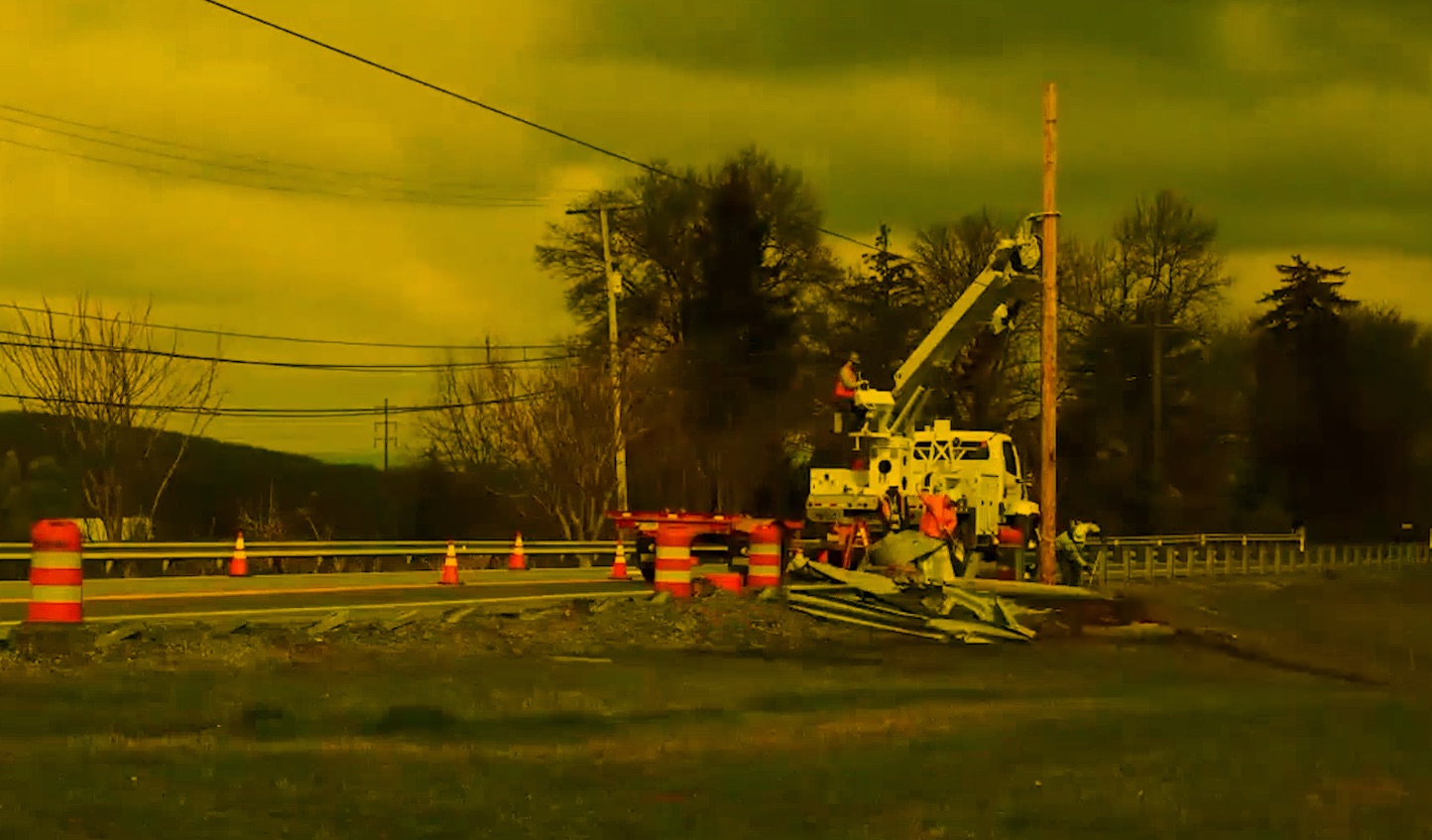
When Lehigh University needed to connect three campuses with a robust, redundant fiber network, they faced real challenges: steep terrain, rocky soil, and construction that couldn't disrupt student life. The solution? A 288-count buried fiber build (not aerial), constructed during off-hours, completed within one year and on budget. That redundancy now protects research and academic data from environmental outages.

Document the risks of not owning your infrastructure: carrier outages, contract disputes, capacity constraints during critical periods, and dependency on third-party upgrade timelines.

Pillar 5: Stakeholder Presentation

CFOs and board members evaluate decisions through financial impact, risk, and long-term institutional value rather than technical specifications alone. That means network proposals should translate bandwidth needs into clear business language.

Ownership can shift unpredictable monthly operating expenses into a depreciable capital asset with long-term utility. A single investment may provide 25 to 30 years of service life, creating a stronger return profile over time. Modern infrastructure can also strengthen competitive positioning by supporting student recruitment, retention, digital learning expectations, and campus experience. 

For research institutions, greater capacity can enable grant-funded initiatives, advanced computing programs, and revenue-generating partnerships that depend on robust connectivity.

The most effective presentation often starts with a 10-year total cost of ownership comparison, then addresses risk reduction and operational resilience, and closes by showing how the investment supports broader strategic goals.

Total Cost of Ownership: What the Numbers Actually Show

Industry data shows that organizations crossing the 3x100Gbps threshold see distinct TCO advantages with ownership versus leasing. The math shifts because leasing costs scale linearly with demand, while ownership costs remain relatively fixed after initial investment.

Consider the Decorah, Iowa, municipal fiber model: a $13.7 million investment delivering gigabit symmetrical service with full local control. The ownership model avoided public-private partnership pitfalls and created long-term infrastructure value for the community.

Universities operate on similar logic. A campus fiber network isn't a multi-decade asset. When you factor in:

  • Elimination of recurring carrier fees
  • Unlimited capacity scaling without service charges
  • Equipment ownership (no lease-end surprises)
  • Reduced vendor dependency

The ownership model often delivers 40-60% lower TCO over a 20-year horizon compared to equivalent leased capacity.

Making the Case to Your Board: Practical Next Steps

Here's your action plan.

Step 1: Commission a feasibility study that maps your current infrastructure, projects future demands, and models ownership versus leasing scenarios.

Step 2: Engage OSP engineering expertise to design a network that meets your specific campus topology, whether that's aerial construction, underground builds, or a hybrid approach.

Step 3: Build your presentation around the 5-pillar framework. Lead with financials, support with technical necessity, close with strategic vision.

Step 4: Plan for ongoing maintenance from day one. A 25-year asset requires a 25-year maintenance strategy.

In our work with educational institutions, we've seen the difference between networks built for today and networks built for tomorrow. The institutions that invest in ownership with proper planning, quality construction, and meticulous documentation position themselves for decades of competitive advantage. Contact us to discuss your campus fiber ownership project.

Contact Us

Name

1 2 37
footer-logo

Subscribe to our newsletter to stay Well Connected with Celerity Integrated Services, Inc.

Contact Us

3500 AM Drive,
Quakertown, PA 18951

P 215 538 1600
F 215 538 1602

info@nextmiletech.com

proview

© 2025 Celerity Integrated Services. Privacy Policy. Site by Smith & Howell Design Co.

Back to top Arrow