Broadband expansion depends on one critical resource that most people never think about: utility poles. These wooden structures carry power lines, cable TV, telephone wires, and fiber optic cables. When a telecommunications provider wants to add new fiber to a pole, it must navigate a complex process governed by federal regulations.
The Federal Communications Commission (FCC) sets the rules for pole attachments under Section 224 of the Communications Act. These rules determine how quickly broadband providers can access utility poles and how much they pay for that access. For contractors, engineers, and project managers working in telecom infrastructure, understanding these regulations is essential to keeping projects on schedule and within budget.
Recent updates to FCC pole attachment rules took effect on May 7, 2026, bringing significant changes to timelines and processes. These changes directly impact how One-Touch Make-Ready works in practice and create new opportunities for faster broadband deployment.
What Are FCC Pole Attachment Rules?
FCC pole attachment rules establish the framework for how telecommunications companies access utility poles owned by electric utilities and other pole owners. The rules cover everything from application procedures to pricing formulas to dispute resolution.
Under Section 224 of the Communications Act, the FCC has authority to regulate pole attachments to ensure that broadband providers have fair and reasonable access to utility infrastructure. This matters because approximately 70% of broadband networks in the United States rely on aerial construction using existing utility poles.
The core principle behind these regulations is simple: pole owners cannot unreasonably deny access or charge excessive fees. However, the practical application involves detailed timelines, notification requirements, and technical standards that govern every step of the attachment process.
Key Timeline Requirements Under Current Rules
The FCC's Fifth Report and Order, adopted in July 2025, established specific deadlines for each phase of the pole attachment process:
- Application review: Utilities have 10 business days to determine if an application is complete
- Survey completion: 45 days for standard orders; 90 days for large orders (over 300 poles)
- Make-ready estimates: 14 days after survey completion for standard orders; 29 days for large orders
- Make-ready work: 30 days in the communications space; 90 days in the power space for standard orders
- Large order make-ready: 120 days in communications space; 180 days in power space
Federal rules now impose firmer timelines on the pole attachment process. The FCC's July 2025 order established a timeline for large pole attachment requests, accelerated contractor approval, and adopted measures to foster collaboration between utilities and attachers. Whether those changes will meaningfully speed deployment is not yet established.
The Congressional Research Service notes that some states have reported timelines running up to five years in total for pole survey results and make-ready completion, and concludes that the effect of pole attachment issues on federally funded build-out deadlines remains to be seen. Regulatory fragmentation compounds the difficulty, with 23 states and the District of Columbia administering their own pole attachment rules rather than deferring to the FCC.
The Make-Ready Challenge
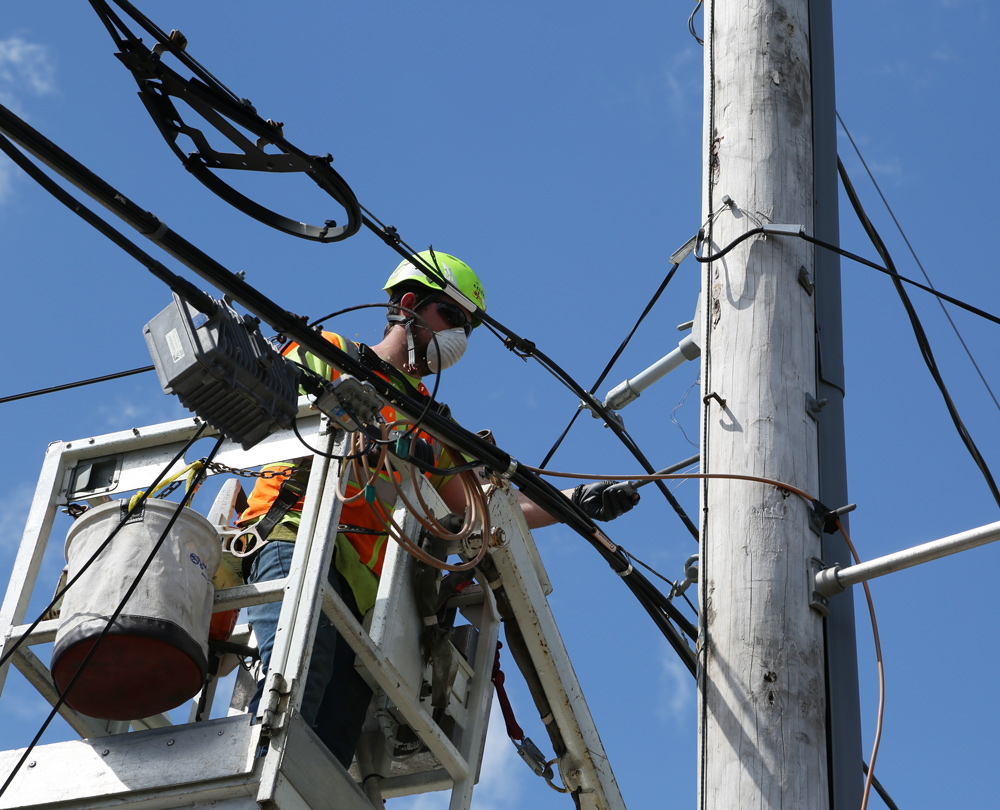
Make-ready work refers to the modifications needed on a utility pole before a new attachment can be installed. This might include moving existing cables, replacing hardware, or even replacing the entire pole if it cannot support additional load.
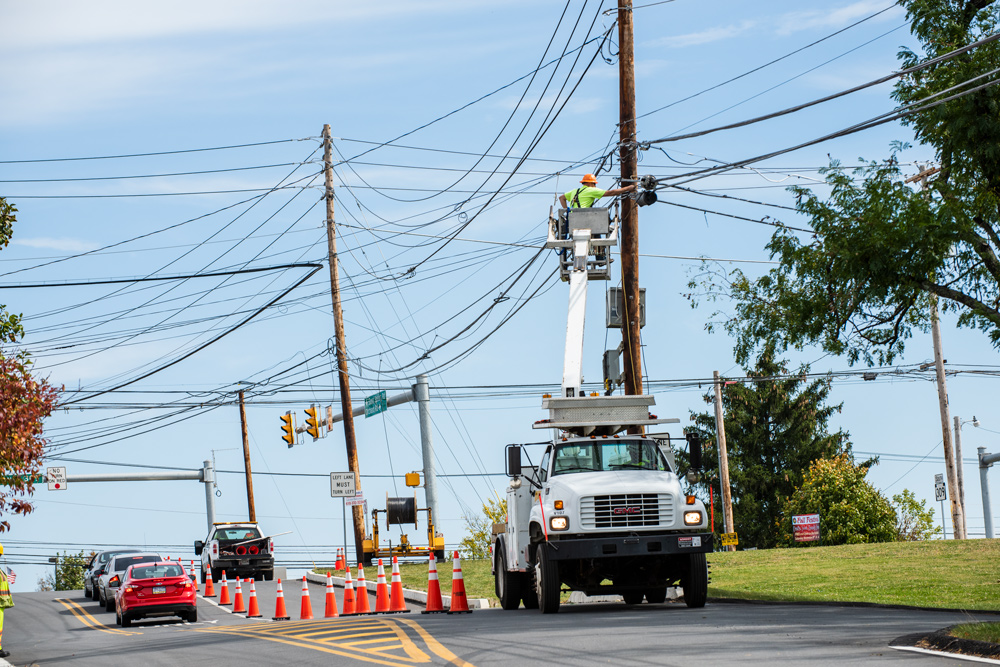
The traditional make-ready process creates a major bottleneck in broadband deployment. Here is why: each existing attacher on a pole must move its own equipment before the new attacher can install fiber. If a pole has cables from an electric utility, a telephone company, and a cable TV provider, each entity must schedule and complete its own work in sequence.
This sequential approach leads to significant delays. Industry data shows that make-ready timelines can stretch from 135 to 225 days before construction crews can install a single strand of fiber. The costs add up quickly too. Simple rearrangements typically cost $380 to $900 per pole, while complex work involving multiple parties can reach $2,100 per pole or more. Pole replacements can cost $3,400 to $6,500 per pole.
For a project involving hundreds or thousands of poles, these delays and costs can derail deployment schedules and strain budgets.
How One-Touch Make-Ready Changes the Game
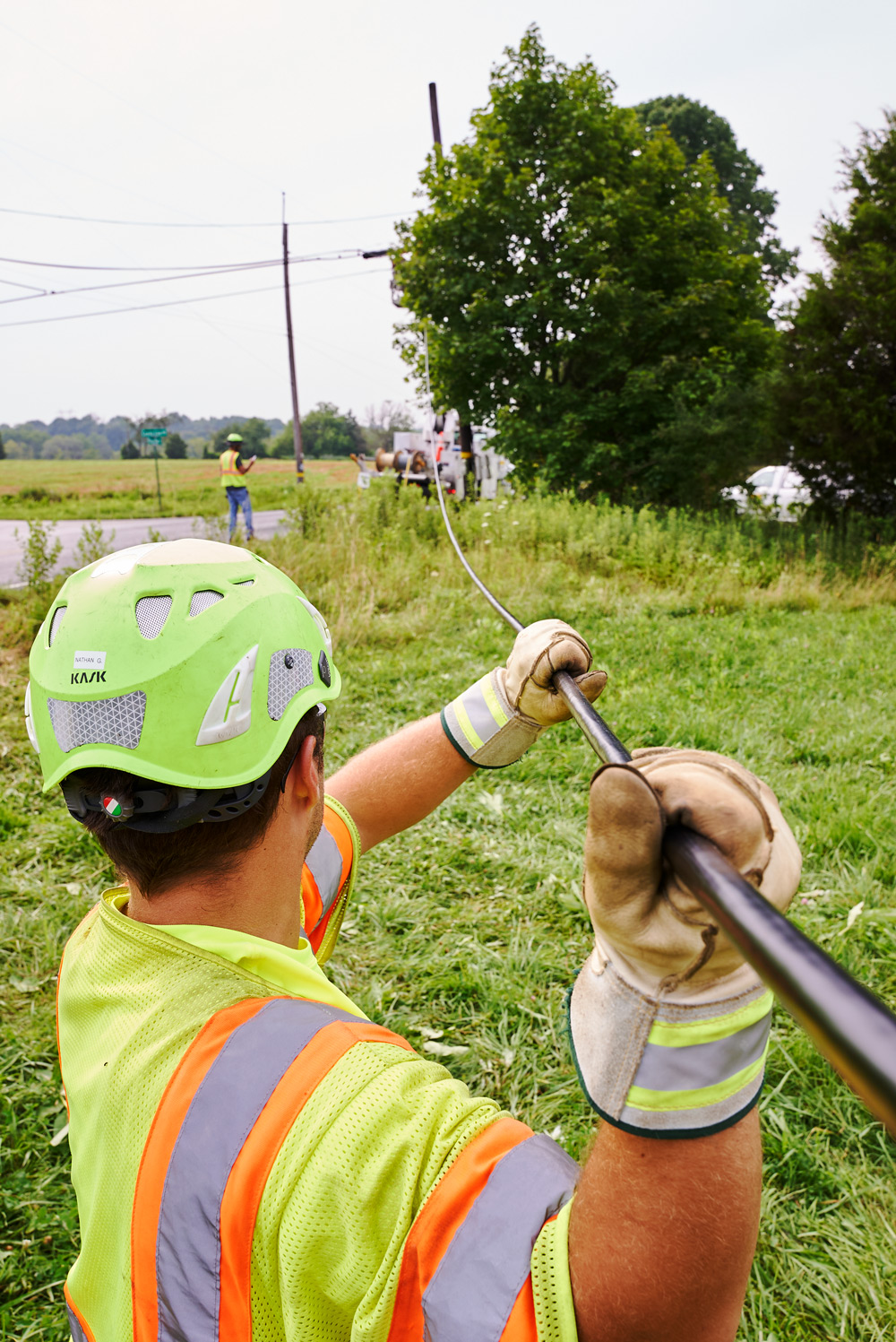
One-Touch Make-Ready (OTMR) offers a solution to the sequential make-ready problem. Under OTMR, a single qualified contractor can perform all necessary rearrangement work in one coordinated visit, rather than waiting for each existing attacher to complete its portion separately.
The FCC adopted OTMR rules in 2018 for "simple make-ready" work in the communications space. Simple make-ready includes routine tasks like moving cables or adjusting attachment heights that do not require specialized skills or create safety concerns.
How OTMR Works in Practice
- Application submission: The broadband provider applies to attach to the pole
- Eligibility determination: The pole owner reviews the request and determines if OTMR applies
- Advance notice: The new attacher provides notice to the pole owner and existing attachers
- Single-crew execution: A qualified contractor performs all rearrangements in one mobilization
- New attachment installation: The fiber or communications equipment is installed
OTMR can compress make-ready timelines by 30 to 60 days on eligible projects. This acceleration is critical for meeting deployment deadlines, especially for projects funded through programs like the Broadband Equity, Access, and Deployment (BEAD) Program.
The 2026 FCC rule updates expanded self-help and OTMR rights for broadband builders. Utilities must now notify attachers within 15 days if they cannot meet survey or make-ready deadlines. This early warning allows attachers to invoke self-help remedies, including using their own qualified contractors to complete the work.
Connecting Pole Attachment Rules to OTMR Success
Understanding how FCC pole attachment rules relate to OTMR is essential for maximizing deployment efficiency. The regulations work together in several important ways.
Contractor Approval Timelines
The 2026 rules require utilities to respond within 30 days to requests from broadband providers seeking approval for new contractors to perform survey, estimate, and make-ready work. Previously, contractor approval could take months, creating a hidden bottleneck before OTMR could even begin.
Large Order Provisions
For large attachment requests (over 300 poles), the FCC created new advance notice and coordination requirements. Attachers must provide 15 days advance notice for mid-size orders (300 to 3,000 poles) and 30 days for very large orders (over 3,000 poles). These provisions help utilities plan resources while maintaining predictable timelines.
Restrictions on Utility Delays
The FCC prohibited utility-imposed limits that effectively cap how many pole attachments an attacher may seek in a given period. This prevents utilities from artificially slowing large-scale deployments by limiting application volume.
BEAD Program Compliance
Cooperatives and municipal utilities participating in the BEAD Program as subgrantees must now comply with FCC pole attachment rules as a condition of accepting funding. This extends federal protections to attachers working with entities that were previously exempt from Section 224 requirements.
Practical Implications for Telecom Infrastructure Projects
For organizations involved in broadband deployment, these regulatory changes create both opportunities and responsibilities.
Planning and Engineering
- Accurate make-ready assessments are more important than ever. With tighter timelines, there is less room for surprises during construction. Comprehensive pole loading analysis and field surveys help identify potential issues before they cause delays.
Contractor Qualifications
- OTMR eligibility depends on using qualified contractors approved by the pole owner. Organizations should maintain relationships with approved contractors and understand the approval process for new contractors in each utility territory.
Documentation and Compliance
- The new rules include specific notification requirements and deadlines. Missing a deadline can forfeit self-help rights or trigger disputes. Robust project management systems help track applications, notices, and responses across large deployments.
Cost Management
- Understanding make-ready cost allocation is critical for accurate budgeting. The FCC has clarified that new attachers cannot be forced to pay for pre-existing safety violations on poles. This ruling, issued in early 2026, protects attachers from bearing costs that should fall on pole owners.
Looking Ahead
The FCC continues to consider additional pole attachment reforms. A Fourth Further Notice of Proposed Rulemaking, released alongside the 2025 order, seeks comment on expanding OTMR to complex work and other streamlining measures.
While no timeline exists for final action, the direction is clear: regulators want to remove barriers to broadband deployment. For telecom infrastructure professionals, staying current on these regulations is not optional. The rules directly impact project timelines, costs, and feasibility. Organizations that understand and leverage the regulatory framework will have a competitive advantage in winning and executing broadband projects.
Navigating FCC pole attachment rules and OTMR requirements takes specialized knowledge and experience. From OSP engineering and make-ready assessments to aerial construction and fiber splicing, having the right partner makes the difference between a project that stays on schedule and one that stalls in regulatory limbo.
Celerity Integrated Services brings decades of experience in telecommunications infrastructure, serving carriers, utilities, and organizations across the full project lifecycle. Whether you need engineering support for pole applications, One-Touch Make-Ready construction services, or ongoing maintenance, Celerity has the expertise to keep your project moving.
Ready to discuss your next broadband deployment? Contact Celerity to learn how our team can help you navigate pole attachment requirements and accelerate your timeline.
—Frequently Asked Questions
What are FCC pole attachment rules?
- FCC pole attachment rules are federal regulations under Section 224 of the Communications Act that govern how telecommunications companies access utility poles. These rules establish timelines for application review, surveys, make-ready work, and pricing. They ensure broadband providers have fair and reasonable access to pole infrastructure for deploying fiber and other communications networks.
What is One-Touch Make-Ready?
- One-Touch Make-Ready (OTMR) is a pole attachment process that allows a single qualified contractor to perform all necessary rearrangement work on a utility pole in one visit. Instead of waiting for each existing attacher to move its equipment separately, OTMR consolidates the work, reducing make-ready timelines by 30 to 60 days on eligible projects.
How long does the pole attachment process take under current FCC rules?
- Under the FCC's 2026 rules, standard pole attachment requests follow a 148-day framework from application to construction authorization. This includes 10 business days for application review, 45 days for surveys, 14 days for estimates, and 30 to 90 days for make-ready work depending on the space involved. Large orders have extended timelines of up to 90 days for surveys and 120 to 180 days for make-ready.
What services does Celerity provide for pole attachment projects?
- Celerity Integrated Services provides comprehensive telecommunications infrastructure services including OSP engineering, make-ready assessments, pole application processing, aerial and underground construction, fiber splicing and testing, and One-Touch Make-Ready construction. The company serves telecommunications carriers, electric utilities, and organizations throughout all project phases from planning through maintenance.
How do the 2026 FCC pole attachment rules affect BEAD-funded projects?
- The 2026 rules extend FCC pole attachment protections to cooperatives and municipal utilities participating in the BEAD Program as subgrantees. This means BEAD-funded projects benefit from federal timeline requirements and self-help remedies, even when working with pole owners that were previously exempt from Section 224 regulations.
What is make-ready work and why does it cause delays?
- Make-ready work includes any modifications needed on a utility pole before a new attachment can be installed, such as moving existing cables, replacing hardware, or replacing poles. Delays occur because traditional processes require each existing attacher to complete its work sequentially. Industry data shows make-ready can take 9 to 16 months, with some projects experiencing delays of up to five years.