December 23, 2025

Data Center Fiber Planning: How to Design for 400G and Beyond

The 400G Tipping Point: Why Your Fiber Planning Strategy Needs to Evolve Now

Data center operators in Ashburn and across the Mid-Atlantic are facing a bandwidth reality check. The migration from 100G to 400G is no longer a future consideration, it is happening in production environments today. What worked for legacy fiber infrastructure simply cannot support the signal integrity, distance requirements, and density demands of next generation networks.

The challenge is not just about faster speeds. It is about rethinking how fiber infrastructure is designed, validated, and maintained from the ground up. In our work with enterprise clients across Pennsylvania and Virginia, we have seen firsthand how improper Data Center Fiber Planning for 400G creates cascading failures that only appear after deployment, when the cost of remediation multiplies exponentially.

This guide walks through the critical elements of data center fiber planning that separate successful 400G deployments from expensive lessons learned. We will focus on three non-negotiable pillars: redundant path architecture, scalable physical infrastructure, and rigorous validation testing protocols.

Understanding 400G Fiber Requirements: The Technical Foundation

Before diving into planning methodology, you need to understand why 400G breaks traditional fiber assumptions. Unlike previous generations that relied on simple wavelength multiplexing, 400G implementations use advanced modulation schemes like PAM4 (Pulse Amplitude Modulation 4-level) that are far more sensitive to signal degradation.

Signal Integrity at Scale

PAM4 encoding doubles the bits per symbol compared to NRZ (Non-Return-to-Zero) used in 100G, but this efficiency comes at a cost. The signal-to-noise ratio requirements become exponentially more stringent. According to the Fiber Optic Association, 400G SR8 applications require eight parallel fibers transmitting at 50Gbps each, with maximum loss budgets as tight as 2.9dB for OM4 fiber over 100 meters.

This means your fiber plant must be pristine. A single contaminated connector or microbend in a trunk cable can push an entire 400G link beyond acceptable error rates. In practical terms, what passed as "good enough" for 100G will likely fail 400G characterization.

Distance and Modal Bandwidth Constraints

The IEEE 802.3cm standard defines 400G SR8 for short reach applications up to 100 meters on OM4 multimode fiber. For longer reaches, 400G DR4 (500m) and FR4 (2km) over single-mode fiber become necessary. This creates a critical planning decision point: do you invest in OM4/OM5 for short runs, or jump directly to single-mode for future flexibility?

Our recommendation for Ashburn data centers is to standardize on OS2 single-mode fiber for all new builds. While the initial cost is higher, it eliminates the distance limitations and provides a clear upgrade path to 800G and 1.6T without recabling. The Corning data center fiber guide confirms this approach, showing that single-mode fiber supports all current and foreseeable 400G/800G standards with minimal loss.

Redundancy Architecture: Designing for Five Nines Availability

Redundancy in 400G networks requires more than duplicate paths. It demands diverse physical routing, optical protection schemes, and intelligent failover mechanisms that operate at the wavelength level.

Physical Path Diversity

The first rule of Data Center Fiber Planning is never run redundant fibers through the same conduit or tray. True redundancy means physically separate paths from the MDA (Main Distribution Area) to each HDA (Horizontal Distribution Area). In Ashburn facilities, this often translates to routing one path under the raised floor and a second path through overhead cable trays.

We implemented this strategy for a financial services client in Northern Virginia where regulatory requirements demanded 99.999% uptime. By maintaining separate paths that never intersected, we isolated a construction incident that severed the underground path but left the overhead route intact, preventing a complete outage.

MESH Versus Spine-Leaf Considerations

While spine-leaf architecture dominates modern data center design, the fiber planning must support both primary and backup connectivity patterns. Each leaf switch needs dual homing to spine switches across diverse fiber paths. This creates a logical mesh over a physical star topology.

For 400G specifically, plan for breakout configurations where a 400G port splits into four 100G links. This provides operational flexibility but requires fiber counts that support both aggregated and discrete modes. Your cable plant should accommodate 16-fiber MPO connections for 400G SR8 while maintaining the ability to break out into duplex LC for 100G DR links.

Optical Protection Switching

Beyond physical diversity, implement optical protection switching at the transceiver level. Modern 400G coherent optics support Y-cable protection where a single transceiver receives signals from two diverse fibers and automatically switches to the backup path when the primary degrades. This happens in milliseconds, far faster than Layer 3 routing protocol convergence.

The ITU-T G.808.1 standard defines linear protection schemes that work exceptionally well for data center interconnects. We have deployed this for clients connecting Ashburn campuses across Route 7, where fiber cuts are a realistic risk. The protection switching occurs without dropping TCP sessions, maintaining application continuity.

Scalability Planning: Future-Proofing for 800G and 1.6T

Scalability in data center fiber planning means installing capacity you cannot use today but will need within three years. It is about balancing capital expenditure against operational agility.

Dark Fiber Strategy

The most cost-effective scalability approach is installing dark fiber during initial construction. Pre-terminating MPO cassettes with 24 or 32 fibers per rack unit, even if only a quarter are lit initially, provides massive expansion capacity. The incremental cost of the fiber itself is minimal compared to the labor of installation.

For a recent hyperscale deployment in Loudoun County, we installed 864-fiber count cables between each data hall, with only 96 fibers initially active. This represents a 9x growth capacity without additional construction. The Corning data center fiber guide validates this approach, recommending 40-60% overbuild for future growth.

High-Density Patching and Cabling

As fiber counts increase, physical management becomes critical. Use modular cassettes that support 1U densities of 96 or 144 fibers. Implement intelligent patching systems that can detect connection changes and update documentation automatically. This eliminates the manual record-keeping that fails at scale.

Standardize on polarity Method B for all MPO connections. This ensures consistent end-to-end connectivity regardless of how many patch panels the signal traverses. Polarity errors are the number one cause of 400G link failures we encounter during turn-ups.

Bandwidth Forecasting Models

Create a simple bandwidth forecasting model based on server refresh cycles. Most data centers replace servers every three to five years. Each new generation typically doubles network bandwidth requirements. If you are deploying 400G today, plan for 800G support when those servers refresh.

Track metrics like average and peak port utilization quarterly. When average utilization consistently exceeds 40% of port capacity, it is time to plan the next speed upgrade. This prevents the performance cliff that occurs when networks become congested.

Next Generation Network Testing: Validation That Prevents Failures

Next Generation Network Testing for 400G is fundamentally different from previous generations. Simple insertion loss and OTDR tests are insufficient. You must validate the entire signal path under load conditions.

Fiber Characterization per G.650.3

The ITU-T G.650.3 standard defines comprehensive fiber characterization tests required for 400G and beyond. This includes:

  • Bidirectional insertion loss and return loss measurements
  • Chromatic dispersion testing
  • Polarization mode dispersion analysis
  • OTDR trace analysis with event dead zone characterization

We perform these tests for every fiber span during installation, not just spot checks. For a recent 400G deployment in Ashburn, we discovered 12 fibers out of 288 that met insertion loss specs but failed chromatic dispersion requirements. Those fibers would have caused intermittent errors under load that basic testing would miss.

Load-Based Validation Testing

After fiber characterization, validate each 400G link under sustained load for 24 hours. Use test equipment that generates full line rate traffic with various packet sizes. Monitor for bit errors, latency spikes, and error correction events.

The key metric is pre-FEC (Forward Error Correction) bit error rate. Post-FEC errors are zero until the link fails completely. Pre-FEC errors indicate the link is operating on the edge of failure. We reject any link with pre-FEC BER worse than 1E-6, even though standards allow up to 2.4E-4. This conservative approach eliminates future failures.

Automated Test Documentation

Manual test documentation does not scale. Use test equipment that generates automated reports with pass/fail criteria and exports data to network management systems. This creates a digital twin of your fiber plant with historical performance data.

For enterprise clients, we provide a certification binder with every test result, fiber map, and as-built drawing. This documentation is essential for troubleshooting and proves compliance during audits. One client used our documentation to secure a $50 million cyber insurance policy, as it demonstrated due diligence in infrastructure validation.

Ashburn-Specific Considerations: Building in the Data Center Capital

Ashburn, Virginia presents unique fiber planning challenges due to its concentration of data centers and existing infrastructure. The region's geology, utility coordination, and permitting requirements demand specialized approaches.

Utility Coordination and Permitting

Loudoun County requires detailed civil engineering plans for any underground fiber installation. Coordinate early with Dominion Energy and Verizon for pole attachments and conduit access. The permitting process typically takes 90 to 120 days, so factor this into project timelines.

We have established relationships with local utilities that accelerate this process. For a recent project along Waxpool Road, our pre-existing joint use agreements cut permitting time in half compared to new entrants.

Geological Factors

Ashburn's soil composition requires specific burial depths and conduit types. The clay-heavy soil retains moisture, increasing the risk of water infiltration. Use HDPE conduit with gel-filled innerducts and maintain minimum 36-inch burial depths for backbone routes.

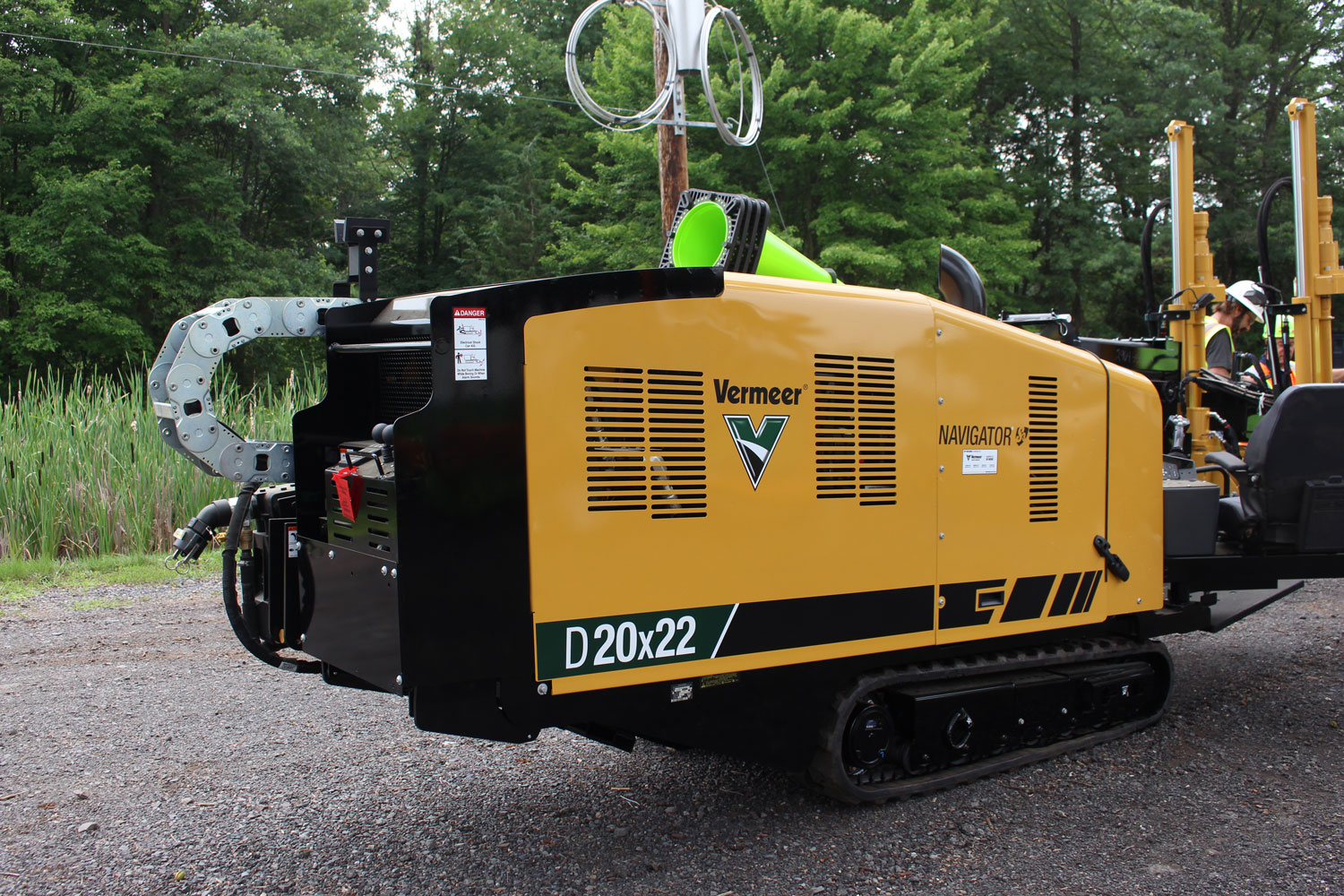
During horizontal directional drilling, conduct potholing every 100 feet to verify existing utilities. The density of underground infrastructure in Ashburn makes utility strikes a significant risk. Our crews use ground-penetrating radar to map unknown utilities before drilling.

Inter-Campus Connectivity

Many Ashburn enterprises operate multiple data halls or campuses across different buildings. Plan for campus-wide fiber rings that provide redundant paths between facilities. Use 288-count or higher fiber cables for these rings, as they become the backbone for all inter-site traffic.

For one client with three campuses along Loudoun County Parkway, we designed a protected fiber ring with sub-2ms failover between any two points. This supports synchronous replication for their mission-critical applications.

Implementation Roadmap: From Planning to Production

Successful 400G fiber planning follows a phased approach that validates each decision before committing capital.

Phase 1: Assessment and Design (Weeks 1-4)

Conduct a comprehensive audit of existing fiber infrastructure. Test every strand for 400G compatibility, not just current utilization. Document all pathways, conduits, and spaces. Create a detailed design that includes capacity forecasts for three, five, and seven years.

Phase 2: Pilot Deployment (Weeks 5-8)

Install and test a single 400G link end-to-end. This reveals real-world issues with connector cleanliness, polarity, and signal integrity. Use this pilot to refine installation procedures and test protocols. We never skip this phase, as it prevents repeating mistakes across the entire data center.

Phase 3: Full-Scale Rollout (Weeks 9-20)

Execute the installation in logical segments, typically by data hall or row. Test and document each segment before moving to the next. This isolates issues and provides incremental capacity that can support production workloads.

Phase 4: Documentation and Handoff (Weeks 21-24)

Create final as-built documentation, test reports, and maintenance procedures. Train operations staff on 400G-specific troubleshooting techniques. Establish baseline performance metrics for ongoing monitoring.

ROI and Business Justification

The business case for proper 400G fiber planning extends beyond simple bandwidth increases. It reduces operational risk, lowers total cost of ownership, and enables revenue-generating services.

Risk Mitigation Value

A single 400G link failure can cost $10,000 per minute in lost revenue for high-frequency trading or e-commerce applications. Proper fiber planning reduces outage probability by over 90%. For one financial client, our redundant fiber design prevented an estimated $2 million loss during a construction cut.

Total Cost of Ownership

While 400G optics cost more per port, they reduce switch and cabling requirements by 75% compared to equivalent 100G solutions. A single 400G port replaces four 100G ports, reducing power, cooling, and rack space. Over a five-year lifecycle, this typically saves 30% on network infrastructure costs.

Service Enablement

400G infrastructure enables new revenue streams like AI training clusters, high-performance computing as a service, and low-latency financial exchange connectivity. These services command premium pricing and differentiate data center offerings. Without proper fiber planning, these opportunities remain out of reach.

Conclusion: The Time to Plan is Now

Data Center Fiber Planning for 400G and beyond is not an incremental upgrade. It requires a fundamental rethinking of how fiber infrastructure is designed, tested, and maintained. The technical requirements are more stringent, the business stakes are higher, and the margin for error is smaller.

Organizations that treat 400G as simply faster optics will face expensive remediation and operational instability. Those that invest in proper planning, redundant architectures, and comprehensive testing will gain a competitive advantage through superior reliability and scalability.

In Ashburn and other data center hubs, the difference between success and failure often comes down to execution details: connector cleanliness, polarity management, and thorough validation. These are not glamorous topics, but they determine whether your 400G network performs as designed or becomes a source of chronic problems.

The fiber you install today will likely remain in place for 15 to 20 years. Make decisions that support not just 400G, but the 800G and 1.6T networks that will follow. The incremental cost of future-proofing is minimal compared to the expense of replacing inadequate infrastructure.

Your Next Generation Network Testing protocol is your insurance policy. It is the difference between assuming your fiber plant is ready for 400G and knowing it with certainty. In our experience, this confidence is what separates leading data centers from those constantly fighting fires.


December 19, 2025

Next Generation Network Testing: How to Prepare for 400G/800G Upgrades

Across enterprise data centers, telecommunications providers, and network infrastructure companies, the demand for greater bandwidth is accelerating faster than ever. Even networks upgraded just a few years ago are now straining under the explosive growth of artificial intelligence workloads, machine learning applications, and cloud-based services. As organizations move from 100G to 400G and soon to 800G, the shift represents far more than a hardware upgrade and actually involves more of a complete evolution in how networks are tested, validated, and maintained.

The global 800G Ethernet market, which reached $2.7 billion in 2024, underscores this transformation. Preparing for next-generation network speeds requires not only the right equipment but also a strategic approach to testing methodologies, performance verification, and long-term scalability. This article explores how organizations can prepare their infrastructure and teams for the next wave of high-capacity network performance.

Why 400G and 800G Testing Demands a Different Approach

Traditional fiber testing methods that worked perfectly for 10G and even 100G networks often fall short when validating 400G and 800G systems. The reason lies in the underlying technology shift. These higher speeds rely on PAM4 (Pulse Amplitude Modulation 4-level) signaling rather than the simpler NRZ (Non-Return-to-Zero) encoding used in legacy systems. PAM4 transmits two bits per symbol instead of one, effectively doubling data rates without requiring proportionally higher bandwidth. However, PAM4 signals are inherently more sensitive to noise, dispersion, and signal degradation.

In our work with clients upgrading their network infrastructure, we consistently see organizations underestimate the testing complexity. A fiber link that passes basic insertion loss testing may still fail catastrophically under actual 400G or 800G traffic loads. The signal-to-noise ratio requirements become exponentially more stringent. According to EXFO's testing guidelines, even minor connector contamination or fiber bending that would barely register on 100G systems can cause unacceptable bit error rates at 400G speeds.

Network downtime in a modern data center can cost enterprises between $5,000 and $9,000 per minute, according to industry analysts. When data centers factor in the reputational damage and potential SLA violations, the true cost of inadequate testing increases. Organizations cannot afford to discover compatibility issues after deployment.

Essential Testing Equipment for Next-Generation Networks

Preparing for 400G and 800G upgrades requires organizations to invest in the right testing tools before initiating the transition. The testing equipment landscape has advanced significantly, and relying on outdated test sets can leave critical network vulnerabilities undetected.

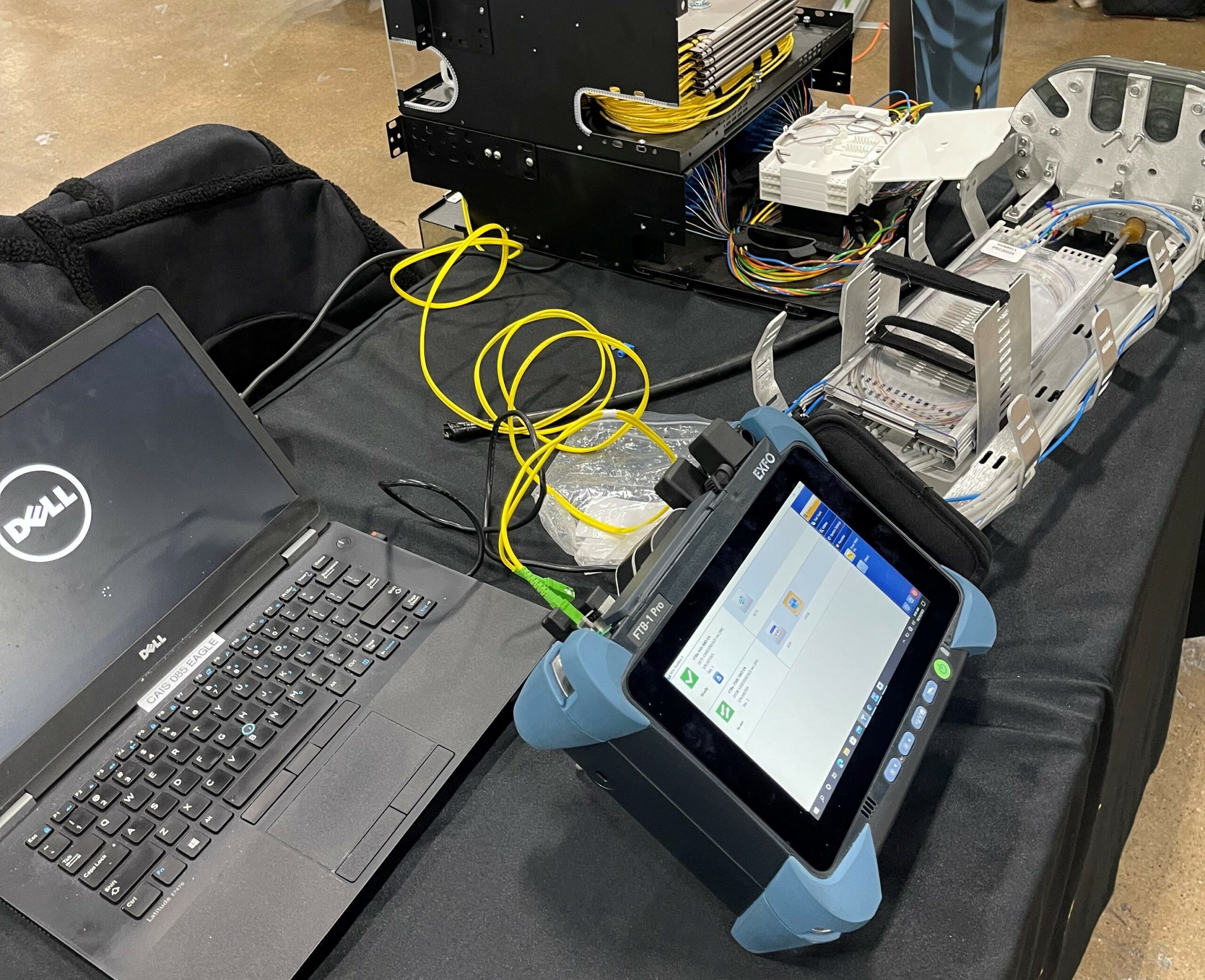
First, organizations need an optical time domain reflectometer (OTDR) capable of characterizing fiber at the wavelengths used by their new transceivers. Modern 400G systems typically operate at 1310nm for shorter reaches and 1550nm for longer distances. The OTDR testing equipment must provide accurate loss measurements, identify splice points, detect micro-bends, and locate any reflective events that could degrade signal quality. The device should offer bidirectional testing capabilities, as issues may appear differently depending on the direction of light propagation.

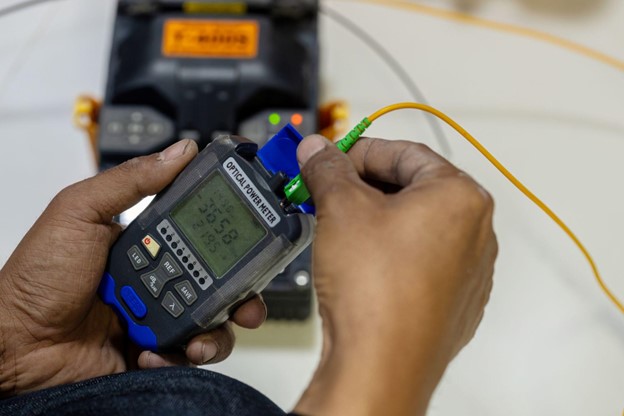
Power meters and light sources form the second critical component. These tools verify that the fiber infrastructure can deliver adequate optical power to the receiving equipment. For 400G and 800G systems, organizations require instruments capable of measuring across multiple wavelengths simultaneously, as these networks often rely on wavelength division multiplexing to achieve higher speeds. Single-wavelength testing is insufficient and can overlook critical issues in CWDM and DWDM deployments.

Fiber inspection microscopes have become non-negotiable for high-speed networks. These devices capture high-resolution images of connector end faces, automatically detecting scratches, contamination, and geometric defects that human inspectors might miss.

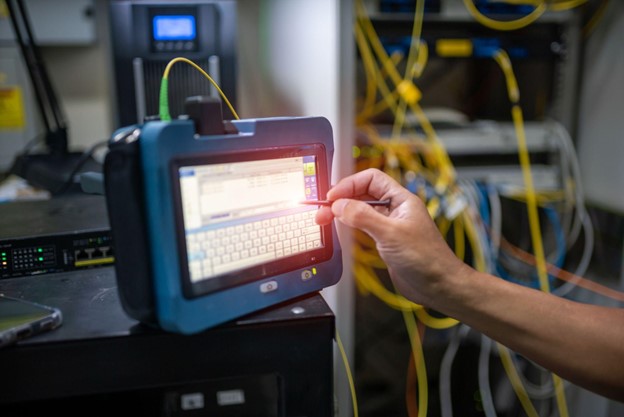
For organizations deploying coherent optics in their 400G and 800G infrastructure, optical spectrum analyzers become essential. These instruments visualize the optical spectrum, allowing technicians to verify channel spacing in DWDM systems, measure optical signal-to-noise ratios, and identify unwanted spectral components that could cause crosstalk. Integrated test platforms can combine multiple functions into portable units suitable for field deployment.

Finally, high-speed Ethernet testers that support native 400G and 800G interfaces validate real network performance under realistic traffic conditions. These instruments generate test patterns, measure throughput, verify forward error correction functionality, and stress-test the infrastructure before production traffic is introduced. It is essential to select testers that support electrical and optical interfaces, as performance must be validated at multiple points within the network architecture.

The Five-Step Testing Methodology for High-Speed Upgrades

Successfully transitioning to 400G and 800G requires a systematic approach that catches problems early when they are still inexpensive to fix. Based on industry best practices and lessons learned, this five-step methodology provides a proven framework.

Step One

  • A comprehensive fiber characterization analysis should be performed before any equipment upgrades occur. Document existing infrastructure thoroughly, running OTDR tests on every fiber strand planned to be used for high-speed services. Measure insertion loss, return loss, and optical length. Many organizations skip this step and later regret it when they cannot determine whether problems stem from new equipment or pre-existing fiber issues.

Step Two

  • Focus on cleaning and inspection. Every connector, every adapter, every patch panel must be inspected and cleaned according to manufacturer specifications. This process prevents the majority of field failures. Automated inspection tools speed this process considerably while maintaining quality standards.

Step Three

  • Introduce compatibility testing in a controlled lab environment before field deployment. Install new 400G or 800G transceivers in a test setup that mimics the production environment. Verify that optics from different vendors can interoperate successfully, as even standards-compliant components sometimes exhibit incompatibilities. Run extended burn-in tests to identify infant mortality failures before they impact the network.

Step Four

  • Rather than upgrading the entire network simultaneously, identify a non-critical segment for initial deployment. Install 400G or 800G equipment, bring it online, and monitor performance metrics obsessively for at least two weeks. Track bit error rates, optical power levels, temperature readings, and any forward error correction statistics. This approach allows the refinement of procedures and catch unexpected issues before they affect mission-critical services.

Step Five

  • High-speed networks require more frequent inspection and testing than their slower predecessors. Implement quarterly fiber inspections, semi-annual OTDR testing, and continuous performance monitoring through the network management system. Create runbooks that document exactly how to respond when specific alarms trigger. Train technical staff on the unique characteristics of PAM4 signaling and the troubleshooting techniques that apply to 400G and 800G systems.

Future-Proofing Your Network Infrastructure

Future-proofing requires making smart choices now that will pay dividends for years to come. Cable plant design represents the most important future-proofing decision. While multimode fiber works adequately for short-reach 400G connections within a single data center, single-mode fiber provides the flexibility to support longer distances and future speed increases. Industry experts recommend deploying OM5 multimode fiber at minimum for new installations, though single-mode fiber offers superior longevity. The incremental cost difference is minimal compared to the expense of re-cabling later.

Connector technology matters more than many organizations realize. Traditional LC duplex connectors served the industry well for decades, but higher-speed networks increasingly rely on MPO/MTP connectors that support multiple fibers in a single interface. A 400G QSFP-DD transceiver using 400GBASE-SR8 requires eight fiber pairs, making MPO connectivity almost mandatory.

Testing equipment should be modular and software-upgradeable whenever possible. The test set purchased today should support firmware updates that add new capabilities as standards evolve. Leading vendors design their platforms with this principle in mind, allowing customers to add 800G testing modules to existing chassis rather than replacing entire systems.

Finally, documentation and data management deserve special attention in the context of future-proofing. Every test result, every fiber characterization, every inspection image should be stored in a centralized database accessible to the entire technical team. Cloud-based platforms enable real-time collaboration, allowing field technicians to share results instantly with network engineers and managers. This data becomes invaluable when planning future upgrades or troubleshooting mysterious performance issues.

The transition to 400G and 800G networks represents both a challenge and an opportunity. Organizations that approach these upgrades methodically, invest in proper fiber optic testing equipment, and follow proven methodologies will position themselves to capitalize on the performance benefits while avoiding costly mistakes. The future of networking is faster, denser, and more complex, but with the right preparation, the infrastructure can meet whatever demands tomorrow brings.

December 15, 2025

Fiber Network Validation: The Key to Post-Installation Reliability

The moment construction crews finish installing the last fiber strand, many network owners breathe a sigh of relief. The hard part is over, right? Not quite. What happens in the hours and days immediately following installation often determines whether a fiber network becomes a reliable asset or an expensive liability. This critical phase is called fiber network validation and skipping it can cost organizations hundreds of thousands of dollars in downtime, repairs, and lost productivity.

According to research from Gartner, network downtime costs businesses an average of $5,600 per minute. That translates to more than $336,000 per hour when networks fail. Yet many organizations still treat post-installation validation as an optional checkbox rather than the essential safeguard it truly represents. The difference between a network that performs flawlessly for decades and one that fails within months often comes down to how thoroughly it was validated after installation.

What Fiber Network Validation Really Means

Fiber network validation is the comprehensive process of testing, verifying, and documenting every aspect of a newly installed fiber optic system before it goes live. Think of it as the final quality inspection before a product ships to customers.

The validation process examines three critical dimensions of network performance. First, it confirms that every fiber strand transmits light signals within acceptable parameters. Second, it verifies that all connections, splices, and terminations meet industry standards for loss and reflectance. Third, it creates detailed documentation that serves as a baseline for future maintenance and troubleshooting.

In our work with telecommunications providers and enterprise clients across the country, we've seen firsthand how proper validation prevents problems that would otherwise surface months or years later. A fiber strand that passes visual inspection might still have microscopic defects that cause signal degradation. A splice that looks perfect to the naked eye could introduce excessive loss that limits network capacity. These hidden issues only reveal themselves through systematic testing with specialized equipment.

The Three Phases of Acceptance Testing

Professional fiber network validation follows a structured approach that leaves nothing to chance. The process begins with visual inspection, advances to technical testing, and concludes with comprehensive documentation. Each phase builds on the previous one to create a complete picture of network health.

Visual inspection starts the moment installation crews finish their work. Experienced technicians walk the entire cable route, examining every accessible section for potential issues. They check that cables follow the planned path without excessive tension or sharp bends that could damage delicate glass fibers. They verify that splice enclosures are properly sealed against moisture and that all equipment rooms meet environmental requirements. This hands-on examination catches obvious problems before they complicate technical testing.

The visual phase pays special attention to connector end faces, where microscopic contamination causes the majority of fiber optic failures. Even particles invisible to the naked eye can block light transmission or create reflections that disrupt network equipment. Professional validation includes cleaning every connector with lint-free materials and inspecting them under high-magnification microscopes. This seemingly minor step prevents countless service calls and performance complaints down the road.

Technical testing forms the heart of the validation process. This phase uses sophisticated instruments to measure how light behaves as it travels through the network. An Optical Time Domain Reflectometer, commonly called an OTDR, sends precise light pulses down each fiber strand and analyzes the reflections that bounce back. This technique reveals the exact location and severity of any defects, from poor splices to fiber breaks to excessive bending.

The OTDR creates a visual trace that shows every event along the fiber path. Skilled technicians interpret these traces to identify problems that need correction. They measure insertion loss at connectors, verify splice quality, check for macro-bends and micro-bends that increase attenuation, and confirm that overall link loss falls within acceptable limits. Testing occurs at multiple wavelengths, typically 1310nm and 1550nm for single-mode fiber, to ensure performance across the spectrum of light the network will use.

Power meter testing complements OTDR analysis by measuring end-to-end loss with a different methodology. A calibrated light source connects to one end of the fiber while a power meter measures signal strength at the opposite end. This straightforward approach validates that the complete link meets performance specifications. When OTDR and power meter results align, it provides strong confidence in network quality.

Documentation completes the validation triangle. Every test result, every measurement, every observation gets recorded in detailed reports that become part of the network's permanent record. These documents prove that the installation meets contractual requirements and industry standards. More importantly, they establish a baseline for future comparison. When problems arise months or years later, technicians can compare new test results against the original validation data to pinpoint exactly what changed.

Industry Standards That Guide Validation

Fiber network validation doesn't happen in a vacuum. Multiple industry organizations have developed detailed standards that specify exactly how testing should occur and what results are acceptable. These standards ensure consistency across projects and provide objective criteria for acceptance decisions.

The Telecommunications Industry Association publishes the TIA-568 series of standards that govern commercial building telecommunications cabling. These documents specify testing procedures, performance requirements, and documentation formats for fiber optic installations. Following TIA standards ensures that networks meet widely recognized benchmarks for quality and reliability.

BICSI, the Building Industry Consulting Service International, provides additional guidance through training programs and best practice documents. The NECA/FOA 301 standard, developed jointly by the National Electrical Contractors Association and the Fiber Optic Association, offers comprehensive requirements for installing and testing fiber optic systems. Network owners who require compliance with these standards gain assurance that their installations follow proven methodologies.

Standards specify acceptable loss budgets based on fiber type, connector style, and network architecture. They define proper testing procedures including launch cable requirements, test wavelengths, and measurement accuracy. They establish documentation requirements that ensure future technicians can understand and maintain the network. Adherence to these standards transforms validation from a subjective judgment into an objective, repeatable process.

Why Documentation Standards Matter More Than You Think

The testing phase gets most of the attention, but documentation often proves equally valuable over a network's lifetime. Comprehensive records serve multiple purposes that extend far beyond initial acceptance. They provide insurance documentation in case of damage claims. They guide troubleshooting when performance issues arise. They enable efficient upgrades and expansions by showing exactly what exists and where.

Effective documentation includes detailed splice sheets that map every fiber connection throughout the network. It contains OTDR traces for every tested fiber, showing the signature of the network in pristine condition. It lists all equipment serial numbers, cable types, and connector styles used in the installation. It includes photographs of critical locations and as-built drawings that reflect any changes from original plans.

In our fiber auditing work, we regularly encounter networks where documentation has become unreliable or disappeared entirely. Repairs weren't recorded, employees moved on without transferring knowledge, or records were never created properly in the first place. Restoring accurate documentation through field audits costs significantly more than creating it correctly during initial validation. Organizations that invest in thorough network documentation during validation save money and frustration throughout the network's operational life.

The Real Cost of Skipping Validation

Some organizations view post-installation validation as an unnecessary expense that delays network activation. This short-term thinking ignores the substantial risks that unvalidated networks carry. Problems that could be identified and corrected during validation often multiply into expensive emergencies once the network goes live.

Consider a splice with slightly excessive loss that goes undetected during installation. Initially, the network functions adequately because it has margin to spare. Over time, as additional connections are made or environmental factors cause minor degradation, that marginal splice becomes a bottleneck. Eventually, it causes intermittent failures that are difficult to diagnose because no baseline documentation exists. Technicians spend hours troubleshooting, users experience frustrating outages, and the organization pays for multiple service calls to resolve an issue that should have been caught during validation.

Unvalidated networks also create liability concerns. If a network fails to meet contractual specifications, but no validation testing occurred, disputes become difficult to resolve. Did the contractor deliver substandard work, or did problems develop after acceptance? Without validation data, answering that question becomes expensive and contentious. Proper validation protects both network owners and installation contractors by establishing clear acceptance criteria and documenting compliance.

How Professional Validation Services Work

Organizations that lack in-house expertise often partner with specialized firms that provide comprehensive validation services. These providers bring experienced technicians, calibrated test equipment, and deep knowledge of industry standards to every project. They serve as independent third parties who verify that installations meet specifications regardless of who performed the construction work.

Professional validation begins with understanding the network's intended use and performance requirements. Different applications demand different testing approaches. A network supporting high-speed data transmission requires more stringent testing than one carrying basic voice traffic. Validation specialists tailor their approach to match the network's criticality and performance targets.

The validation team arrives with a complete toolkit of specialized instruments. Modern OTDR units can test multiple fibers simultaneously and generate automated reports that speed the documentation process. Fiber inspection microscopes with digital cameras capture images of connector end faces for permanent records. Power meters and light sources calibrated to traceable standards ensure measurement accuracy. This professional-grade equipment delivers results that basic tools cannot match.

After completing all testing, validation specialists compile comprehensive reports that present results in clear, understandable formats. These reports highlight any issues that require attention and confirm that all acceptable parameters have been met. They provide the documentation that network owners need for acceptance decisions, warranty claims, and future reference.

Moving Forward With Confidence

Fiber network validation represents the bridge between construction and operation. It transforms a physical installation into a verified asset ready for production use. Organizations that treat validation as an essential investment rather than an optional expense position themselves for long-term success with reliable, well-documented networks.

For network owners evaluating new installations or considering audits of existing infrastructure, professional fiber optic testing and validation services offer peace of mind and tangible value. The relatively modest investment in comprehensive testing and documentation pays dividends through reduced downtime, simplified troubleshooting, and extended network life. In an era where connectivity drives business success, ensuring that fiber networks perform reliably isn't optional—it's essential.

Whether you're planning a new fiber deployment or need to validate existing infrastructure, partnering with experienced professionals who understand both the technical requirements and business implications makes all the difference. Our team at Celerity brings decades of combined experience in fiber optic splicing, testing, and validation to every project. We don't just test networks—we ensure they're built to last.

December 12, 2025

How Preventative Maintenance Reduces Fiber Downtime and Repair Costs

Every hour of fiber network downtime costs the average organization more than $300,00 according to industry analysis. The math is brutal and the consequences are predictable: emergency repairs cost three to five times more than scheduled maintenance, service disruptions erode customer trust, and aging infrastructure degrades faster without consistent care.

For network planners and operations teams managing fiber optic infrastructure, the question is how quickly to invest in ongoing maintenance. The can save millions of dollars in avoided costs, thousands of hours of prevented downtime, and the competitive advantage that comes from running a network your customers can actually rely on.

Understanding Preventative vs. Reactive Maintenance Models

The distinction between preventative and reactive maintenance isn't just philosophical. It's financial, operational, and strategic. Reactive maintenance means you fix things after they break. Preventative maintenance means you identify and address vulnerabilities before they cause outages. The U.S. Department of Energy found that predictive and preventative maintenance approaches reduce costs by 40% compared to reactive strategies.

Consider what happens when a fiber splice case fails unexpectedly. A team scrambles to locate the problem, dispatch technicians during off-hours, expedite replacement parts, and coordinate with affected customers while your network bleeds revenue. Emergency repairs typically cost 30 to 40 percent more than planned maintenance according to industry analysis from NTT Training, and that figure doesn't account for the reputational damage or the customer churn that follows extended outages.

Preventative maintenance flips this equation. Instead of waiting for catastrophic failures, a team conducts scheduled inspections using fiber auditing services to document network conditions, identify degradation patterns, and address minor issues during planned maintenance windows. The work happens on schedule, with preferred vendors, using parts already sourced at competitive prices. More importantly, customers never experience the outage because the problem is caught months before it would have caused a service interruption.

The cost ratio between planned and unplanned work stands at one to five, meaning unplanned emergency work can cost five times more than the same repair performed during a scheduled maintenance cycle. Every dollar invested in preventative maintenance saves overhead costs and those savings compound over time as infrastructure ages more gracefully under consistent care.

Proactive Inspection Protocols That Prevent Failures

The most successful operations teams implement quarterly visual inspections, semi-annual testing of critical fiber routes, and annual comprehensive audits of splice cases and termination points. These inspection cycles create a baseline understanding of network health and establish trend data that helps predict where failures are most likely to occur.

Visual inspections focus on physical infrastructure conditions. Technicians examine aerial cables for sagging lines, damaged lashing wire, vegetation encroachment, and weather-related wear. Underground infrastructure requires inspection of handholes, vaults, and conduit entry points for water intrusion, rodent damage, or shifting ground conditions. These inspections typically identify issues that would cause failures within 90 to 180 days, giving operations teams adequate time to schedule repairs before service impacts occur.

Connector end-face inspection represents another critical preventative measure. Contamination from dust, oils, or improper handling causes signal degradation and eventual failure. The Fiber Optic Association recommends a three-step process: inspect with a microscope, clean using approved methods, and inspect again to verify cleanliness.

Documentation during inspections proves as important as the inspections themselves. Well-documented networks experience better performance and less downtime because operations teams can track degradation patterns, prioritize maintenance activities, and allocate resources to the highest-risk infrastructure segments. Fiber optic testing combined with thorough documentation creates an institutional knowledge base that survives personnel changes and supports long-term network planning.

Systematic Testing Cycles and Maintenance Schedules

The most effective preventative maintenance programs operate on systematic testing cycles calibrated to infrastructure age, environmental conditions, and criticality. Mature networks benefit from quarterly testing of critical routes, semi-annual testing of secondary infrastructure, and annual comprehensive testing of the entire plant.

Testing frequency should increase for infrastructure exposed to harsh environmental conditions. Scheduled maintenance windows allow operations teams to perform testing, cleaning, and minor repairs without service disruption. This shift from reactive to proactive work reduces overall maintenance costs while improving network reliability.

Maintenance schedules should align with business cycles and customer usage patterns. Performing maintenance during low-traffic periods minimizes customer impact even when brief service interruptions prove necessary. Coordinating maintenance activities across multiple infrastructure segments during the same maintenance window maximizes technician efficiency and reduces the frequency of customer notifications.

Quantifying Cost Savings: Preventative vs. Reactive Economics

The financial case for preventative maintenance becomes compelling when considering actual cost data. Consider a typical fiber network serving 10,000 customers. An unexpected fiber break requires emergency dispatch, after-hours labor rates, expedited parts procurement, and extended repair time due to diagnostic challenges. The total cost for this reactive repair might reach $15,000 to $25,000 when labor, materials, and indirect costs are included. The same repair performed during scheduled maintenance with advance planning, standard labor rates, and inventory parts costs $5,000 to $8,000. The difference of $10,000 to $17,000 per incident adds up quickly across a network experiencing dozens of failures annually.

Downtime costs amplify these direct repair expenses. If that fiber break affects 500 customers for four hours, and the average revenue per customer is $100 monthly, the loss is $667 in direct revenue plus whatever service credits or compensation provided to affected customers.

Preventative maintenance programs typically cost 15 to 30 percent of reactive maintenance budgets while delivering superior network reliability. A network spending $500,000 annually on reactive repairs might invest $150,000 to $200,000 in preventative maintenance and reduce total maintenance costs to $300,000 to $350,000 while simultaneously improving uptime from 99.5 percent to 99.9 percent or better. The return on investment becomes obvious within the first year of program implementation.

Building a Preventative Maintenance Program That Works

Successful preventative maintenance programs share common characteristics regardless of network size or complexity. They begin with comprehensive network documentation including as-built drawings, splice records, test results, and equipment inventories. This documentation foundation supports all subsequent maintenance activities by giving technicians the information they need to work efficiently and safely.

The program requires dedicated resources including trained personnel, appropriate test equipment, and adequate budget allocation. Organizations that treat preventative maintenance as discretionary spending that can be deferred during budget constraints inevitably pay more in emergency repairs and lost revenue. The most successful programs establish preventative maintenance as a non-negotiable operational requirement with protected budget allocation.

Systematic scheduling ensures that maintenance activities occur consistently rather than sporadically. Computerized maintenance management systems help operations teams track inspection schedules, document findings, manage work orders, and analyze trends. These systems transform preventative maintenance from an ad-hoc activity into a disciplined operational process that delivers consistent results.

Continuous improvement based on failure analysis completes the program framework. When failures do occur despite preventative efforts, root cause analysis identifies whether the failure resulted from inadequate inspection frequency, missed warning signs, or conditions outside the maintenance program scope. This analysis informs program adjustments that progressively improve effectiveness over time.

The Competitive Advantage of Proactive Network Care

The evidence supporting preventative maintenance is overwhelming and the financial returns are substantial. Networks that implement systematic inspection protocols, leverage advanced diagnostic technologies, and maintain disciplined testing cycles reduce downtime by 20 to 50 percent while cutting maintenance costs by 30 to 40 percent compared to reactive approaches. These improvements translate directly to better customer experiences, lower operational costs, and competitive advantages in increasingly crowded markets.

At Celerity, we've helped network operators across the country implement preventative maintenance programs that deliver measurable results. Our fiber auditing services establish the documentation foundation your program needs, our fiber optic testing capabilities provide the diagnostic data that drives maintenance decisions, and our ongoing maintenance services ensure your infrastructure receives consistent, professional care. When emergencies do occur, our emergency response teams stand ready to restore service quickly and professionally.

The networks that thrive in the coming decades will be those that receive proactive, systematic care today. The choice between preventative and reactive maintenance isn't just an operational decision. It's a strategic choice that determines whether your network becomes a competitive advantage or a constant source of problems. The data is clear, the returns are substantial, and the time to act is now.

December 1, 2025

Fiber Splicing Contractors in Maryland: What to Look for in a Trusted Partner

The Mid-Atlantic region is experiencing unprecedented growth in fiber infrastructure. According to the Fiber Broadband Association, U.S. home fiber deployments set a 13% growth record in 2024 alone, with 76.5 million homes now passed by fiber broadband networks. Maryland sits at the center of this expansion. But here's what most project managers discover too late: not all fiber splicing contractors operate with the same level of transparency or technical precision.

The difference between a contractor who simply completes a job and one who becomes a trusted partner often comes down to three things: process transparency, regional expertise, and a verifiable track record. Let's break down exactly what that looks like in practice.

Why Process Transparency Matters in Fiber Splicing Projects

The phrase “trust but verify” is a fundamental principle of effective project management. When investing hundreds of thousands of dollars in underground fiber construction, companies need more than promises. They need documentation, real-time updates, and contractors who welcome questions rather than dodge them.

Process transparency starts before the first splice is made. A reputable contractor walks through their methodology, explains their quality control checkpoints, and provides detailed project timelines. They offer transparency and show how they'll get there.

In our work with clients across Pennsylvania, Virginia, and Maryland, we've seen the consequences when contractors skip documentation. One municipal client came to us after their previous contractor completed a network build but provided no splice records. When a fiber break occurred six months later, troubleshooting took three times longer than necessary because nobody knew the exact splice locations or baseline performance metrics.

Transparency also means honest conversations about challenges. Underground construction in Maryland presents unique obstacles. Contractors who've worked extensively in the region know these challenges and plan accordingly.

The Technical Standards That Separate Good from Great

Not all fusion splices are created equal. Industry standards exist for a reason and understanding them helps evaluate contractor capabilities. Top-tier fiber splicing contractors in Maryland invest in state-of-the-art equipment and maintain rigorous calibration schedules. Fusion splicers, OTDRs, and power meters require regular calibration to ensure accuracy. When evaluating contractors, ask about their equipment maintenance protocols. How often do they calibrate their test equipment? What brands do they use? Can they provide calibration certificates?

Certifications also matter. Look for contractors whose technicians hold credentials from recognized organizations like the Fiber Optic Association or manufacturers like Corning. These certifications represent hundreds of hours of training and demonstrated competency.

The physical environment where splicing occurs also impacts quality. Purpose-built splice vans with climate control protect sensitive fiber from temperature fluctuations and contamination. Contractors who splice in the back of pickup trucks or uncontrolled environments introduce unnecessary risk. Dust, moisture, and temperature extremes all degrade splice quality.

Quality assurance extends beyond individual splices. Comprehensive testing includes bidirectional OTDR traces, insertion loss measurements, and return loss verification. These tests create a baseline performance record that proves invaluable for future maintenance and troubleshooting. A contractor who rushes through testing or skips documentation is cutting corners that will carry a cost later.

Regional Expertise in the Mid-Atlantic: Why Local Knowledge Counts

Contractors with deep Mid-Atlantic experience understand regional nuances. They know which counties require specific permitting documentation. They've built relationships with utility companies for pole attachment agreements. They understand Maryland Department of Transportation requirements for work in state rights-of-way.

This regional knowledge translates directly to project efficiency. An experienced contractor anticipates permitting timelines, plans for seasonal weather impacts, and knows which local suppliers stock specialized materials.

Consider underground fiber construction across state lines. Coordinating permits, managing different utility companies, and navigating varying construction standards requires contractors who've done it before. The learning curve for contractors new to the region often results in delays and budget overruns.

Local expertise also means understanding the Mid-Atlantic's fiber infrastructure landscape. Major fiber routes run along I-95, I-270, and I-70 corridors. Knowing where existing infrastructure exists helps identify cost-effective connection points and avoid redundant construction.

Red Flags to Watch For When Evaluating Contractors

Some warning signs appear early in the contractor selection process. A contractor who can't provide detailed references from similar projects should raise immediate concerns. Ask for specific project examples in Maryland or neighboring states. Request contact information for previous clients and actually call them.

Vague pricing proposals signal trouble ahead. Legitimate contractors provide itemized estimates that break down labor, materials, equipment, and testing costs. If a bid seems significantly lower than others, there's usually a reason. Low-ball bids often hide change order strategies or substandard work quality.

Communication patterns during the proposal phase predict communication during the project. Does the contractor respond promptly to questions? Do they provide clear, jargon-free explanations? Are they willing to walk through their process in detail? Contractors who are difficult to reach or evasive during sales conversations don't improve once they have a contract.

Insurance and bonding documentation isn't optional. Verify that contractors carry adequate general liability insurance, workers' compensation coverage, and performance bonds appropriate to the project size. Request certificates of insurance and verify them directly with the insurance carrier.

Finally, be wary of contractors who discourage site visits or observation during construction. Transparent contractors welcome client oversight. They're proud of their work and happy to demonstrate their processes. Contractors who want to work behind closed doors usually have something to hide.

What to Expect from a Professional Fiber Splicing Partnership

The best contractor relationships feel like partnerships, not transactions. From initial consultation through project closeout, professional contractors maintain consistent communication and deliver on commitments.

A thorough project kickoff meeting sets expectations for everyone involved. This meeting should cover project timelines, communication protocols, safety procedures, and quality standards.

During construction, expect regular progress updates. Weekly status reports should include completed work, upcoming activities, any challenges encountered, and photos documenting progress. Modern contractors use project management software that provides real-time visibility into project status.

Quality documentation is what separates professional contractors from the rest. Upon project completion, the client should receive comprehensive as-built drawings, splice records with OTDR traces, test results for every fiber, and equipment warranty information. This documentation becomes a critical part of the organization’s permanent network records.

Professional contractors also provide training for maintenance staff, walking teams through the network layout, explaining splice locations, and demonstrating proper testing procedures. This knowledge transfer ensures the client can effectively manage and maintain the network long after the contractor’s work is complete.

Post-project support matters too. Questions inevitably arise after project completion. Responsive contractors remain available to answer questions, provide additional documentation, or troubleshoot issues. Some offer ongoing maintenance agreements that provide peace of mind and ensure optimal network performance.

Making the Decision: Questions to Ask Before Signing

Armed with the right questions, you can quickly separate qualified contractors from pretenders. Start with project-specific experience:

  • "How many fiber splicing projects have you completed in Maryland in the past two years?"
  • "Can you provide references from three similar projects?"

Dig into their technical capabilities:

  • "What fusion splicing equipment do you use, and when was it last calibrated?"
  • "What tests do you perform on every splice, and what documentation do you provide?"

Understand their team structure:

  • "Who will be the project manager, and what's their experience level?"
  • "What portions of the work will you self-perform versus subcontract?"

Clarify communication expectations:

  • "How often will you provide progress updates, and in what format?"
  • "Walk me through how you handle unexpected challenges or delays."

Finally, address the documentation:

  • "What deliverables will I receive upon project completion?" The answer should include as-built drawings, test results, splice records, and warranty information.

Next Step: Partner with Proven Mid-Atlantic Experts

Choosing fiber splicing contractors in Maryland doesn't have to feel like a gamble. When clients prioritize process transparency, verify regional expertise, and ask the right questions, they find partners who deliver quality work and peace of mind.

At Celerity, we've built our reputation on transparent processes, technical excellence, and deep Mid-Atlantic expertise. Our team has completed projects across Maryland, Virginia, and Pennsylvania, from complex urban builds to rural broadband deployments. We document every splice, test every fiber, and stand behind our work with comprehensive warranties and ongoing support.

Our fiber optic splicing services include fusion splicing, ribbon splicing, OPGW and ADSS splicing, comprehensive OTDR testing, and emergency restoration. We maintain purpose-built splice vehicles with climate-controlled environments and state-of-the-art equipment that's regularly calibrated to manufacturer specifications.

For underground projects, our underground construction capabilities cover everything from manhole placement and directional drilling to FTTX construction and emergency restoration. We handle permitting, utility coordination, and all aspects of project management so you can focus on your core business.

Ready to discuss your fiber optic project? Contact our team for a detailed consultation and project bid. Let's build infrastructure that lasts.

November 25, 2025

Permitting and ROW 101: How to Keep Fiber Projects on Schedule

According to the Fiber Broadband Association, overly complex and inconsistent permitting processes across states are now the primary obstacle slowing broadband infrastructure deployment nationwide. In some municipalities, permitting delays average six to nine months, while make-ready engineering bottlenecks in urban corridors can exceed twelve months due to power company backlog. The FCC has identified permitting delays as the number one barrier to fiber deployment, and for good reason—every week of delay translates to lost revenue, frustrated stakeholders, and communities left without critical connectivity.

But here's what most people miss: permitting delays aren't inevitable. The difference between projects that move forward smoothly and those that stall for months often comes down to three interconnected elements: make-ready engineering expertise, strategic pole attachment permitting, and proactive ROW coordination. When these pieces work together, fiber projects stay on schedule even in the most challenging regulatory environments.

Why Fiber Projects Stall (And How to Prevent It)

Delays are expensive. USTelecom data shows that permit application processing times range from eight weeks to six months, depending on jurisdiction complexity. Often times, broadband projects can turn into multi-year endeavors, with costs escalating at every turn.

The Hidden Cost of Permitting Delays

In our work with fiber providers across Pennsylvania, Virginia, and Maryland, we've seen projects lose hundreds of thousands of dollars to preventable permitting delays. The pattern is consistent: teams underestimate the complexity of coordinating between state DOT requirements, municipal ordinances, and utility company procedures. They submit applications without complete make-ready engineering documentation. They miss critical details in pole attachment agreements. And they discover these gaps only after applications are rejected or indefinitely delayed.

Successful fiber deployments in the Mid-Atlantic region share a common thread: they treat permitting and ROW coordination as engineering disciplines, not administrative afterthoughts. They invest in make-ready engineering expertise upfront. They build relationships with utility partners before applications are submitted. And they understand that pole attachment permitting is a strategic process, not a paperwork exercise.

Understanding Make-Ready Engineering in the Permitting Process

Make-ready engineering is where fiber deployment theory meets infrastructure reality. Here's where most projects stumble: they treat make-ready engineering as a checkbox rather than a critical path item. The application goes to the utility company with incomplete information. The utility requests additional surveys. Engineering teams scramble to provide missing data. Weeks turn into months while the project waits for make-ready approval. By the time construction can begin, the original timeline is unrecognizable.

What Makes Make-Ready Engineering Critical

Think of make-ready engineering as the foundation of the entire deployment. A pole that looks perfectly adequate during initial route planning might require reinforcement, replacement, or rearrangement of existing attachments once load calculations are complete. Power companies need to verify clearance requirements. Cable providers need to relocate their equipment. Telephone companies need to coordinate their own make-ready work. Each utility operates on its own timeline, and without proactive coordination, these timelines rarely align.

The FCC's One-Touch Make-Ready (OTMR) rules were designed to streamline this process by allowing new attachers to perform simple make-ready work themselves, with proper notification and oversight. In theory, OTMR can reduce deployment time and costs significantly. In practice, it requires detailed engineering documentation, clear communication with existing attachers, and careful adherence to safety standards. When executed properly, OTMR transforms make-ready from a bottleneck into a competitive advantage.

In the Mid-Atlantic region, make-ready engineering complexity varies significantly by location. Pennsylvania's dense suburban corridors often involve poles with multiple existing attachers, requiring careful coordination and sometimes extensive rearrangement. Virginia's rural areas may have older pole infrastructure that needs replacement before new attachments are possible. Maryland's mix of urban and rural deployments demands flexibility in engineering approach, adapting to local conditions while maintaining consistent quality standards.

Mastering Pole Attachment Permitting

Pole attachment permitting sits at the intersection of engineering, regulation, and relationship management. Every utility pole owner has its own application process, fee structure, and approval timeline. Navigate these processes effectively, and the project moves forward. Mismanage them, and delays appear while applications languish in review queues. The regulatory framework for pole attachments is established by the FCC, which sets maximum rates and establishes timelines for utility responses. But federal regulations provide only the baseline. State public utility commissions often have additional requirements. Individual utilities layer on their own procedures. The result is a complex web of overlapping requirements that varies not just state to state, but utility to utility within the same state.

The Three-Phase Pole Attachment Strategy

Phase one is relationship building. Before the first application reaches a utility’s desk, project leaders should have relationships and be familiar with specific documentation requirements, typical review timelines, and preferred formats for applications and communication. These relationships elevate a project team from being just another applicant to becoming a trusted partner who understands the utility’s processes and respects its operational constraints.

Phase two is application excellence. Every application should be complete, accurate, and professionally presented. This means comprehensive engineering drawings that show existing conditions and proposed attachments. It means load calculations that demonstrate structural adequacy. It means clear documentation of how your attachments will maintain required clearances and safety standards. When utilities receive applications that meet or exceed their standards, approval timelines shrink dramatically.

Phase three is proactive coordination. Once applications are submitted, successful teams follow up regularly, address questions promptly, and coordinate with other attachers who may be affected by the proposed work. They track applications through the utility's internal workflow, identifying and resolving bottlenecks before they cause delays. This level of engagement requires dedicated resources, but the timeline benefits are substantial.

In Pennsylvania, PennDOT oversight adds another layer to pole attachment permitting when poles are located within state highway rights-of-way. Virginia's VDOT has similar requirements. Maryland's newly formed cross-agency broadband coordination group is working to streamline these processes, but navigating multiple agency requirements remains a challenge.

ROW Coordination: Building Partnerships That Work

Right-of-way coordination is where fiber deployment meets community impact. Every foot of fiber you install in public ROW requires permission from the entity that controls that space. These entities have legitimate concerns about public safety, traffic management, infrastructure protection, and community impact. Address these concerns effectively, and ROW permits flow smoothly. Ignore them, and the project grinds to a halt.

The challenge is that ROW requirements vary dramatically across jurisdictions. Some municipalities have streamlined online application systems with clear timelines and transparent processes. Others require in-person meetings, paper applications, and multiple rounds of review. Some charge nominal fees. Others impose substantial costs that significantly impact project economics. Some respond within weeks. Others take months. Understanding these variations and planning accordingly is essential for maintaining project schedules.

Mid-Atlantic Regional Considerations

The Mid-Atlantic region presents unique ROW coordination challenges due to its mix of dense urban areas, sprawling suburbs, and rural communities. Pennsylvania's municipal landscape includes hundreds of individual townships and boroughs, each with its own ordinances and permitting processes. Virginia's counties often have more centralized authority, but state-level coordination with VDOT adds complexity for routes along state highways. Maryland's proximity to Washington, D.C., means some projects must navigate federal property considerations alongside state and local requirements.

Successful ROW coordination in this environment requires a multi-layered approach. At the state level, building relationships with DOT permitting offices ensures smooth processing for routes along state highways. At the county level, understanding zoning requirements and comprehensive plans helps identify potential obstacles early. At the municipal level, engaging with local officials and addressing community concerns proactively builds support for projects and accelerates approvals.

The BEAD (Broadband Equity, Access, and Deployment) funding program has added new urgency to ROW coordination across the region. States are under pressure to deploy broadband infrastructure quickly to meet federal deadlines and serve unserved communities. Projects that engage early, provide complete applications, and maintain proactive communication are best positioned to navigate this environment successfully.

Keeping Your Fiber Project on Schedule: A Practical Framework

Bringing together make-ready engineering, pole attachment permitting, and ROW coordination into a cohesive strategy requires technical expertise and project management discipline. The most successful fiber deployments we've supported follow a framework that integrates these elements from project inception through construction completion.

Start with comprehensive planning that accounts for permitting timelines as critical path items, not administrative afterthoughts. When developing project schedules, build in realistic timeframes for each permitting phase. In the Mid-Atlantic region, this typically means adding three to six months to initial timeline estimates, depending on route complexity and jurisdictional requirements.

Invest in front-end OSP engineering that produces permit-ready documentation from the start. Detailed pole surveys, accurate engineering drawings, complete structural analysis, and thorough ROW impact assessments accelerate every subsequent permitting phase. The cost of comprehensive upfront engineering is almost always less than the cost of delays caused by incomplete applications and multiple revision cycles.

Establish internal processes that ensure application quality and coordination efficiency. This means dedicated permitting coordinators who understand regional requirements, tracking systems that monitor application status across multiple jurisdictions, and communication protocols that ensure timely responses to utility and government inquiries. It also means regular internal reviews that catch errors before applications are submitted, preventing the delays that come from rejected or incomplete submissions.

Finally, embrace flexibility and adaptability. Even with perfect planning and execution, unexpected obstacles will arise. A utility might discover pole conditions that require additional work. A municipality might request design modifications to address community concerns. A state DOT might implement new requirements mid-project. Projects that build contingency into timelines and budgets, maintain open communication with all stakeholders, and adapt quickly to changing conditions are most likely to stay on schedule despite these challenges.

The fiber infrastructure needs of the Mid-Atlantic region are substantial and growing. Communities need reliable connectivity for economic development, education, healthcare, and quality of life. Providers need to deploy networks efficiently to serve these communities while maintaining financial viability. Government agencies need to facilitate deployment while protecting public interests and infrastructure. When make-ready engineering, pole attachment permitting, and ROW coordination work together effectively, everyone benefits—projects stay on schedule, costs remain controlled, and communities get the connectivity they need.

At Celerity, we've built our permitting and ROW services around this integrated approach. Our engineering team understands the technical requirements of make-ready assessments and pole attachment design. Our permitting coordinators have established relationships with utilities and government agencies across Pennsylvania, Virginia, and Maryland. And our project managers ensure that permitting activities stay aligned with construction schedules and project goals. Whether you're deploying fiber in dense urban corridors or rural communities, we have the expertise to keep your project moving forward.

The difference between fiber projects that succeed and those that stall often comes down to how permitting and ROW coordination are approached. Treat them as administrative tasks to be checked off, and you'll likely face delays, cost overruns, and frustration. Treat them as engineering disciplines that require expertise, planning, and proactive management, and you'll find that even complex deployments can stay on schedule. The choice is yours, but the communities waiting for connectivity can't afford to wait while projects languish in permitting limbo.

November 20, 2025

Fiber Feasibility Studies Explained: Cost, Timeline, & Regulatory Factors

Telecommunications companies, municipalities, and private enterprises invest billions in fiber optic infrastructure projects. Yet according to industry data, nearly 40% of these initiatives encounter significant cost overruns or timeline delays that could have been prevented with proper upfront planning. The difference between a successful fiber deployment and a financial setback often comes down to one critical step: a comprehensive fiber optic feasibility study.

Whether a municipality is exploring broadband expansion, a utility company is planning network upgrades, or a private developer is evaluating fiber-to-the-premises opportunities, understanding the true scope of a project before breaking ground is essential. A fiber optic feasibility study serves as a roadmap, revealing hidden costs, regulatory hurdles, and timeline realities that can determine the project’s ultimate return on investment.

What Makes Fiber Feasibility Studies Critical for Project Success

A proper fiber optic feasibility study examines every dimension of a proposed network deployment. It answers the questions that keep executives awake at night: What will this actually cost? How long will it really take? What regulatory obstacles stand in our way? Can the company achieve the ROI its stakeholders expect?

The study process typically encompasses route analysis, infrastructure assessment, regulatory compliance review, cost modeling, and risk evaluation. For projects involving aerial construction, pole attachment application management becomes a critical component, as securing rights to attach to existing utility poles often represents an unpredictable phase of the timeline. Likewise, Railroad and water crossings, in particular, are often the most challenging elements of any build.

According to research from the Phoenix Strategy Group, fiber projects typically target internal rates of return between 10-15%, with payback periods often exceeding 10 years. These extended timelines mean that even small miscalculations in upfront planning can compound into significant financial impacts over the life of the project.

Understanding the True Cost Components of Fiber Deployment

When decision-makers first explore fiber projects, they often focus on the obvious expenses: fiber cable, electronics, and labor. However, experienced network builders know that these visible costs represent only part of the equation. The hidden expenses, particularly those related to infrastructure preparation and regulatory compliance, frequently determine whether a project succeeds or fails financially.

Make-ready assessments often reveal that existing poles require reinforcement, replacement, or adjustment of existing attachments before new fiber can be installed. Industry data shows that make-ready work can cost $25,000 or more for complex pole replacements.

Permitting and right-of-way acquisition represent another significant cost center that feasibility studies must accurately forecast. Municipal permits, railroad crossing agreements, highway occupancy permits, and environmental assessments each carry their own fee structures and timelines. In our work with clients across the Mid-Atlantic region, we've seen permitting costs range from $50,000 for straightforward municipal projects to over $500,000 for complex deployments crossing multiple jurisdictions.

A comprehensive feasibility study also accounts for soft costs that inexperienced planners often underestimate: engineering and design services, project management, legal fees, insurance, bonding requirements, and contingency reserves. These typically add 15-25% to the hard construction costs, yet they're essential for project success.

Timeline Realities: Why Fiber Projects Take Longer Than Expected

If cost overruns represent the most common fiber project challenge, timeline delays run a close second. The Federal Communications Commission established guidelines requiring pole owners to respond to attachment applications within 45 days and complete make-ready work within 60 days for simple requests. Reality, however, tells a different story.

The timeline for a typical fiber deployment breaks down into several distinct phases. Initial feasibility analysis and route planning generally require two to four months, depending on project complexity and data availability. OSP engineering and detailed design add another two to three months. Pole attachment applications and make-ready coordination can consume six to twelve months or longer.

Once permits are secured and OTMR (One Touch Make Ready) work is complete, actual construction timelines depend on project scale and methodology. These timelines assume relatively smooth execution. In practice, weather delays, equipment availability, contractor scheduling, and unforeseen field conditions frequently extend the schedule. A realistic feasibility study builds in contingency time (typically 15-20% of the base timeline) to account for these inevitable disruptions.

Navigating the Regulatory Maze: Permits, Compliance, and Stakeholder Management

Regulatory compliance represents perhaps the most complex dimension of fiber feasibility analysis. Unlike construction costs that can be estimated with reasonable precision, regulatory processes involve multiple stakeholders, each with their own requirements, timelines, and approval criteria.

Permitting and right-of-way services must address federal, state, and local requirements. At the federal level, projects may trigger National Environmental Policy Act reviews, especially when crossing federal lands or utilizing federal funding. State departments of transportation govern highway occupancy permits and road crossing approvals. Municipal governments control access to local rights-of-way and enforce local building codes.

Pole attachment agreements add another layer of regulatory complexity. The National Electric Safety Code establishes clearance requirements and safety standards that govern how communications cables can be attached to utility poles. Pole owners—typically electric utilities or telecommunications companies—maintain their own application processes, engineering standards, and fee structures. Some pole owners process applications efficiently; others create bottlenecks that can paralyze project timelines.

Railroad crossings deserve special attention in feasibility planning. Railroad companies maintain strict control over their rights-of-way and typically require extensive engineering documentation, insurance coverage, and substantial crossing fees.

Environmental compliance requirements vary based on project location and methodology. Wetland crossings may require Army Corps of Engineers permits. Projects in historic districts face additional review. Horizontal directional drilling near waterways triggers environmental assessments. A thorough feasibility study identifies these regulatory triggers early, allowing accurate timeline and cost projections.

In our experience working with FTTx and rural broadband deployments, projects that invest in early stakeholder engagement and proactive communication with regulatory authorities consistently achieve better outcomes than those that treat permitting as a mere administrative checkbox.

Common Pitfalls That Derail Fiber Projects and How to Avoid Them

Even well-intentioned fiber projects encounter obstacles that threaten their success. Understanding these common pitfalls allows decision-makers to structure feasibility studies that identify and mitigate risks before they become crises.

Inaccurate or incomplete infrastructure data ranks as the leading cause of project rework and cost overruns. Many organizations begin planning based on outdated GIS records or incomplete pole surveys, only to discover during construction that field conditions differ dramatically from their assumptions. Each discrepancy requires engineering changes, permit modifications, and construction delays. Investing in comprehensive field surveys and fiber audits during the feasibility phase costs money upfront but saves multiples of that investment by preventing expensive surprises later.

Underestimating make-ready complexity represents another frequent mistake. Decision-makers often assume that existing poles can accommodate new attachments with minimal work. Poles may require replacement due to age or loading capacity. Existing attachments may need relocation to maintain proper clearances. Electric utilities may identify safety concerns requiring remediation. According to the National Cable & Telecommunications Association, make-ready costs can account for 30-50% of total aerial deployment expenses in mature utility corridors.

Inadequate contingency planning leaves projects vulnerable to the inevitable unexpected challenges. Weather events, supply chain disruptions, contractor performance issues, and regulatory changes all represent risks that prudent planners must anticipate. Industry best practices suggest maintaining financial contingencies of 10-15% for well-defined projects and 20-25% for projects with higher uncertainty. Timeline contingencies should follow similar guidelines.

Calculating ROI: Making the Financial Case for Your Fiber Investment

For decision-makers evaluating fiber projects, the ultimate question is whether the investment makes financial sense. A comprehensive feasibility study must translate technical analysis into financial projections that stakeholders can evaluate against their investment criteria.

Revenue modeling begins with understanding the addressable market and realistic penetration rates. Municipal broadband projects typically target 30-40% household penetration in the first three years, growing to 50-60% over five to seven years. Enterprise-focused networks may achieve higher penetration but serve fewer total customers. Average revenue per user varies by market and service offering, ranging from $50 to $150 per month for residential services and significantly higher for business and institutional customers.

Operating expenses include network maintenance, customer service, billing systems, and ongoing regulatory compliance. Industry benchmarks suggest that operating expenses typically consume 30-40% of revenue for mature networks, though new deployments may experience higher ratios during the initial growth phase.

Capital recovery timelines for fiber projects typically extend seven to 15 years, depending on construction costs, revenue ramps, and operating efficiency. The World Broadband Association notes that fiber networks represent long-term infrastructure investments with useful lives exceeding 30 years, making them attractive for patient capital but challenging for investors seeking quick returns.

For many organizations, the financial case for fiber extends beyond direct revenue generation. Economic development benefits, property value appreciation, improved service delivery, and competitive positioning all contribute value that traditional ROI calculations may not fully capture. Municipal leaders evaluating broadband investments should consider these broader community benefits alongside the direct financial returns.

Taking the Next Step: From Feasibility to Successful Deployment

A comprehensive fiber feasibility study transforms uncertainty into actionable intelligence. It replaces guesswork with data-driven projections. It identifies obstacles while they're still manageable rather than after they've become crises. Most importantly, it gives decision-makers the confidence to move forward based on realistic assessments of cost, timeline, and risk.

Whether an organization is exploring a small-scale fiber extension or a large-scale network deployment, the expertise applied during the feasibility phase directly influences the project’s ultimate success. Partnering with experienced professionals who understand not only the technical requirements but also the regulatory landscape, cost drivers, and project management complexities can mean the difference between a transformative infrastructure investment and an expensive lesson in what not to do.

We've guided projects ranging from small municipal networks to large-scale rural broadband deployments, and we understand the questions you need answered before making your investment decision.

Contact our engineering team today to discuss your fiber project and discover how comprehensive feasibility analysis can set your deployment up for success from day one.

November 10, 2025

Mid-Atlantic Emergency Fiber Restoration SLAs: Municipal & K-12 School Playbook

In 2024, Pennsylvania experienced a record number of power outages, with 71 "reportable outage events," the highest number recorded in more than 30 years. These widespread outages disrupted electric service for residents and businesses across the state, including schools. When the municipal fiber network in Portsmouth, Viriginia, experienced outages during and after Hurricane Matthew passed through, city services and K-12 schools were faced with operational challenges until full service was restored.

Such a scenario, unfortunately, is common more often than not and pose a critical dilemma for municipal leaders. Many municipalities and K-12 schools operate on dated emergency fiber restoration SLAs (service level agreements) built for commercial environments. This leaves many networks exposed. When outages strike, dated SLAs cost communities valuable time, and money.

Understanding Mid-Atlantic Emergency Fiber Restoration SLA Requirements

Emergency fiber restoration in the Mid-Atlantic region presents unique challenges that require careful planning and clear service level agreements. By understanding these SLA requirements, municipalities and school districts can ensure rapid response and maintain essential services during storms or other disruptions.

Standard Response Time Expectations

Typical emergency fiber restoration SLAs generally outline several key timeframes to ensure a rapid and effective response. The initial response from the service provider is usually expected within four hours depending on location of the outage being reported, allowing the issue to be acknowledged and a response team to be dispatched promptly. Once on-site, a full assessment of the situation is typically completed within six hours, giving technicians the information they need to implement a solution. 

Temporary restoration measures are often targeted to be completed within eight to twelve hours, providing a functional, if interim, level of service while permanent repairs are planned. Finally, permanent restoration is generally expected within 24 to 48 hours, ensuring that full network functionality is restored as quickly as possible to minimize disruption. These timeframes assume optimal conditions. Weather patterns often delay these goals. Smart contracts add contingencies for storms, ice, and flooding.

Critical Circuit Prioritization Framework

Proper emergency fiber restoration SLAs are critical for municipalities and school districts because these networks support essential public services and daily operations that communities rely on. Municipal systems often handle critical functions such as emergency response coordination, traffic management, public safety communications, water and utility monitoring, and administrative services. For school networks, an extended outage can disrupt instruction, delay important communications, and impact student learning.

Having well-defined SLAs ensures that service providers respond quickly and predictably during outages, reducing downtime and providing clear expectations for response times, on-site assessment, temporary fixes, and full restoration. They allow municipalities and schools to plan contingencies, maintain operational continuity, and demonstrate accountability to the public. In short, proper emergency SLAs are a safeguard for public safety, educational continuity, and community trust. 

Municipal and K-12 school networks need to prioritize their systems. Such prioritization, as outlined here, ensures that critical services stay online first:

  • Priority 1 (0–2-hour response): 911 call centers, emergency ops centers, hospitals, public safety comms
  • Priority 2 (2–4-hour response): municipal government buildings, K-12 school administrative, traffic and water/sewer systems, fire/police substations
  • Priority 3 (4–8-hour response): library and community centers, non-critical municipal facilities, schools, parks and recreation facilities

Geographic Considerations for the Mid-Atlantic Region

The Mid-Atlantic region’s diverse geography presents a range of unique challenges that contractors must understand and plan for when maintaining and restoring fiber networks. Coastal areas are particularly vulnerable to storm surge, flooding, and the corrosive effects of salt-laden air, all of which can accelerate network damage. Mountainous regions face their own difficulties, including ice storms, limited access to remote sites, and a shortage of available crews to respond quickly. Suburban and rural areas often involve long fiber runs with few backup options and extended travel times for contractor teams. 

Service level agreements must take these realities into account by incorporating local staging of equipment, specialized tools for each environment, and backup crews to ensure timely response and restoration.

Building Stronger Emergency Restoration SLAs

But what are the essential elements that should be included in a stronger emergency restoration SLA? Clear, well-defined agreements set expectations for response times, on-site assessments, and restoration, helping to minimize downtime and maintain essential services. 

Contractor Resource Requirements

Contractor resource requirements are a critical factor in ensuring timely and effective emergency fiber restoration. Adequate staffing, specialized equipment, and strategically located crews enable contractors to respond quickly, assess damage accurately, and restore services efficiently, even in challenging geographic or weather conditions. Minimum contractor capabilities that should be considered to ensure local readiness include:

  • 24/7/365 emergency response with live answer
  • Service vehicles and gear within 2 hours
  • Certified municipal fiber technicians
  • Emergency parts inventory
  • Backup contractor partnerships

Communication Protocols and Escalation Procedures

Effective communication protocols and escalation procedures are essential for managing emergency fiber outages. Clear lines of communication and predefined escalation steps ensure that the right teams are notified promptly, decisions are made quickly, and restoration efforts proceed smoothly, minimizing downtime and disruption for critical municipal and school networks. Strong SLAs should require:

  • Initial notification within 15 minutes
  • Regular status updates during outages
  • Executive notification for 4+ hour outages
  • Full incident report within 48 hours

Performance Monitoring and Reporting

Performance monitoring and reporting are key to maintaining accountability and ensuring service reliability during emergency fiber restorations. By tracking response times, restoration progress, and overall SLA compliance, municipalities and K-12 schools can identify areas for improvement, verify contractor performance, and make data-driven decisions to strengthen network resilience. An SLA can be tracked for compliance by using key performance indicators such as:

  • Quarterly reviews
  • Annual capability assessments
  • Continuous improvement sessions

K-12 School District Specific SLA Considerations

K-12 school districts face unique requirements that are often not fully addressed in standard municipal SLAs, making it critical to design service agreements tailored to their specific needs. Emergency restoration work, for example, must be thoroughly documented to meet local government compliance standards. 

When developing a municipal SLA for K-12 schools, several key considerations should not be overlooked. E-rate compliance is essential, as all emergency work must be properly documented to qualify for reimbursement. The academic calendar must also be factored in, with provisions for rapid response during critical periods such as standardized testing or distance learning. 

In addition, multi-site coordination is a major priority, requiring seamless alignment across campuses, transportation systems, and food service networks. By incorporating these elements, an SLA can better reflect the operational realities of K-12 districts while ensuring compliance and minimizing disruption to education.

Implementation Roadmap: Getting Your SLA Right

Creating an effective SLA, whether it is for K-12 schools or municipalities at large, begins with a clear implementation roadmap to ensure all aspects of emergency fiber restoration needs are addressed. The process starts with assessing current SLAs during the first two weeks, auditing existing terms, reviewing past outages, and identifying potential risks. In weeks three and four, development requirements are established, including defining response times, penalties for missed deadlines, and communication protocols. 

The next phase, spanning weeks five through eight, should focus on market engagement and procurement, which involves issuing RFPs, evaluating contractor readiness, and negotiating terms to ensure the best possible service. 

Finally, during weeks nine through twelve, the plan moves into implementation with staff training, and thorough documentation of all protocols to confirm that the SLA functions effectively under real-world conditions.

Measuring SLA Performance: Key Metrics That Matter

Effective management of service-level agreements (SLAs) relies on tracking the right performance indicators to ensure goals are consistently met. Key metrics include response measures, such as average response times, SLA compliance percentages, and adjustments for factors like weather that may impact performance. 

Restoration metrics are also critical, encompassing the mean time to temporary and permanent repair, as well as user downtime. Additionally, communication and quality indicators play a vital role, including satisfaction scores, the accuracy of reports, and documented improvement actions. 

Finally, monitoring these metrics provides a comprehensive view of SLA performance, enabling teams to identify gaps, optimize processes, and maintain high service standards.

The Celerity Advantage: Mid-Atlantic Emergency Restoration Expertise

At Celerity, we understand that Mid-Atlantic municipalities and school districts need more than generic SLA templates. Our emergency restoration services are specifically designed for the unique challenges of the region, backed by years of experience serving public sector clients.

Celerity's Mid-Atlantic Emergency Response Capabilities:

  • 24/7 regional coverage with vehicles in the Mid-Atlantic region
  • Municipal & K-12 expertise including E-rate compliance and public safety compliance
  • Proven track record with 100% SLA compliance three years running, and average 3-hour response
  • Weather-ready operations built for hurricanes, flooding, and ice storms

Our OSP Engineering team designs networks with emergency restoration in mind, while our emergency response specialists ensure rapid recovery when outages occur.

Ready to strengthen your emergency fiber restoration SLA? Contact Celerity today for a SLA assessment and customized emergency response plan. Don't wait for the next emergency to discover gaps in your current agreement.


November 5, 2025

Fiber Characterization (G.650.3) Checklist for 100G/400G Turn-Ups

When deploying high-speed 100G and 400G networks, proper fiber characterization is mission critical. A single missed test can cause service failures, costly delays, and frustrated customers. Following the ITU-T G.650.3 standard ensures your fiber links meet the strict demands of next-generation systems.

Why 100G/400G Networks Require Stricter Fiber Characterization

Legacy 10G systems could handle minor imperfections, but 100G and 400G run on razor-thin margins. And in most cases, the majority of high-speed network failures stem from inadequate fiber characterization during the deployment phase.

400G networks use PAM4 modulation, requiring Optical Signal-to-Noise Ratio (OSNR) levels above 30 dB that are double of what 100G systems need. This leaves little room for error. Even a single bend in the fiber can lower performance below acceptable limits. Proper fiber characterization, however, helps avoid downtime, speeds up troubleshooting, and improves customer satisfaction.

Understanding ITU-T G.650.3 Requirements

G.650.3 is the international standard for testing installed single-mode optical fiber cable links. It sets consistent methods for measurement accuracy across global network deployments. For 100G and 400G networks, following this standard is what enables reliable performance.

The Essential G.650.3 Checklist for 100G/400G Turn-Ups

Phase 1: Pre-Testing Preparation

Before any field measurements begin, preparation is key to ensuring accurate and repeatable results under G.650.3. Phase 1 focuses on verifying equipment readiness, reviewing documentation, and confirming that all safety and technical requirements are in place. Laying this foundation helps prevent errors during testing and sets the stage for a successful 100G/400G turn-up. Things to consider include:

  • Verify test equipment calibration (within 12 months)
  • Confirm support for 1310nm, 1550nm, and 1625nm wavelengths
  • Review link documentation and splice locations
  • Check link budget calculations
  • Confirm safety protocols

Phase 2: Physical Layer Inspection

With preparation complete, the next step is to verify the integrity of the physical layer. Phase 2 focuses on thorough connector inspection using high-magnification tools and international pass/fail standards. By cleaning, rechecking, and replacing any faulty connectors, technicians ensure a clean optical path that eliminates one of the most common causes of test failures and performance issues in 100G/400G networks. A single 2-5 μm dust particle, for example, can block the 9 μm core of single-mode fiber. At 400G, even tiny contamination can push OSNR below limits. Things to consider in this critical phase include:

  • Inspect all connectors with a video microscope (minimum 400x)
  • Apply IEC 61300-3-35 pass/fail rules
  • Clean connectors, then re-inspect
  • Replace damaged connectors

Phase 3: Insertion Loss Testing

Once the physical layer is confirmed clean, attention shifts to measuring signal performance. Phase 3 involves insertion loss testing at multiple wavelengths and in both directions, following G.650.3 best practices. By monitoring temperature, checking bidirectional consistency, and validating Optical Return Loss (ORL) thresholds, technicians ensure the link can support the demanding power and sensitivity requirements of 100G/400G transmission. Things to consider include:

  • Test insertion loss at 1310nm, 1550nm, and 1625nm in both directions
  • Record temperature during testing (fiber loss varies with temperature)
  • Investigate if bidirectional difference >0.3 dB
  • Test Optical Return Loss (ORL) using G.650.3 guidelines
  • Confirm ORL values meet requirements (typically >28 dB for 100G/400G)

Phase 4: OTDR Characterization

After insertion loss testing verifies overall performance, Phase 4 provides a deeper look into the fiber link itself. Using OTDR characterization at multiple wavelengths, technicians can pinpoint splice quality, reflective events, and potential stress points that may impact long-term reliability. By documenting results and generating event maps, this step ensures a detailed baseline for both immediate validation and future maintenance of 100G/400G links. Things to consider include:

  • Run bidirectional OTDR testing at all key wavelengths
  • Use launch and receive cables (minimum 500m for long-haul links)
  • Locate and measure all splice losses (should be <0.1 dB for fusion splices)
  • Document reflective events and stress points
  • Generate event maps for future maintenance reference

Phase 5: Dispersion Testing (Critical for 100G/400G)

Phase 5 of G.650.3 validation focuses on dispersion, a critical factor for high-speed transmission. Phase 5 testing measures both chromatic dispersion (CD) and polarization mode dispersion (PMD) to confirm the fiber can support 100G and 400G data rates. By validating tolerances across the C-band and ensuring mean DGD values remain within strict limits, technicians safeguard against signal distortion that can degrade performance over long distances.

  • For Chromatic Dispersion (CD): Test across C-band at 1nm steps
    • 100G tolerance: ±50,000 ps/nm
    • 400G tolerance: ±20,000 ps/nm
  • For Polarization Mode Dispersion (PMD): Ensure mean Differential Group Delay (DGD) values meet requirements:
    • 100G: <10 ps mean DGD
    • 400G: <2.5 ps mean DGD
    • Take multiple samples to account for variation

Phase 6: Advanced Characterization for 400G

As networks scale to 400G, advanced fiber characterization becomes essential to validate performance under real-world conditions. Phase 6 adds deeper testing for spectral attenuation to ensure the link can handle higher-order modulation formats. By checking for water peak absorption around 1383nm and confirming OSNR margins well above vendor thresholds, technicians provide the confidence needed for error-free transmission at ultra-high speeds. Things to consider include:

  • Spectral Attenuation: Check for water peak absorption near 1383nm

Phase 7: Documentation and Reporting

Phase 7 ensures that all testing results translate into lasting value for network operations. This focuses on documentation and reporting, turning raw measurements into actionable records. By compiling pass/fail reports, archiving test data, updating network management systems, and training operations staff, this phase provides both accountability and a solid foundation for ongoing reliability of 100G/400G networks. Things to consider include:

  • Create a full test report with pass/fail status
  • Store all raw test data for future troubleshooting
  • Update network documentation systems
  • Provide training for operations teams

Common Pitfalls to Avoid in High-Speed Network Testing

When testing high-speed networks, certain pitfalls can compromise measurement accuracy if not carefully managed. Temperature fluctuations, for example, can shift dispersion by approximately 0.02 ps/nm/km per degree Celsius, making it essential to document environmental conditions during testing. Similarly, poor launch conditions including incorrect mode conditioning, insufficient cable length, or substandard connector quality can skew results and mask underlying issues. 

Polarization Mode Dispersion (PMD) is highly sensitive to environmental factors, so multiple samples are necessary to capture true network performance. Ignoring bidirectional differences can be misleading, as these often indicate connector defects, splice problems, or localized fiber stress that must be addressed to ensure reliable 100G/400G operation.

Professional Fiber Characterization ROI

Investing in professional G.650.3 fiber characterization delivers clear, measurable ROI for high-speed networks. By identifying potential issues early, it helps prevent up to 85% of fiber-related outages, significantly reducing downtime. Detailed baseline data accelerates troubleshooting and fault isolation, while maintaining proper fiber performance reduces stress on transceivers and extends equipment life. Comprehensive documentation supports SLA compliance and provides verifiable proof of network performance. Finally, thorough testing ensures the network is future-proofed, ready to accommodate upgrades and increased capacity without unexpected setbacks.

Successful 100G and 400G deployments depend on following the G.650.3 standard. Skipping steps or rushing testing puts your entire investment at risk. The investment in proper fiber characterization builds a reliable foundation for today’s bandwidth needs, and tomorrow’s move toward 800G networks and beyond.

Don't let inadequate testing compromise your high-speed network investment. By following this checklist, you ensure your network delivers the performance and reliability modern applications demand.

When to Use Professional Services

Certain network deployments demand specialized expertise beyond standard field testing. Specialized service providers bring advanced tools, proven methods, and decades of experience in high-speed fiber testing. Professional fiber characterization services are particularly valuable for submarine or ultra-long-haul links exceeding 1,000 km, as well as for dense wavelength division multiplexing (DWDM) systems where precision is critical. They are also recommended for networks with ultra-low latency requirements or mission-critical links governed by strict SLAs, ensuring both performance and reliability under the most demanding conditions. Especially consider when the following are in play:

  • Submarine or ultra-long-haul links (>1,000km)
  • Dense wavelength division multiplexing (DWDM) systems
  • Networks with ultra-low latency requirements
  • Mission-critical links with strict SLAs

Celerity: Trusted Partner in the Mid-Atlantic For Fiber Characterization

At Celerity, based in Quakertown, PA, we specialize in fiber characterization across the Mid-Atlantic region. With proven expertise, local knowledge, and a strong safety culture, we help utilities reduce downtime, improve grid reliability, and prepare for the future of smart energy. Want your 100G/400G network to succeed from day one? Celerity’s certified experts deliver G.650.3 fiber testing with proven accuracy and reliability. Contact us today for a consultation.


October 29, 2025

OPGW Splicing for Utilities: Safety & QA Buyer Checklist 

For utilities in the Mid-Atlantic, reliable communication is just as important as reliable power delivery. OPGW (Optical Ground Wire) splicing services play a key role in making that possible. The OPGW combines two functions: it protects the power grid as a ground wire while carrying optical fibers that transmit data for grid monitoring, SCADA systems, and smart grid applications. 

When OPGW is installed and repaired, splicing is one of the most critical steps. This process of connecting fiber ends inside the cable has to be performed correctly. A poor splice can cause signal loss, outages, or even grid instability. That’s why choosing the right contractor is one that  has proven safety protocols, and has current knowledge of the Mid-Atlantic fiber infrastructure.

This buyer's checklist gives utility procurement teams a structured way to evaluate OPGW splicing contractors, ensuring safe, compliant, and cost-effective OPGW splicing services.

Understanding OPGW Splicing in Utility Operations

OPGW is designed for high-voltage transmission lines. It contains metal strands (for grounding and strength) and fiber optic cables (for communication). Splicing requires opening this cable and joining fibers without damaging the electrical grounding system or reducing line performance.

In the Mid-Atlantic region, which is home to utilities like PECO, BGE, Dominion Energy, and PPL, splicing is especially important for: 

  • SCADA systems that monitor grid conditions in real time
  • Protective relaying that isolates faults to prevent blackouts
  • Smart grid functions like distributed energy resource (DER) management

Since the work takes place on high-voltage transmission lines, splicing requires specialized tools, insulated equipment, and strict safety steps. Contractors must also understand protocols of how OPGW should be tested and verified.

IEEE 1138-2021: The Foundation of OPGW Performance Standards

The IEEE 1138-2021 standard is the foundation for OPGW performance and quality. It covers how OPGW should be tested especially for mechanical and optical reliability. Any contractor offering OPGW splicing in the Mid-Atlantic should show documentation that they meet these requirements. Key requirements include:

Mechanical Testing

Mechanical testing verifies that OPGW can withstand the physical stresses of installation and long-term field conditions. These tests ensure the cable maintains structural integrity under load, resists fatigue from vibration, and performs safely during handling and deployment. Things to keep in mind include: 

  • Tensile strength (minimum 40% of rated breaking strength) and bending resistance
  • Fatigue testing under vibration
  • Safe load limits during installation

Optical Testing

Optical testing confirms that OPGW meets performance standards for signal transmission and reliability. These evaluations measure fiber attenuation, splice quality, and return loss to ensure minimal signal degradation, while also verifying durability under environmental stresses in compliance with IEEE 1138-2021. Things to keep in mind include:

  • Fiber attenuation limits (≤0.4 dB/km at 1310 nm, ≤0.3 dB/km at 1550 nm)
  • Splice loss limits (≤0.1 dB average)
  • Return loss requirements and environmental durability

Critical Safety Protocols for OPGW Splicing

Since splicing occurs on or near live, not dark, cable lines, safety is paramount. Leading contractors use detailed Job Safety Analysis (JSA) documents to map out their work before it begins. This checklist covers weather, site hazards, PPE (Personal Protective Equipment), and emergency planning. Without these safeguards, even the best technical work can put crews and the grid at risk.

Required Safety Equipment Standards

Strict safety standards govern OPGW splicing and installation, requiring crews to be fully equipped with appropriate protective gear and specialized tools. Personal protective equipment (PPE) must include 20kV-rated gloves, arc-rated clothing, electrical hazard (EH) boots, and fall protection systems to ensure worker safety in high-voltage environments. In addition, proper grounding equipment is essential, such as 5/8-inch by 4-foot ground rods, 2/0 grounding cables (67mm²), stirrup clamps, and grip-all clamp sticks ranging from five to eight feet in length. Crews must also use specialized tools to maintain optical integrity and reliability, including fusion splicers, OTDR testers, and weatherproof splice enclosures.

Pre-Work Safety Steps

Before any OPGW work begins, crews must follow strict safety protocols to minimize risk and ensure compliance with established standards. Weather conditions should be closely monitored, and no work should proceed if lightning is detected within a five- to ten-mile radius. All personal protective equipment (PPE) and testing devices must be thoroughly inspected to confirm they are in proper working condition. Site-specific hazards should be reviewed with the team, and rescue procedures along with emergency response plans must be verified to ensure everyone is prepared should an incident occur.

Grounding and Bonding Procedures

Proper grounding and bonding are critical to maintaining worker safety and system reliability during OPGW splicing operations. The OPGW cable must be grounded above all splice points to ensure safe energy dissipation. Personal protective equipment and vehicles should be bonded and positioned at least six feet from the active work area to minimize electrical risk. Crews must use approved ground rods, clamps, and cables to establish secure connections, while also taking steps to reduce step and touch potentials around the work zone to prevent accidental shock hazards.

Mid-Atlantic Regional Considerations

OPGW splicing in the Mid-Atlantic requires careful planning due to the region’s diverse environmental factors, strict regulations, and complex urban infrastructure. From coastal salt air and frequent storms to compliance with multiple state utility commissions and NERC CIP standards, contractors must navigate a range of factors that can impact both safety and reliability. 

In densely built areas, additional urban infrastructure challenges such as electromagnetic interference and restricted transmission access further complicate projects. Contractors with local expertise are best positioned to anticipate these challenges, minimize risks, and keep projects on schedule.

Comprehensive Buyer's Checklist for OPGW Splicing Contractors

When evaluating OPGW splicing contractors, procurement teams should look beyond cost alone and assess a full range of qualifications. A reliable partner must demonstrate compliance with industry standards, provide proof of technical expertise, follow rigorous safety practices, and have experience managing the unique environmental and regulatory challenges of the Mid-Atlantic region. 

This checklist ensures decision-makers can identify contractors who not only deliver quality work but also reduce risk, avoid delays, and protect long-term system reliability.

Technical Qualifications and Certifications

The key technical qualifications and certifications required for personnel and contractors are essential. Ensuring that team members hold the appropriate credentials is critical not only for compliance with industry standards and safety regulations but also for guaranteeing the quality, reliability, and longevity of the work performed. 

Proper qualifications help mitigate risks, prevent costly errors, and instill confidence that projects are executed by trained and competent professionals. They should have:

  • OSHA training
  • Fiber Optic Association (FOA) certified technicians
  • Utility-specific safety certifications
  • Fusion splicing expertise with <0.1 dB average loss

Safety Program Evaluation

Safety program evaluation is a critical component of contractor and personnel assessment. Key elements include a written safety management plan, documented JSA procedures, current PPE certifications, and a proven record of low incident rates. Together, these components demonstrate a commitment to workplace safety, regulatory compliance, and risk mitigation, ensuring that all work is conducted in a safe and controlled environment

Project Management and Quality Assurance

Project management and quality assurance are essential to ensure that work is executed efficiently, accurately, and reliably. Key components include detailed work planning and outage coordination, robust quality control processes with comprehensive test reporting, and long-term monitoring with warranty support. Together, these practices help maintain high standards, minimize disruptions, and provide confidence that projects are completed on time and to specification.

Regional Experience and References

Regional experience and references are critical for ensuring successful project execution in the Mid-Atlantic region. Key factors include a history of past projects with local utilities, a thorough understanding of regional environmental and regulatory challenges, and established relationships with local suppliers and subcontractors. Together, these elements demonstrate proven expertise, local knowledge, and the ability to navigate complex regional requirements efficiently and effectively.

Financial Stability and Insurance

Financial stability and insurance are essential indicators of a contractor’s ability to successfully manage and complete large projects. Key elements include strong bonding and comprehensive insurance coverage, a proven track record of financial stability, and transparent payment terms with effective cost management. These factors provide assurance that projects will be executed reliably, risks are mitigated, and financial obligations are met without disruption.

KPIs for OPGW to Track Against

Key performance indicators (KPIs) are essential for tracking OPGW splicing contractor performance and ensuring project success. Important metrics include technical measures such as average split loss below 0.05 dB, and a success rate above 95%. Safety standards should be upheld with zero incidents, full compliance with safety protocols, and current certifications for all staff. Efficiency metrics, including minimal outage durations, rapid restoration times, and reliable scheduling, further ensure that projects are completed safely, on time, and to the highest quality standards.

Cost Considerations and Value Engineering

While price is an important consideration, the lowest bid may cost more in the long run if quality or safety is compromised. Utilities should evaluate direct costs, including labor, equipment, enclosures, testing, and reporting, alongside indirect costs such as outage duration, compliance penalties, and future maintenance requirements. 

Value engineering strategies, such as bulk splicing projects, standardized enclosures, preventive maintenance, and the integration of new technologies, can optimize cost efficiency and long-term project performance.

Emerging Technologies and Future Considerations

As the power grid continues to modernize, OPGW splicing is becoming increasingly critical. Utilities face growing demands for faster, safer, and more reliable fiber connections, driving the adoption of advanced splicing technologies. 

Automated fusion splicing ensures consistent connections while reducing labor costs, ribbon splicing allows multiple fibers to be joined simultaneously for large projects, and field-installable connectors minimize the need for full splices in certain setups. Remote monitoring further enhances reliability by tracking splice performance in real time and identifying potential issues early.

These technological advancements coincide with broader grid modernization trends, including the integration of 5G for utility communications, management of distributed energy resources that require higher bandwidth, implementation of robust cybersecurity protections for fiber-based systems, and increased focus on climate resilience to withstand severe weather events and support rapid recovery. Contractors who adopt these new splicing methods and monitoring tools play a key role in helping utilities stay ahead of these evolving challenges

Celerity: Trusted OPGW Splicing in the Mid-Atlantic

At Celerity, based in Quakertown, PA, we specialize in OPGW splicing across the Mid-Atlantic region. Our team is fully certified and compliant with JSA procedures, and maintains an exemplary safety record.

Our Well Crafted installation services include environmentally controlled splicing labs on 4x4 bucket trucks, ensuring precision fiber work in any weather. We have successfully partnered with PECO, BGE, Dominion Energy, and PPL, delivering splice loss averages under 0.05 dB.

With proven expertise, local knowledge, and a strong safety culture, we help utilities reduce downtime, improve grid reliability, and prepare for the future of smart energy.


Contact Us

Name

1 2 32
footer-logo

Subscribe to our newsletter to stay Well Connected with Celerity Integrated Services, Inc.

Contact Us

3500 AM Drive,
Quakertown, PA 18951

P 215 538 1600
F 215 538 1602

info@nextmiletech.com

proview

© 2025 Celerity Integrated Services. Privacy Policy. Site by Smith & Howell Design Co.

Back to top Arrow