August 19, 2026

Smart City Fiber Network: Choosing the Right Infrastructure Partner

Imagine a city where traffic lights adjust in real time to reduce congestion, where water leaks get detected before they flood streets, and where emergency responders receive instant alerts the moment a crisis unfolds.

This is not science fiction. It is the promise of smart cities, and it all runs on one critical piece of infrastructure most people never see: fiber optic networks.

City planners, utility managers, and telecom providers are learning a hard lesson, though. The technology is only as good as the team that builds it. Choosing the wrong infrastructure partner does not just delay projects. It can derail them entirely.

We explain what smart city fiber networks actually are, why they matter, and how organizations can find a partner capable of delivering one that works for decades.

What Is a Smart City Fiber Network?

A smart city fiber network is the digital backbone that connects every sensor, camera, traffic signal, and data center across an urban area. Think of it as the nervous system of a modern city transmitting massive amounts of data at the speed of light.

Unlike traditional copper networks, fiber optic cables use pulses of light to carry information. This means:

  • Faster speeds: Fiber delivers gigabit connectivity, supporting everything from HD surveillance to real-time traffic management.
  • Lower latency: Data travels almost instantaneously, which is critical for applications like autonomous vehicles and emergency response systems.
  • Greater reliability: Fiber is immune to electromagnetic interference and can withstand harsh weather conditions.
  • Future-proof capacity: A single fiber strand can be upgraded to handle 400 Gbps or more without replacing the physical cable.

According to the Fiber Broadband Association, 76.5 million U.S. homes (56.5% of all households) were serviceable by fiber as of late 2024, representing a 13% year-over-year increase. That growth is accelerating as municipalities recognize fiber's role in powering smart city applications.

Why Fiber Is the Backbone of Every Smart City

Smart cities are not just about flashy technology. They are about solving real problems that affect people every day: reducing traffic deaths, cutting energy waste, improving public safety, and closing the digital divide. Smart city systems attack these problems directly. Sensors and connected infrastructure give traffic engineers the data to redesign dangerous corridors. Smart meters and automated grid controls help utilities spot waste and respond to outages faster. Connected emergency networks route responders to the scene with greater speed and accuracy. Expanded fiber access brings high-speed connectivity to communities that the market has long overlooked. 

The global smart cities market is projected to reach $4.06 trillion by 2031, growing at a 15.65% compound annual rate. Behind every one of those smart city applications is a fiber network that must be designed, permitted, constructed, and maintained with precision. However, there is a catch: Building that network is far more complex than laying cable in the ground.

The Hidden Risks of Choosing the Wrong Infrastructure Partner

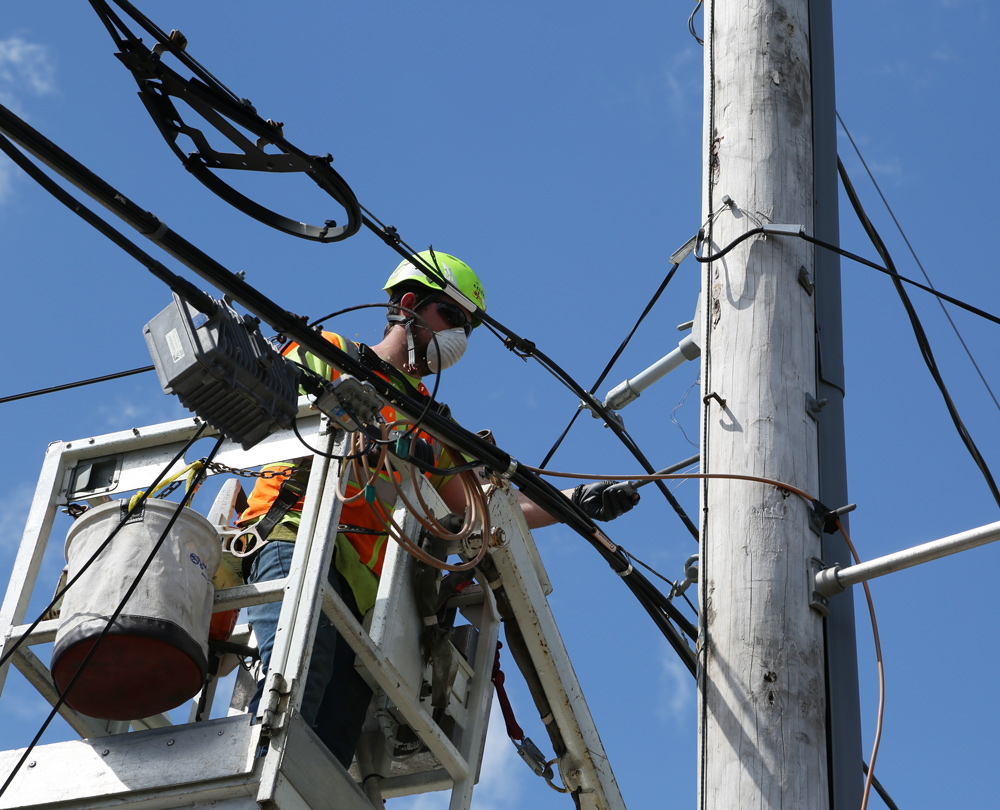
Fiber construction is not a commodity service. It requires specialized engineering, regulatory expertise, and field crews trained in everything from aerial construction to underground directional drilling.

When municipalities or telecom providers choose the wrong partner, the consequences are severe:

  1. Project Delays
    Permitting alone can stall projects for months. Partners unfamiliar with local utility pole owners, right-of-way requirements, or railroad crossings often underestimate timelines leaving cities waiting while costs escalate.
  2. Budget Overruns
    Make-ready assessments, pole attachment licenses, and unexpected field conditions can blow budgets wide open. Inexperienced contractors frequently miss these costs in initial proposals.
  3. Poor Documentation
    A fiber network is only as useful as its records. Without accurate as-built documentation, future maintenance becomes a guessing game and emergency repairs take longer than they should.
  4. Stranded Assets
    Cities have invested millions in fiber infrastructure that sits underutilized because the network was not designed for scalability or properly integrated with existing systems.
  5. Long-Term Reliability Issues
    Sloppy splicing, inadequate testing, or shortcuts during construction lead to network failures years down the road exactly when smart city applications are most critical.

Celerity works with municipal clients and regional fiber providers, to rescue projects after other contractors walked away mid-build. The common thread? A lack of upfront planning and a partner who disappeared once construction wrapped up.

What to Look for in a Fiber Infrastructure Partner

Not all fiber contractors are created equal. Here is what separates a true infrastructure partner from a vendor who is just chasing the next job:

  • End-to-End Capabilities- The best partners handle every phase: feasibility studies, OSP engineering, permitting, aerial and underground construction, splicing, testing, and ongoing maintenance. Fragmented responsibility creates gaps where problems hide.
  • Deep Regulatory Expertise- Each jurisdiction has unique requirements. Pole attachment applications, railroad crossings, PennDOT permits, municipal right-of-way agreements. Partners with established relationships navigate these faster and with fewer surprises.
  • Meticulous Documentation- Quality construction means nothing without records that future teams can use. Look for partners who deliver complete as-built packages, splice diagrams, and network documentation in both digital and hard copy formats.
  • Long-Term Commitment- Smart city networks are not one-time projects. They require ongoing inspections, emergency restoration services, and preventative maintenance. Choose a partner who will be there five, ten, or twenty years from now.
  • Safety-First Culture- Fiber construction involves working at heights, in confined spaces, and near live utilities. Partners with rigorous safety programs protect their crews—and your project timeline.

How Celerity Delivers Smart City Fiber Networks That Last

At Celerity we have spent more than 20 years building fiber optic and wireless infrastructure for telecommunications companies, utilities, universities, and municipalities across the country. Our philosophy is simple: Well Planned. Well Crafted. Well Done.

That means we do not just show up with trucks and cable. We start with feasibility studies that forecast costs, timelines, and risks before a single permit is filed. Our OSP engineering team handles strand mapping, make-ready assessments, and pole attachment applications with the precision that comes from decades of experience.

When construction begins, our crews execute aerial and underground builds with craftsmanship that meets the most stringent specifications. Every splice is tested. Every cable is documented. Every closeout package is delivered so your team can manage the network with confidence.

And when the project is complete? We do not disappear. Our maintenance and emergency response services ensure your smart city network stays operational, day or night, storm or shine.

If you are planning a municipal fiber project, expanding a regional network, or exploring smart city applications, the time to choose the right infrastructure partner is now before the first permit is filed. Contact Celerity to discuss your next fiber project.


April 1, 2026

Ask An Engineer: 5 Questions About Fiber Audits

Ask An Engineer:

Today, we sit down with Matt Ritterson, Celerity’s Engineering Department Manager, to take a deeper look at fiber optic audits and why they are such a valuable tool for effectively managing a network. Matt brings more than 15 years of telecom engineering experience, with a background that includes Sunesys, Crown Castle, and, most recently, Celerity. He began at Celerity as a Telecom Engineer and was later promoted to his current leadership role.

Anyone responsible for managing a fiber optic network, whether it supports a campus, a data center, or a large telecommunications infrastructure, has likely heard the term “fiber audit.” The more important questions are what a fiber audit truly involves and why it plays a critical role in network performance and risk management.

Celerity’s engineering team addresses the five most common questions about fiber audits. For organizations planning their first audit or reassessing a previous review that failed to identify a critical issue, the engineers explain what a comprehensive fiber audit should deliver and where it creates measurable operational value.

1. What Exactly Is a Fiber Audit?

A fiber audit provides a comprehensive review of a fiber optic network’s physical infrastructure and performance. It functions as a structured health assessment for the network. Engineers measure signal loss, verify splice integrity, inspect termination points, and confirm that documentation accurately reflects what exists in the ground, in conduits, or above ceilings.

In projects spanning campus environments to large national networks, the same pattern consistently emerges. Most organizations believe they have a clear understanding of their fiber footprint. However, detailed field inspections often reveal mismatched records, undocumented splices, unidentified cables, and routing discrepancies that introduce operational risk and long-term performance issues.

A proper fiber audit includes:

Physical inspection of cables, splice enclosures, and termination points
    • Technicians examine cable routing, bend radius, strain relief, labeling, enclosure integrity, and environmental exposure. They look for crushed conduit, improper cable management, water intrusion, poorly secured panels, and any condition that could degrade performance over time.
Optical testing (OTDR, insertion loss, return loss)
    • Engineers validate real-world performance by measuring attenuation across each strand, identifying splice quality, detecting macro-bends, and pinpointing reflections or faults. OTDR traces help locate events along the fiber span, while insertion and return loss testing confirm that links meet performance thresholds required for current and future bandwidth demands.
Documentation verification (comparing as-built records to actual infrastructure)
    • Teams reconcile labeling, strand counts, panel assignments, and routing diagrams with field conditions. Discrepancies such as mislabeled fibers, undocumented splices, or inaccurate pathway drawings are corrected to ensure network records reflect reality.
Path tracing from endpoint to endpoint
    • Each critical circuit is physically and logically traced to confirm continuity, routing accuracy, and proper termination. This step eliminates uncertainty around “mystery fibers” and ensures that redundancy paths and failover routes function as designed.
Compliance checks against industry standards like ANSI/TIA-568
    • The network is evaluated against recognized structured cabling and performance standards to confirm proper installation practices, testing thresholds, and labeling conventions. This reduces liability exposure and supports warranty, insurance, and regulatory requirements.

The goal? To give you a complete, accurate picture of your network so you can plan upgrades, troubleshoot issues, and avoid costly downtime.

2. Why Do I Need a Fiber Audit? My Network Seems Fine.

According to the Uptime Institute's 2025 Annual Outage Analysis, more than half of organizations report that their most recent significant outage cost over $100,000. For large enterprises, downtime can cost upwards of $14,000 per minute. And a surprising number of those outages trace back to fiber infrastructure issues that could have been caught during a routine audit.

Here are the most common reasons organizations schedule fiber audits:

Mergers or acquisitions 
    • An organization inherits a network with incomplete or outdated documentation, limiting visibility into its true configuration and condition.
Capacity planning 
    • Determine whether existing fiber infrastructure can support a planned bandwidth upgrade without performance degradation or signal loss.
Troubleshooting chronic issues 
    • Intermittent outages or ongoing performance degradation, yet internal teams cannot isolate the root cause.
Regulatory compliance 
    • Certain industries require formal documentation that verifies network integrity, performance standards, and infrastructure reliability.
Pre-construction planning 
    • Before a dig, confirm the location and configuration of existing fiber infrastructure to prevent accidental damage and project delays.

Even when a network appears stable, an audit can reveal hidden risks such as aging splice enclosures, improper terminations, or exposed fiber vulnerable to accidental damage

3. What's the Difference Between a Fiber Audit and Regular Testing?

Regular testing (like OTDR scans or insertion loss measurements) tells how a fiber is performing right now. A fiber audit goes deeper to understand the entire lifecycle of the infrastructure.

During a fiber audit:
  • Trace every fiber path from FTP (Fiber Termination Panel) to FTP: Documenting every splice, patch panel, and cross-connect.
  • Open splice cases to verify: Splice counts, check for water intrusion, and confirm that splices match the documentation.
  • Test bidirectionally: To catch issues that only show up in one direction.
  • Update or create as-built drawings: To have accurate records moving forward.

Regular testing is reactive. Audits are proactive. And in a world where network downtime can cost thousands of dollars per minute, proactive wins every time.

4. How Long Does a Fiber Audit Take?

The timeline depends on the network’s size and complexity. A small campus environment may require about a week, while a regional telecom network spanning hundreds of miles can take several months.

Here's what affects the timeline:

Network size
    • Larger networks require more time because each fiber strand, splice point, and termination must be inspected and tested. Higher strand counts and longer pathway distances increase both field labor and data analysis requirements.
Documentation quality
    • Accurate, up-to-date records significantly accelerate the audit process because technicians can validate rather than rediscover infrastructure. 
Access restrictions 
    • Limited access to locked telecommunications rooms, underground vaults, data centers, or rooftop equipment can slow progress. 
Testing requirements
    • Basic insertion loss testing can be completed efficiently, while comprehensive OTDR analysis, including bidirectional testing and event characterization, requires more setup time, trace review, and detailed reporting.

5. What Happens After the Audit? Do I Get a Report?

At the conclusion of each audit, the engineering team delivers a comprehensive report that outlines all test results, documented findings, identified risks, and clear technical recommendations. The team provides updated as-built drawings in CAD or GIS format based on the client’s preference, ensuring all documentation reflects verified field conditions. 

The deliverables also include a detailed fiber strand inventory that identifies active strands, available dark fiber, and any damaged or compromised lines. Finally, the team presents a prioritized action plan that distinguishes between issues requiring immediate remediation, items that can be addressed over time, and lower-priority enhancements that support long-term strategic planning and capital allocation.

Clients use audit reports for:
  • Budgeting and capital planning: Knowing what needs to be replaced helps you forecast costs.
  • Vendor negotiations: Accurate documentation gives you leverage when negotiating maintenance contracts.
  • Insurance claims: If a contractor damages your fiber, you'll need proof of what was there before.

A fiber audit isn't just a box to check. It's a strategic tool that helps manage risk, plan for growth, and keep networks running smoothly.

Ready to Schedule Your Fiber Audit?

If you're dealing with outdated documentation, planning a network upgrade, or just want peace of mind that your fiber infrastructure is in good shape, Contact us today to schedule a consultation and get a custom audit plan for your network. Celerity specializes in fiber audits, OSP engineering, and fiber optic testing for organizations that can't afford downtime.

Contact Us

Name

1 2 37
footer-logo

Subscribe to our newsletter to stay Well Connected with Celerity Integrated Services, Inc.

Contact Us

3500 AM Drive,
Quakertown, PA 18951

P 215 538 1600
F 215 538 1602

info@nextmiletech.com

proview

© 2025 Celerity Integrated Services. Privacy Policy. Site by Smith & Howell Design Co.

Back to top Arrow