June 10, 2026

Why Bandwidth-Intensive Research Universities Cannot Afford to Lease Fiber Infrastructure

Research universities are entering an era where bandwidth has become as essential as power, water, and laboratory space. Advanced AI workloads, genomics research, high-performance computing, immersive learning environments, and cloud-based collaboration now move enormous volumes of data across campus every hour. Infrastructure decisions that once seemed routine have become strategic.

For many institutions, leased connectivity no longer keeps pace with the speed of innovation. Capacity limits, contract constraints, and delayed upgrades can slow research momentum and create unnecessary costs. Universities that control their own fiber networks often gain the flexibility to scale faster, protect critical data, and support future growth on their own timeline.

The question is no longer whether campuses need more bandwidth. The real question is who controls it.

The Bandwidth Crisis Facing Research Universities

Research universities aren't just schools with bigger libraries. They're data factories. Modern academic research generates staggering amounts of information. High-performance computing clusters process climate simulations. Medical imaging systems transfer terabytes of scans daily. AI and machine learning labs train models that demand constant data flow between GPUs and storage systems.

Recent infrastructure assessments show that university high-performance computing environments now require 100 to 400 Gbps interconnects for node-to-node communication. As research workloads become more data intensive, bandwidth expectations continue to rise across the campus ecosystem.

Campus backbone networks increasingly need 100 to 400 Gbps capacity to support research traffic, enterprise systems, and growing digital demand. Research data centers often require dedicated 40 to 100 Gbps connections to move large datasets efficiently between facilities. High-performance computing clusters rely on InfiniBand networks operating at 100 Gb/s line rates to reduce latency and maximize performance. AI training environments push requirements even further, with GPU clusters demanding massive memory bandwidth measured in terabytes per second.

When an institution’s competitive edge depends on how quickly it can process, move, and analyze data, network infrastructure is no longer just an IT function. It becomes a strategic asset.

Leased Fiber: The Hidden Long-Term Costs

Leasing fiber seems attractive at first glance. Low upfront costs. Someone else handles maintenance. Quick deployment.

But here's what the sales pitch doesn't mention. Leased fiber means monthly payments that never stop. A 10 Gbps dedicated connection might cost $5,000-$15,000 per month depending on location and provider. Over a decade, that's $600,000 to $1.8 million for a single connection. Research universities typically need dozens of high-capacity links across campus. 

Scalability Bottlenecks

Need more bandwidth? With leased fiber, you're negotiating new contracts. Waiting for provider approval. Paying premium upgrade fees. Upgrading bandwidth often requires negotiating a new contract and paying higher recurring fees, which can be slow and expensive. For research institutions racing against grant deadlines and competing for federal funding, "slow" isn't acceptable.

Limited Control

Leased fiber means someone else controls your network's destiny. Maintenance schedules. Technology choices. Security protocols. When your institution's most sensitive research data flows through infrastructure you don't control, that's a risk worth considering.

Owned Fiber Infrastructure: The Strategic Advantage

Fiber cables aren't like computers that become obsolete in five years. Properly installed fiber infrastructure lasts 30 to 50 years with minimal maintenance, according to Penn State Extension research.  This longevity transforms the financial equation. While leased fiber costs accumulate indefinitely, owned fiber becomes a depreciating asset that continues delivering value for decades.

The greatest advantage of owned fiber is that long-term capacity depends largely on the endpoint electronics rather than the cable itself. The same physical fiber carrying 10 Gbps today can often support 400 Gbps tomorrow through upgrades to transceivers, lasers, and switching equipment at each end of the connection. The institution can expand performance without new trenching, contract renegotiations, or lengthy carrier approval cycles.

For research universities where bandwidth demand grows rapidly through AI workloads, advanced computing, and data-intensive collaboration, that level of flexibility delivers significant strategic value.

Total Cost of Ownership Wins

When a university owns its fiber infrastructure, it controls the critical decisions that shape network performance and security. The institution can set encryption standards, manage access permissions, determine maintenance schedules, and implement technology upgrades on its own timeline.

That level of control matters deeply for universities handling sensitive research and regulated information, including defense-related projects, medical data, and proprietary discoveries. In those environments, network oversight is not a convenience. It is a requirement.

Lehigh University: A Case Study in Strategic Infrastructure

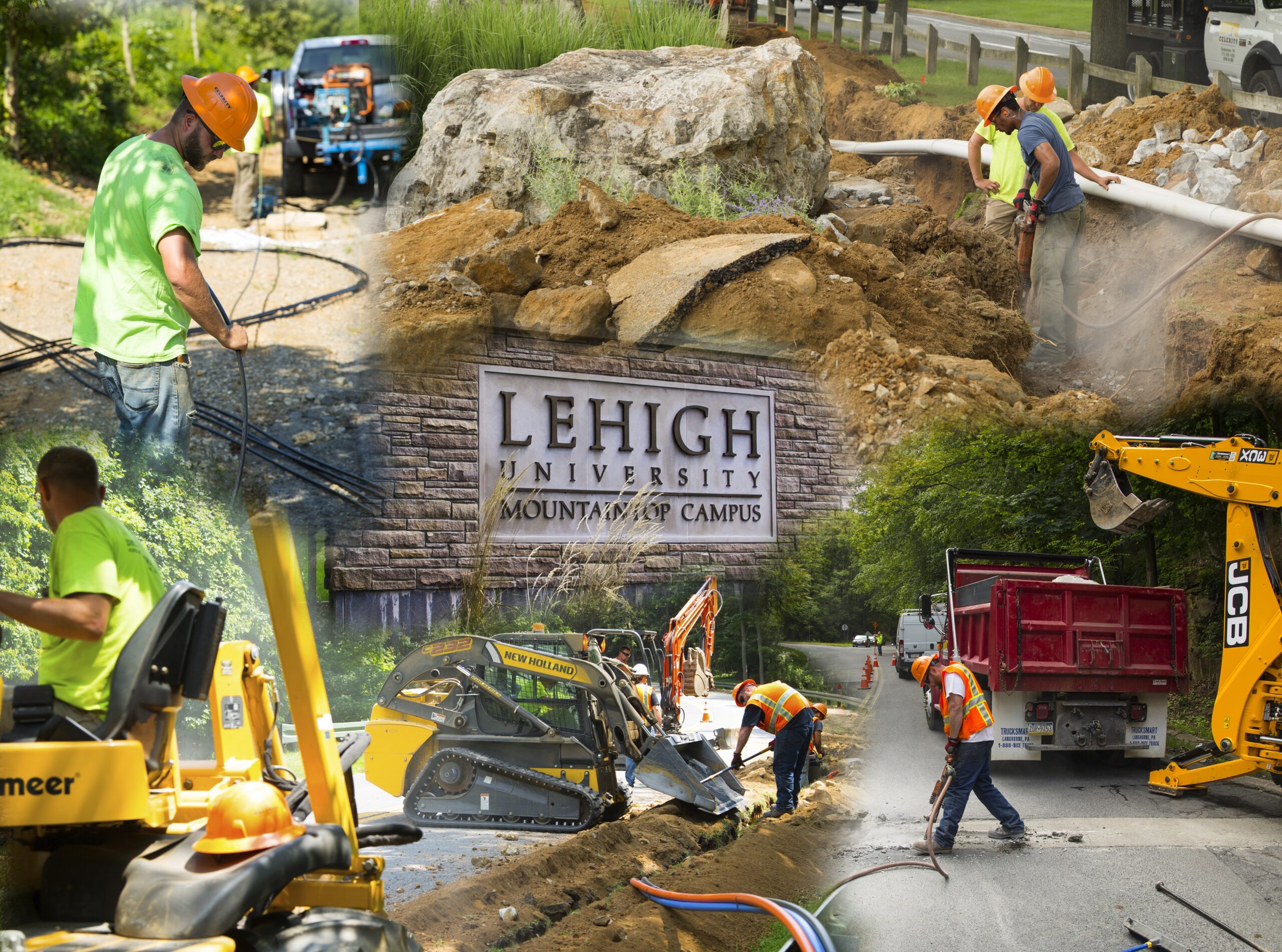
When Lehigh University needed to connect its Goodman, Asa Packer, and Mountain Top campuses, leadership faced a strategic infrastructure decision. The university could continue relying on a patchwork of leased connections and vulnerable aerial cable systems, or it could invest in owned infrastructure designed for long-term growth. The university chose ownership.

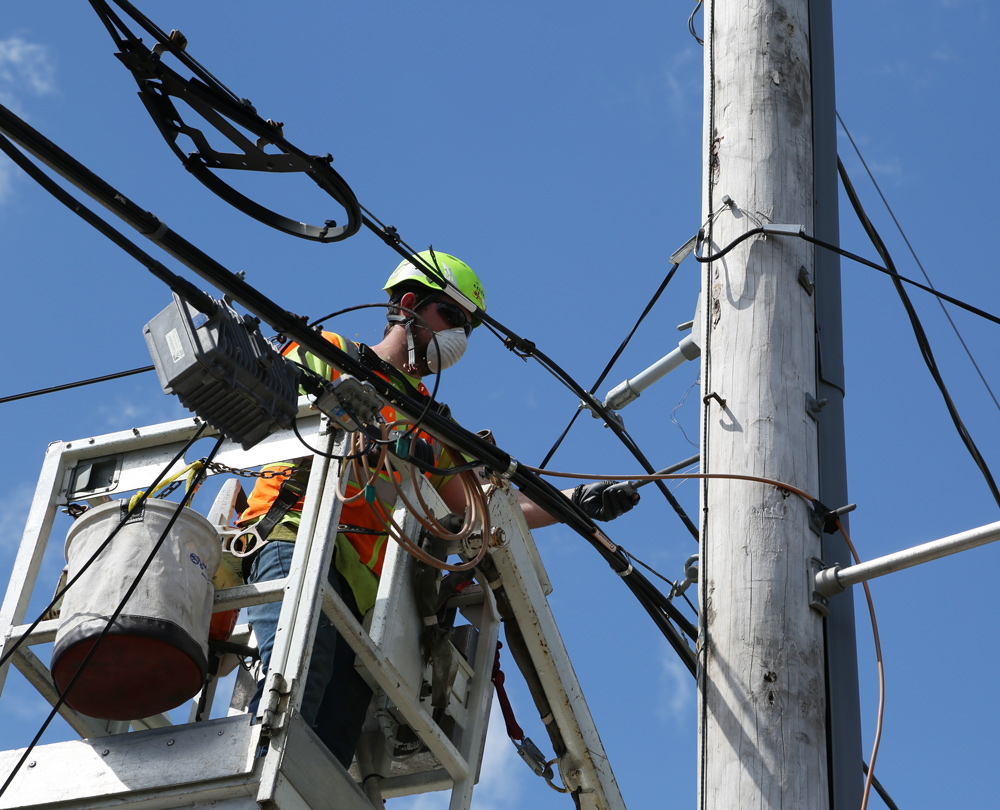
Through the Celerity Lehigh project, the institution deployed high-capacity 288-count underground fiber optic cable between campuses. The investment addressed several pressing issues, including capacity limitations affecting the Data X research initiative, recurring exposure to falling trees, rodent damage, and traffic-related disruptions, as well as ongoing maintenance demands tied to aging aerial infrastructure.

The new network significantly expanded available capacity while creating true redundancy to help protect mission-critical research data. By moving the system underground, the university also reduced many of the environmental risks that had impacted the previous network.

Most importantly, Lehigh now controls its long-term network roadmap. Future bandwidth upgrades can be achieved through electronics improvements rather than new construction projects or carrier contract negotiations.

Making the Right Choice 

Successful fiber ownership begins with disciplined planning. Universities and other large institutions should first evaluate current bandwidth demand and forecast future needs across every campus location, facility, and strategic initiative. A clear understanding of long-term growth helps ensure the network is built for tomorrow rather than only for today.

The next step involves feasibility studies that examine routes, terrain conditions, utility conflicts, and existing infrastructure. From there, experienced outside plant engineering partners can develop detailed network designs that address capacity, resiliency, and expansion opportunities. Strong planning should also account for construction realities such as permitting requirements, right-of-way access, traffic flow, and minimizing disruption to campus operations.

Just as important, institutions should document every aspect of the project, including routes, assets, splice points, and design decisions, so future maintenance and upgrades can be managed efficiently.

The upfront investment in planning creates value throughout construction and continues paying dividends for decades through lower risk, smoother operations, and easier expansion.

The Bottom Line

Research universities compete on their ability to attract talent, win grants, and produce breakthrough discoveries. All of these depend on infrastructure that can handle tomorrow's data demands. Leased fiber locks institutions into recurring costs and limited scalability. Owned fiber infrastructure delivers control, flexibility, and long-term savings.

In an industry where only 8.5% of construction projects finish on time and on budget, choosing the right partner matters as much as choosing the right strategy. Universities need contractors who understand the unique demands of campus environments such as the safety requirements, the scheduling constraints, and the documentation needs.

The institutions building owned fiber infrastructure today are positioning themselves for decades of competitive advantage. Those still leasing are paying more for less and falling further behind with every monthly invoice.

Contact Celerity to discuss feasibility studies, engineering, and construction for your campus network.


April 27, 2026

Engineering Transparency: How Celerity’s Pre-Job Documentation Sets the Standard

In fiber network construction, misalignment between engineering plans and field conditions remains a costly and recurring risk.

Crews may arrive fully mobilized, only to find that utility pole locations, existing cable routes, and site conditions differ materially from the approved drawings, bringing progress to an immediate halt.  This scenario plays out more often than anyone in telecommunications wants to admit. According to industry research, 52% of construction rework stems from miscommunication and inaccurate documentation. That's millions of dollars evaporating because someone skipped the hard work of getting the details right before construction began.

In an industry where network downtime costs an average of $5,600 per minute, the stakes for accuracy couldn't be higher. Yet many engineering firms still treat pre-job documentation as a checkbox exercise rather than the foundation of project success.

At Celerity, we've built our reputation on a different philosophy: engineering transparency isn't optional—it's the standard. Our tagline, "Well Planned. Well Crafted. Well Done," isn't marketing speak. It's a commitment that starts long before the first shovel hits the ground.

Why Pre-Job Documentation Is the Make-or-Break Moment

Most people think construction projects fail during construction. The truth? They fail during planning, or the lack of it. Pre-job documentation is where theory meets reality. It's the bridge between what's drawn on a CAD screen and what actually exists in the field. When that bridge is shaky, everything that follows becomes exponentially harder.

Here's what happens when pre-job documentation falls short:
  • Field crews waste time troubleshooting discrepancies instead of building
  • Material orders arrive wrong because specs didn't match actual conditions
  • Permit applications get rejected due to incomplete or inaccurate information
  • Project timelines slip as teams scramble to re-engineer on the fly
  • Costs balloon as change orders pile up

In our work with fiber providers, utilities, and educational institutions across the Mid-Atlantic, we've seen firsthand how thorough pre-job documentation transforms project outcomes. When you invest the time upfront to document every pole, every splice point, every conduit route with precision, construction becomes predictable. And predictability is what keeps projects on time and on budget.

Successful Approach to OSP Engineering Design

OSP (Outside Plant) engineering design is where Celerity's roots run deepest. Since 2002, we've designed and built countless miles of fiber optic infrastructure. But what sets our approach apart is our commitment to transparency.

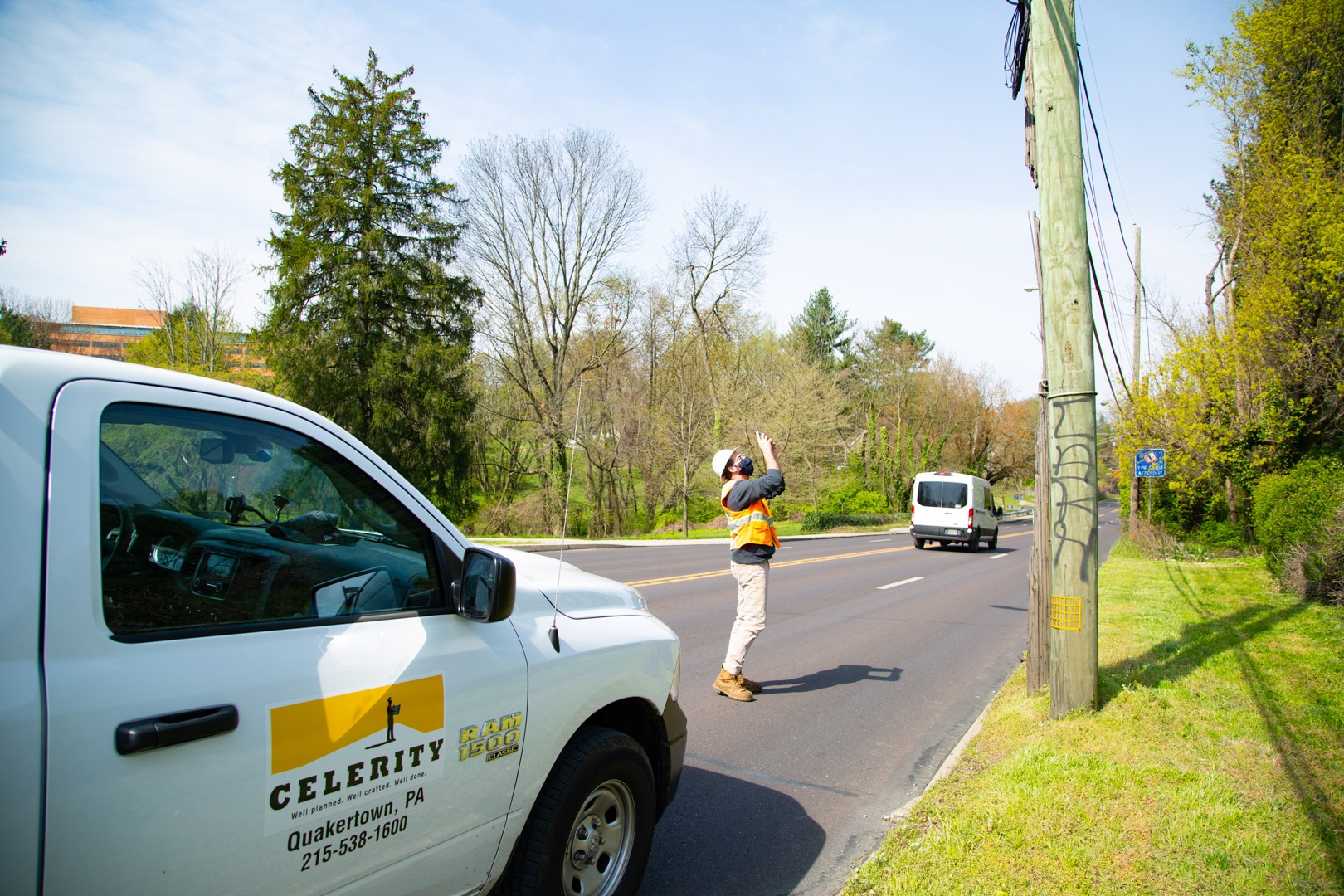
Our pre-job documentation process begins with comprehensive field surveys designed to eliminate uncertainty before construction starts.

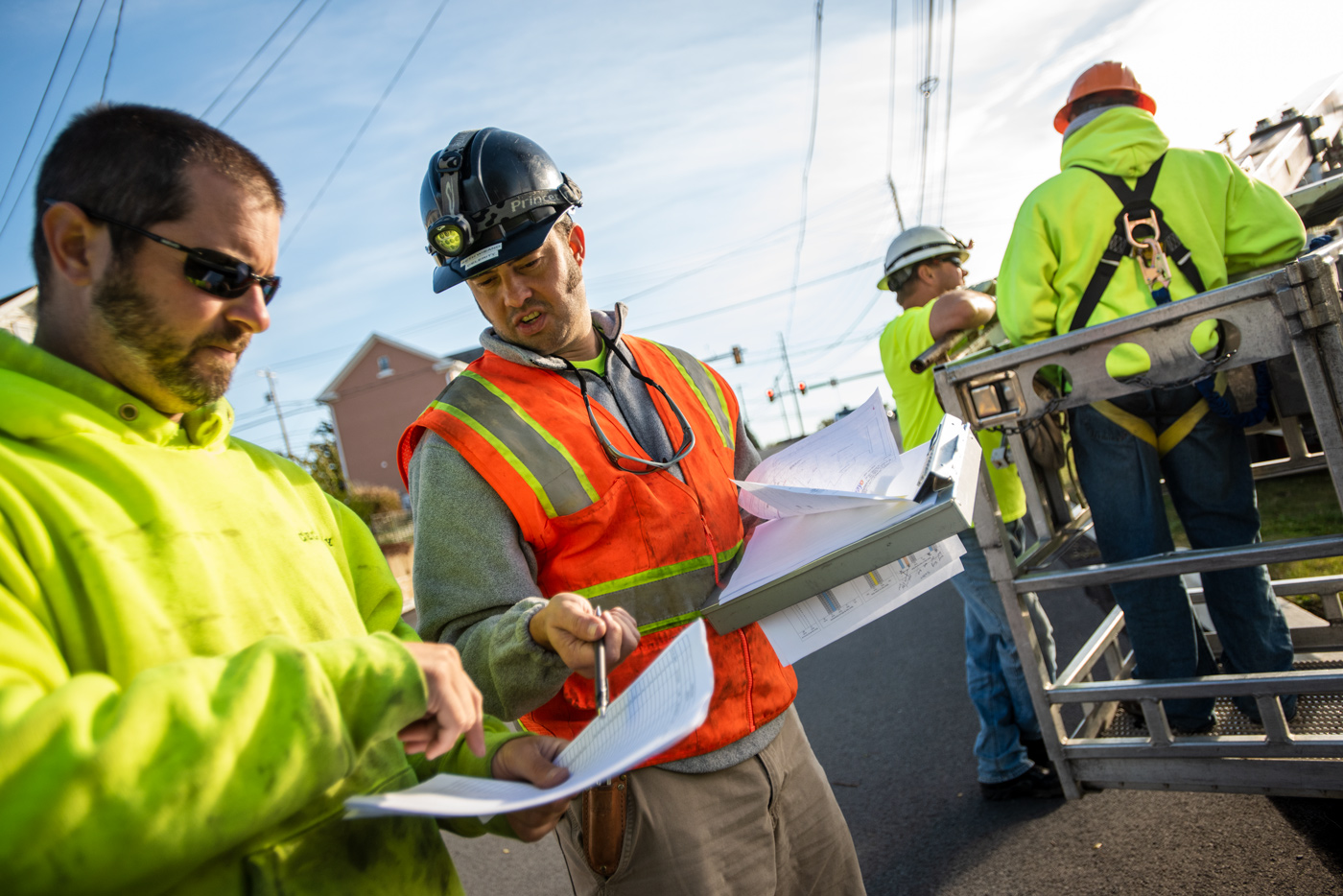
Rather than relying on outdated records or assumptions, our engineers physically walk every route to capture real-world conditions. This includes documenting exact pole locations and structural conditions, existing attachments and available space, underground pathway access points, potential obstacles or conflicts, and right-of-way considerations. 

This boots-on-the-ground approach ensures discrepancies are identified early, preventing costly delays and change orders once crews are mobilized. From hand-drawn redlines to full-blown AutoCAD designs to complete electronic database packages, we tailor our deliverables to match each customer's requirements. Our GIS mapping services provide high-quality digital representations that allow customers to make educated decisions. We work with multiple network management software platforms, ensuring our documentation integrates seamlessly into your existing systems.

Network Documentation: The Asset That Keeps Giving

A fiber network isn't truly complete until it's properly documented. Yet network documentation is often treated as an afterthought as something to "clean up" after construction wraps. Well-documented networks are proven to be well-maintained networks. They experience better performance and less downtime. When an outage occurs or a cable needs to be rerouted, having accurate documentation means the difference between a quick fix and hours of troubleshooting.

Celerity provides comprehensive as-built documentation across engineering, construction, and splicing, delivering a complete and accurate record of what was built, where it was built, and how the network is configured at project closeout. This documentation becomes a living asset that enables faster troubleshooting during outages, supports accurate planning for future network expansions, ensures regulatory compliance for audits and inspections, strengthens asset valuation and financial reporting, and facilitates seamless knowledge transfer as personnel and partners change over time.

Project Documentation: Transparency in Action

Celerity believes in absolute transparency. Field personnel provide detailed daily performance reports that capture safety briefing topics, on-site weather conditions, work completed each day, the names of all technicians and visitors present, the equipment and vehicles on site, and any issues or deviations from the approved plan.

This level of documentation creates clear accountability and gives customers real-time visibility into project progress, while also establishing an accurate historical record that supports future planning and decision-making. In addition, Celerity provides photo documentation at key milestones, capturing conditions before, during, and after work is performed. These visual records become invaluable when questions arise months or even years later about how specific elements were constructed.

The ROI of Getting It Right the First Time

Industry data shows that approximately 14 percent of all rework in construction globally is driven by inaccurate or incomplete data. On a $1 million fiber build, that translates to as much as $140,000 in avoidable cost. When compounded across the industry, poor document management is estimated to contribute more than $31 billion annually in rework and project delays, making the business case for rigorous pre-job documentation unmistakable.

The return on investment extends well beyond the avoidance of rework. Faster project completion allows revenue-generating infrastructure to go live sooner, while fewer change orders help protect profit margins. Accurate as-built documentation reduces long-term maintenance costs, improves permit approval success rates and prevents schedule slippage, and enhances safety by ensuring crews have a clear and accurate understanding of existing conditions before work begins.

In our experience with rural broadband and FTTx projects, thorough documentation during the planning phase consistently delivers 15-20% time savings during construction. For large-scale builds spanning hundreds of miles, that translates to weeks or months of accelerated deployment.

Guiding Standards 

Celerity’s documentation practices are aligned with industry-leading standards, including BICSI Outside Plant design guidelines, Telecommunications Industry Association specifications for network design, and applicable local and state regulatory requirements governing permits and construction. This alignment ensures consistency, accuracy, and compliance across every phase of a project.

However, we do not stop at meeting established standards. Our engineers maintain relevant certifications and engage in ongoing training to stay current with evolving best practices. We invest in advanced design software and field documentation tools, and we continuously refine our processes based on lessons learned across thousands of completed projects.

Consider our work on the Lehigh University fiber network project. The university needed to connect three campuses with a robust, redundant fiber optic network. The complexity was significant: multiple routes, diverse terrain, coordination with municipal authorities, and the need for minimal disruption to campus operations.

Our pre-job documentation process included detailed route surveys across all three campuses, close coordination with existing utility owners, and the preparation of comprehensive permitting packages to support a smooth approval process. Splice locations were planned to optimize long-term maintenance access, and complete as-built documentation was delivered in the university’s preferred GIS format to ensure seamless integration with existing systems.

The result was a world-class network delivered on schedule, supported by documentation so thorough that the university’s IT team could immediately begin planning future expansions. That is the power of getting the details right from day one.

Well Planned Is Well Done

The telecommunications industry moves fast. Demand for bandwidth grows exponentially. Deployment timelines compress. Budgets tighten. But speed without accuracy is just expensive chaos.

Celerity's approach to OSP engineering design and network documentation proves that you don't have to choose between fast and right. When pre-job documentation is thorough, transparent, and accurate, construction becomes faster, safer, and more predictable.

Ready to experience the Celerity difference? Contact our team to discuss your next project. Let's build something that's well planned, well crafted, and well done.

Contact Us

Name

1 2 37
footer-logo

Subscribe to our newsletter to stay Well Connected with Celerity Integrated Services, Inc.

Contact Us

3500 AM Drive,
Quakertown, PA 18951

P 215 538 1600
F 215 538 1602

info@nextmiletech.com

proview

© 2025 Celerity Integrated Services. Privacy Policy. Site by Smith & Howell Design Co.

Back to top Arrow