Installing underground utilities used to mean one thing: dig a trench, lay the pipe, fill it back in. That approach works in open fields. But what happens when a fiber route crosses a four-lane highway, a protected wetland, or a busy downtown intersection?
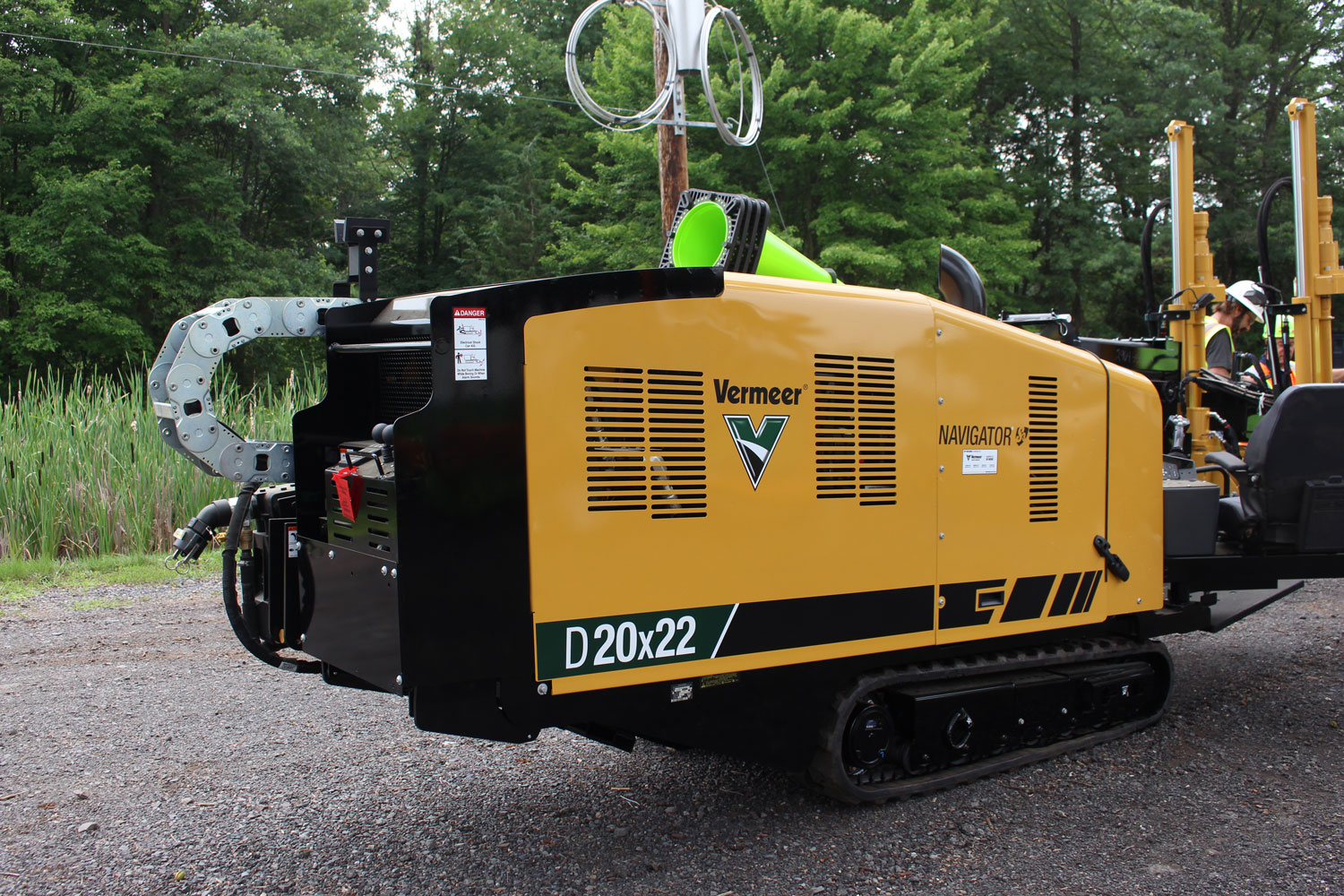
That is where horizontal directional drilling comes in. Horizontal directional drilling, commonly called HDD, is a trenchless construction method that installs conduit, cable, and pipe underground without cutting open the surface. A steerable drill head bores a path beneath obstacles, and crews pull the product back through the completed hole.
For telecom infrastructure projects, HDD has become a go-to solution, and the Fiber Broadband Association identifies directional boring as one of the primary underground construction techniques used in US fiber builds. Global Industry Analysts valued the global HDD market at $10.8 billion in 2024 and projects it will reach $16.4 billion by 2030, a 7.2% compound annual growth rate, driven by aging underground utility replacement, broader infrastructure development, and demand for minimally invasive installation methods
But HDD is not the right fit for every project. Understanding both the advantages and disadvantages helps infrastructure planners make smarter decisions.
What Is Horizontal Directional Drilling?
Horizontal directional drilling is a steerable, trenchless method for installing underground utilities. Unlike traditional open-cut trenching, HDD keeps the surface intact by boring a path beneath roads, waterways, and existing infrastructure.
The process follows three main stages:
- Pilot hole drilling: A drill rig pushes a steerable drill head along a planned path, guided by electronic locating equipment. Entry angles typically range from 8 to 20 degrees.
- Reaming: Once the pilot hole reaches the exit point, crews pull back progressively larger cutting tools called reamers to enlarge the bore to the required diameter.
- Pullback: The product pipe, conduit, or cable bundle is attached to the drill string and pulled back through the enlarged bore to its final position.
This method allows installation of fiber optic cables, telecom conduit, water lines, gas pipes, and electrical cables with minimal surface disruption.
Advantages of Horizontal Directional Drilling
HDD offers several benefits that make it a strong choice for telecom and utility projects, especially in challenging environments.
Minimal Surface Disruption
- The most significant advantage of HDD is what it does not do: tear up the ground. Roads, sidewalks, parking lots, and landscaping remain largely untouched. Crews only need small entry and exit pits at each end of the bore.
- This matters in urban areas where road cuts create traffic headaches, permitting delays, and community complaints. It also matters in sensitive environments like wetlands, parks, and historic districts where surface disturbance is restricted or prohibited.
Faster Project Completion
- HDD can compress project timelines compared to open trenching. Industry analyses report that HDD improves installation efficiency by roughly 30 to 40% versus traditional trenching methods in many contexts.
- Without the need for extensive excavation, backfill, compaction, and surface restoration, crews can complete installations faster. For telecom providers racing to deploy fiber networks, that speed translates to earlier service activation and faster revenue.
Lower Restoration Costs
- Open trenching requires putting everything back the way it was: repaving roads, replacing sidewalks, restoring landscaping, and reseeding lawns. Those restoration costs add up quickly. HDD reduces land restoration costs by an estimated 25 to 35% because there is simply less to restore. Entry and exit pits are small, and the bore path leaves no surface trace.
Ideal for Difficult Crossings
- Some obstacles cannot be trenched through. Rivers, highways, railways, and airport runways require a different approach.
- HDD excels at these crossings. The drill path can pass beneath waterways without disturbing the riverbed, under highways without closing lanes, and beneath rail lines without interrupting train traffic. For telecom projects that must cross multiple obstacles along a route, HDD often becomes the only practical option.
Reduced Environmental Impact
- Because HDD minimizes excavation, it also minimizes environmental disturbance. There is less soil disruption, less erosion, less dust, and less noise compared to open trenching.
- This can simplify environmental permitting and help projects meet sustainability goals. In wetlands and other protected areas, HDD may be the only method that regulators will approve.
Precision and Control
- Modern HDD equipment uses electronic guidance systems that track the drill head position in real time. Operators can steer the bore to within inches of the planned path, navigating around existing utilities and maintaining proper depth throughout the installation.
- This precision reduces the risk of utility strikes and allows accurate placement of conduit in congested underground environments.
Disadvantages of Horizontal Directional Drilling
Despite its benefits, HDD is not without limitations. Understanding these disadvantages helps project planners determine when HDD makes sense and when other methods might be more appropriate.
Higher Upfront Costs
- HDD equipment is expensive. Mid-size and large drilling rigs represent significant capital investments, and mobilization costs can be substantial.
- On a per-foot basis, directional boring typically costs more than simple open trenching, with estimates ranging from $10 to $60 or more per foot depending on conditions. For short runs in open, unobstructed areas, traditional trenching may be more economical. However, total project cost often favors HDD when factoring in reduced restoration, faster completion, and avoided traffic control expenses.
Requires Specialized Expertise
- HDD is not a simple operation. It requires skilled operators who understand soil conditions, drilling fluid management, bore path planning, and equipment capabilities. Poor planning or inexperienced crews can lead to bore deviation, stuck drill strings, surface heave, or damage to existing utilities. Projects need competent HDD contractors and thorough geotechnical investigations to succeed.
Geological Limitations
- Not all ground conditions are suitable for HDD. Hard rock, cobbles, boulders, and highly variable soil layers can slow drilling, increase wear on equipment, and complicate bore path control.
- In some geological conditions, HDD may not be feasible at all or may require specialized equipment and techniques that add cost and complexity.
Risk of Cross-Bores and Utility Strikes
- One of the most serious risks in HDD is the potential to intersect existing underground utilities. A cross-bore occurs when the drill path passes through an existing pipe or conduit, such as a gas line or sewer lateral.
- In congested urban corridors, underground utility mapping is often incomplete or inaccurate. Mitigation measures like potholing (exposing utilities at key points) and advanced locating add cost and time but are essential for safety.
Drilling Fluid Management
- HDD uses drilling fluids, typically bentonite-based mud, to lubricate the drill head, stabilize the bore, and transport cuttings back to the surface. Managing these fluids requires planning and equipment.
- If drilling fluid pressure exceeds the soil's ability to contain it, a frac-out can occur, where fluid breaks through to the surface. Frac-outs near waterways or in environmentally sensitive areas can trigger regulatory issues and cleanup costs.
Not Always the Best Choice for Simple Conditions
- For long, straight runs through open rural areas with few obstacles, conventional trenching or cable plowing may be simpler and cheaper than HDD. HDD shines in complex environments. In simple conditions, its advantages may not justify the additional cost and complexity.
When to Choose Horizontal Directional Drilling
Horizontal directional drilling usually makes the most sense when the route runs into something a trench cannot easily cross. Roads, highways, rail lines, and waterways all fall into that category, and HDD lets crews pass beneath them without cutting through the surface. It earns its keep in places where disruption carries a real cost, such as city streets, parks, and campuses where traffic keeps moving and the ground above stays intact.
Environmental rules often point the same direction, since many sites restrict open excavation outright. Timing matters too, because HDD moves faster than trenching on most crossings and gets the line in the ground sooner. And when a project would otherwise face expensive restoration work after the fact, repaving, replanting, rebuilding what the trench tore up, the drilling approach avoids most of that spend from the start.
Traditional trenching still holds its own on the right job. When the route runs short and nothing sits in the way, opening the ground is often the simpler path. Soil conditions matter as well, since some ground types work against HDD and make a bore risky or impractical. Budget pressure can settle the question too, especially when restoration costs stay low and there is little to put back once the line goes in.
Rural projects tend to fit this profile, with open ground, easy surface access, and few obstacles standing between the start point and the finish. Many telecom deployment programs use a hybrid approach: HDD for crossings and sensitive sections, trenching or plowing for long rural runs.
HDD in Telecom Infrastructure
The telecom industry has embraced HDD as fiber optic networks expand into every community. The method aligns perfectly with the demands of modern broadband deployment:
- 5G and FTTH rollouts require threading conduit through busy city streets without repeated road cuts
- Campus networks for universities, hospitals, and corporate campuses need installation methods that preserve landscaping and minimize disruption
- Utility crossings are unavoidable on most fiber routes, and HDD handles them efficiently
In our work supporting fiber infrastructure projects, Celerity has seen firsthand how the right construction method can make or break a project timeline. Choosing HDD where it fits, and recognizing where it does not, is part of building networks that perform reliably for decades.
Partner with Celerity for Your Next Project
Whether your project calls for horizontal directional drilling, traditional construction methods, or a combination of both, Celerity brings more than 20 years of fiber optic infrastructure experience to every engagement. From OSP engineering and route design through construction, splicing, testing, and maintenance, Celerity delivers integrated services that keep projects on track and networks performing. Ready to discuss your next telecom infrastructure project? Contact Celerity to start the conversation.
Frequently Asked Questions
What is horizontal directional drilling used for in telecom?
- Horizontal directional drilling installs fiber optic cables, telecom conduit, and communication lines underground without digging open trenches. It is commonly used to cross roads, highways, railways, rivers, and other obstacles that cannot be trenched through. HDD is especially valuable in urban areas where surface disruption must be minimized.
How long does a horizontal directional drilling project take?
- Project duration depends on bore length, soil conditions, and site complexity. Residential projects may finish in a few hours, while longer commercial runs can take several days. Experienced HDD teams can install up to 600 feet of conduit per day under favorable conditions, though this varies significantly by project.
Is horizontal directional drilling more expensive than trenching?
- On a per-foot basis, HDD typically costs more than open trenching. However, total project cost often favors HDD when factoring in reduced restoration expenses, faster completion times, and avoided traffic control costs. The cost comparison depends heavily on site conditions and project requirements.
What are the main risks of horizontal directional drilling?
- The primary risks include cross-bores (intersecting existing utilities), bore deviation, drilling fluid frac-outs, and equipment issues in difficult soil conditions. Proper planning, accurate utility locating, experienced crews, and thorough geotechnical investigation help mitigate these risks.
Does Celerity offer horizontal directional drilling services?
- Yes. Celerity provides horizontal directional drilling as part of its comprehensive telecom infrastructure services. The company also offers OSP engineering, fiber optic splicing and testing, underground construction, and maintenance services throughout the Mid-Atlantic region.