October 7, 2026

How Aerial Construction and Deployment Power Modern Telecom Network Construction

Telecom providers face a constant challenge on how to expand network coverage quickly without blowing the budget. The answer often hangs right above our heads.

Aerial construction has become the go-to method for telecom network construction projects across the country. When existing utility poles line the route, stringing fiber overhead delivers connectivity faster and more affordably than digging trenches underground.

Celerity breaks down how aerial construction and deployment work, why they matter for modern telecom builds, and what separates a successful project from a costly delay.

What Is Aerial Construction in Telecom?

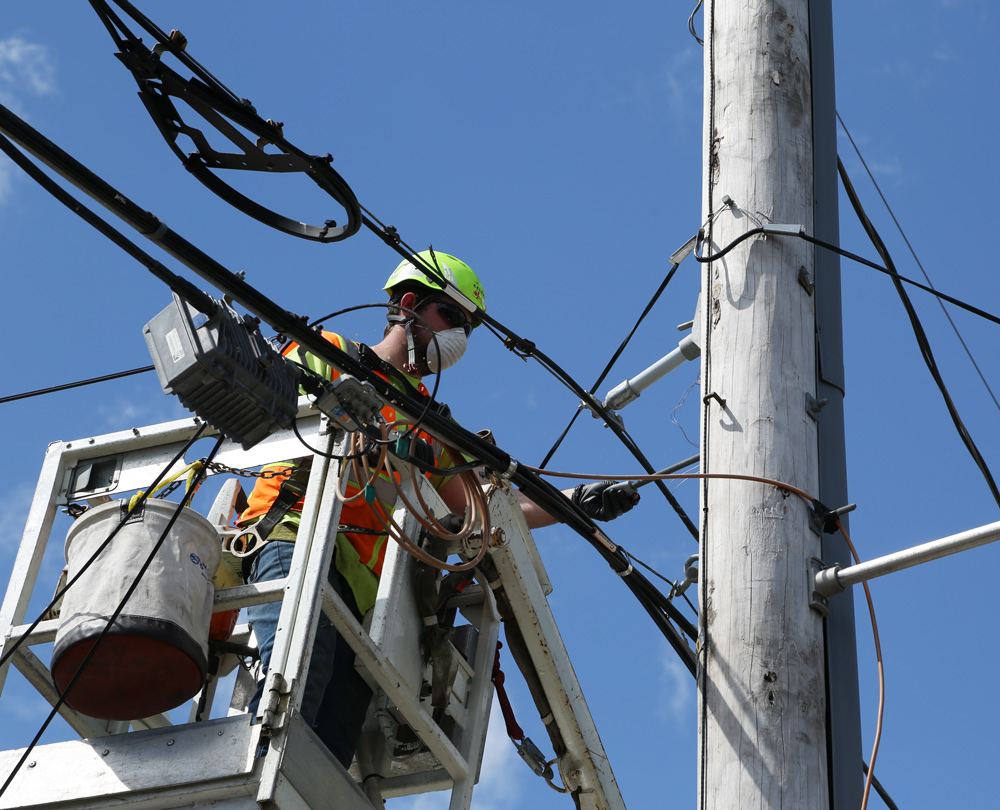
Aerial construction refers to installing communications infrastructure on overhead utility poles instead of burying it underground. Fiber optic cables, coaxial lines, and support hardware attach to existing poles that already carry power and telephone lines. The approach takes advantage of infrastructure that communities have built over decades. Rather than tearing up roads and sidewalks, crews work above ground level to extend network reach.

Aerial construction projects typically involve several key components:

  • Messenger strand: A steel cable that supports the fiber optic cable between poles
  • Lashing wire: Spiral-wrapped wire that secures fiber to the messenger strand
  • Pole hardware: Brackets, anchors, down-guys, and attachments
  • Fiber optic cable: The actual data-carrying infrastructure

According to the Fiber Broadband Association's 2024 Fiber Deployment Cost Report, the median cost to deploy aerial fiber was $6.55 per foot compared with $18.25 per foot underground, making aerial construction roughly one-third the cost on a labor-and-materials basis. The association's 2025 report, released in January 2026, shows the gap narrowing to $8.00 versus $18.00 per foot. Both figures reflect deployment cost alone and exclude make-ready, permitting, and engineering, which together account for a substantial share of total project cost and fall disproportionately on aerial builds.

Why Aerial Deployment Dominates Modern Telecom Builds

Speed and cost drive most construction decisions. Aerial deployment delivers on both fronts.

Faster Time to Service

Underground construction requires permits for excavation, traffic control plans, and coordination with every utility that has buried lines in the area. A single missed location can shut down a project for days. Aerial builds skip most of that complexity. When poles already exist along the route, crews can complete strand placement, cable lashing, and testing in a fraction of the time.

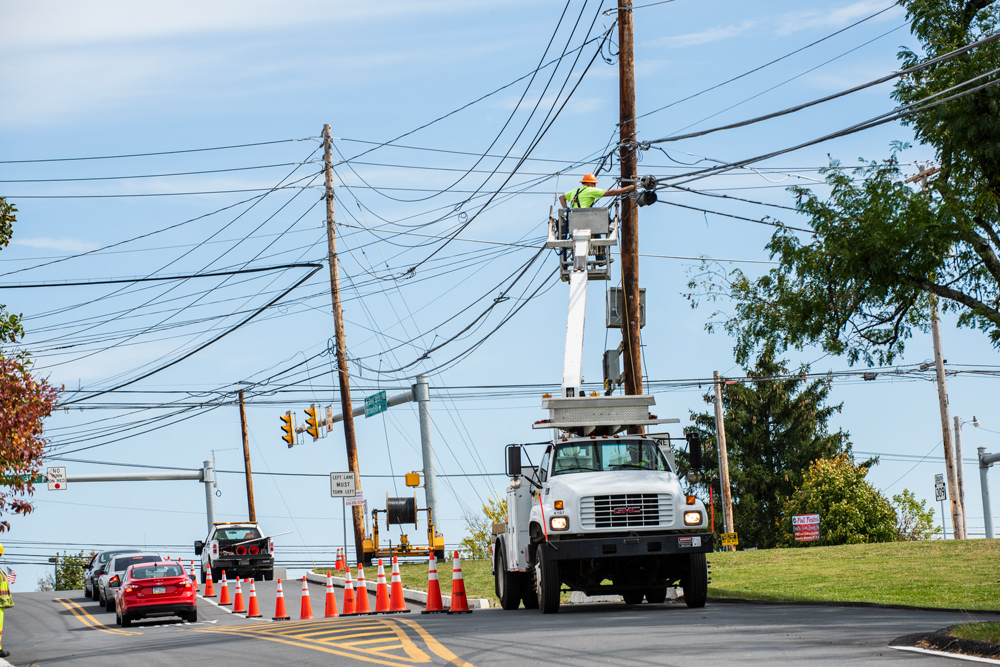
Moving reel installations typically complete two to three miles per day with a four-person crew under ideal conditions. That pace allows providers to light up new service areas weeks or months ahead of underground alternatives.

Easier Maintenance Access

When something goes wrong with buried fiber, crews must excavate to find and fix the problem. Aerial infrastructure remains visible and accessible. Technicians can identify damage, perform splices, and restore service without heavy equipment or road closures.

The Aerial Construction Process: From Survey to Service

Successful aerial deployment follows a structured workflow. Skipping steps or rushing through phases creates problems that surface months or years later.

Step 1: Route Survey and Permitting

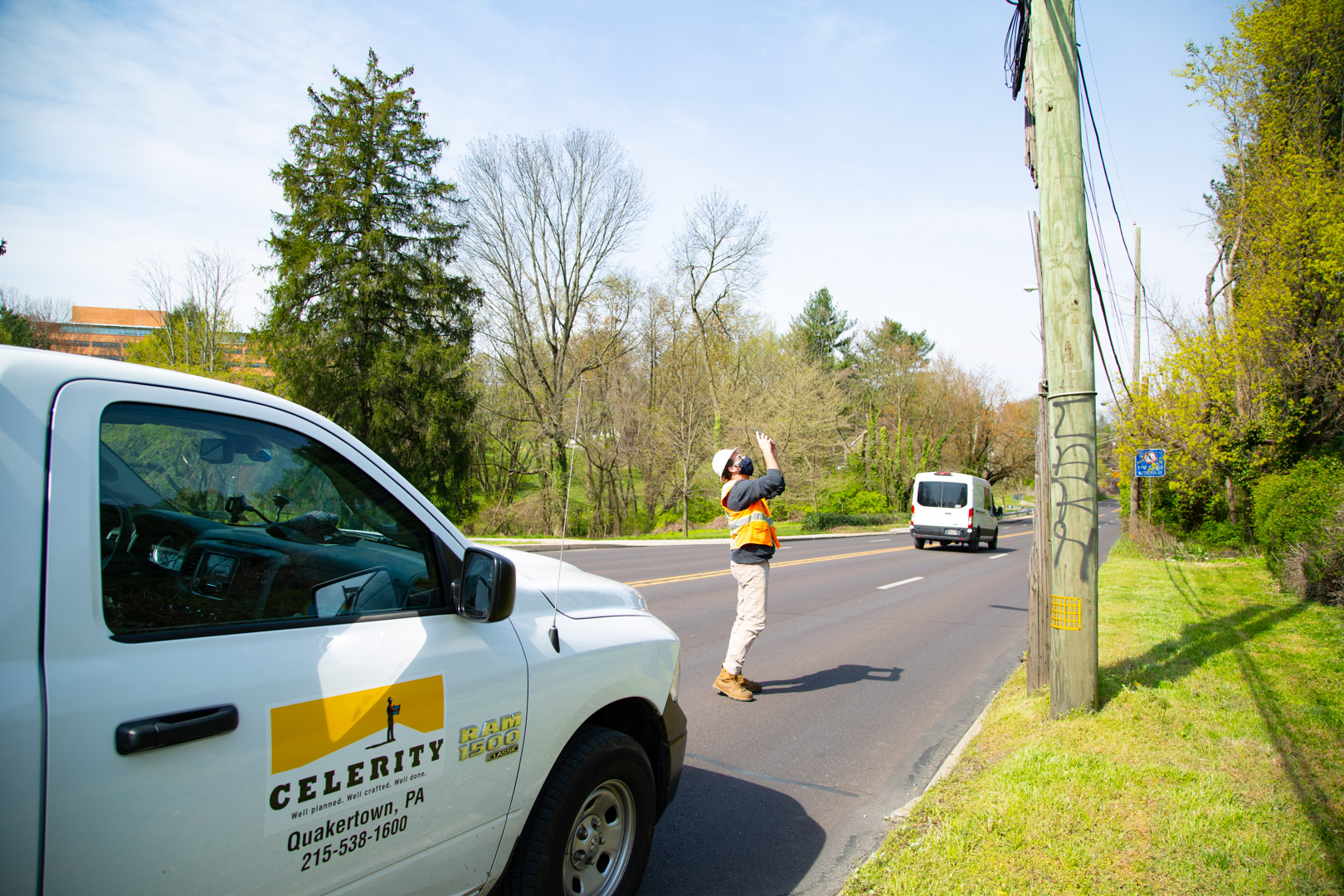
Every project starts with boots on the ground. Field crews walk the proposed route to document:

  • Pole ownership and condition
  • Existing attachments and available space
  • Clearances to power lines, roads, and other utilities
  • Potential obstacles like trees, guy wires, and structures

This survey determines what make-ready work the project will require and identifies any poles that need replacement before construction begins.

Step 2: Pole Loading Analysis

Not every pole can support additional attachments. Engineers perform structural analysis to confirm that each pole along the route can safely carry the new fiber load under applicable safety standards.

  • Poles near their load limits may require reinforcement
  • Some need guy wire installation to handle the added stress
  • Others require complete replacement
  • Findings from this analysis shape the make-ready scope and timeline

Step 3: Make-Ready Work

Make-ready is the engineering and field work required to prepare poles for new attachments. This phase often determines whether a project runs on schedule or falls months behind.  Common make-ready activities include:

  • Rearranging existing cable attachments to create space
  • Installing new brackets, anchors, and down-guys
  • Replacing poles that cannot safely support added load
  • Coordinating with pole owners and other attachers

Make-ready work remains the least predictable cost in aerial deployment. A 2025 study found make-ready estimates reaching as much as 150% of the construction budget on some projects, severe enough that several respondents shifted planned builds from aerial to underground, and 46% of respondents faced material project delays. In comments to the FCC, NCTA reported that utility-supplied figures show actual costs exceeding estimates between 50 and 90% of the time, creating a major obstacle to predictable planning. Projects that underestimate make-ready scope face budget overruns and schedule delays as a result.

Step 4: Strand and Cable Placement

With poles ready, construction crews install the messenger strand and fiber optic cable. This work requires careful attention to:

  • Tension and sag: Cables must maintain proper tension across spans without overstressing hardware or violating clearance requirements
  • Bend radius: Fiber optic cable has minimum bend radius limits that crews must observe during installation
  • Attachment sequencing: Proper installation order prevents damage and ensures secure placement

Experienced crews use manufacturer specifications and local regulations to plan each span before installation begins.

Step 5: Splicing and Testing

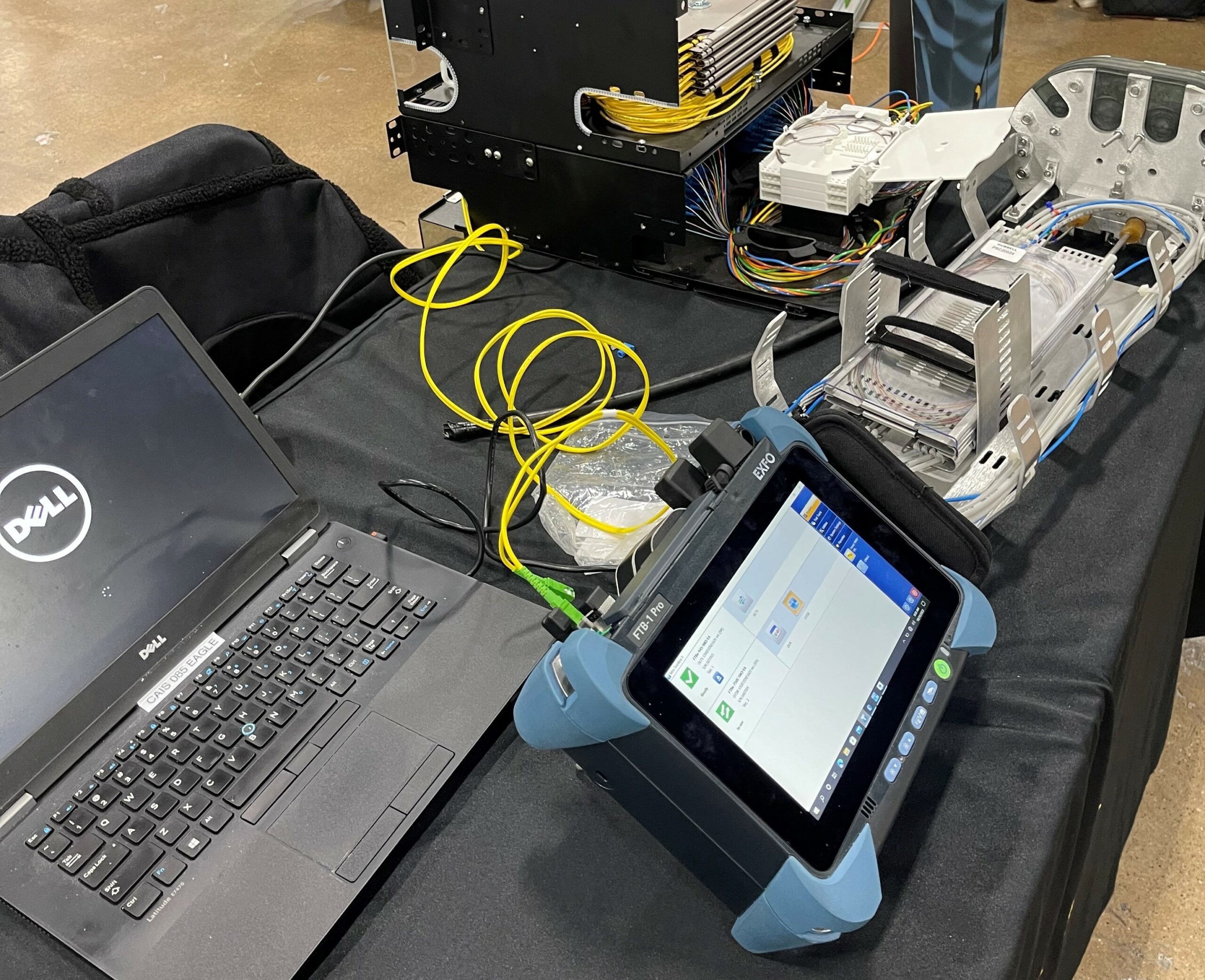
Once cable hangs on the poles, splicing technicians connect fiber segments and terminate at equipment locations.

  • OTDR (Optical Time Domain Reflectometer) testing: verifies signal quality across the route
  • Identifies: any faults before the network goes live
  • Test Runs: during or immediately after placement catches problems while the route remains accessible
  • Urgency: waiting until later stages makes troubleshooting far more difficult and expensive

Step 6: Documentation and Closeout

Modern deployments rely on detailed records:

  • GIS data and route geometry
  • Attachment locations
  • Make-ready status
  • QA/QC results
  • As-built documentation

These records support future maintenance, capacity planning, and regulatory compliance.

Common Challenges in Aerial Telecom Construction

Aerial construction offers clear advantages, but projects still face obstacles that require experienced management.

Utility Coordination Delays

Multiple parties often share the same poles: electric utilities, telephone companies, cable providers, and municipal systems. Coordinating make-ready work across these organizations takes time and persistent communication. Projects that build strong relationships with pole owners and establish clear communication protocols move faster than those that treat coordination as an afterthought.

Weather Exposure

Unlike buried infrastructure, aerial cables face direct exposure to wind, ice, lightning, and falling debris. Proper hardware selection, installation techniques, and ongoing maintenance programs mitigate these risks.  Routine inspection and proactive vegetation management keep aerial networks performing reliably for decades.

Permitting Complexity

Even aerial projects require permits and right-of-way agreements. Navigating municipal requirements, utility easements, and environmental regulations demands expertise that general contractors often lack.

Why Partner with an Experienced Telecom Construction Provider

The difference between a smooth aerial build and a troubled one often comes down to the construction partner. Experienced telecom contractors bring:

  • Established utility relationships that accelerate make-ready coordination
  • Trained field crews who understand pole work, fiber handling, and safety requirements
  • Engineering expertise for route design, pole loading analysis, and permit applications
  • Quality control processes that catch problems before they become expensive fixes
  • Emergency response capability for storm damage and service restoration

Celerity Integrated Services has built its reputation on delivering telecom network construction projects that meet deadlines and budgets. The company's field crews handle aerial construction, underground builds, fiber splicing, OTDR testing, and emergency restoration across the Mid-Atlantic region. From campus fiber networks to rural broadband expansion, Celerity brings the expertise and equipment that complex telecom projects demand.

Aerial construction and deployment have become essential tools for telecom providers racing to expand coverage and upgrade capacity. When existing pole infrastructure lines the route, overhead installation delivers faster timelines, lower costs, and easier long-term maintenance than underground alternatives. Success requires more than just hanging cable on poles. It demands careful planning, thorough make-ready work, skilled installation, and rigorous testing. The right construction partner makes that process predictable instead of painful.

Ready to discuss your next telecom network construction project? Reach out to Celerity to explore how aerial construction can accelerate your deployment timeline and protect your budget.

—Frequently Asked Questions

What is aerial construction in telecom?

  • Aerial construction is the installation of fiber optic cables and communications infrastructure on overhead utility poles rather than underground. This method leverages existing pole infrastructure to deploy networks faster and at lower cost than buried alternatives.

How much does aerial fiber construction cost?

  • According to 2024 industry data, the median cost for aerial fiber deployment is approximately $6.55 per foot, compared to $18.25 per foot for underground installation. Actual costs vary based on make-ready requirements, pole density, and regional factors.

What is make-ready work in telecom construction?

  • Make-ready is the engineering and field work required to prepare utility poles for new fiber attachments. It includes surveying existing attachments, analyzing pole loading capacity, rearranging cables to create space, and replacing poles that cannot safely support additional load.

How long does aerial fiber installation take?

  • Under ideal conditions, moving reel installations can complete two to three miles per day with a four-person crew. However, make-ready work, permitting, and utility coordination often extend overall project timelines significantly.

What services does Celerity offer for telecom construction?

  • Celerity Integrated Services provides comprehensive telecom network construction services including aerial construction, underground builds, fiber optic splicing, OTDR testing, OSP engineering, permitting support, and emergency restoration services throughout the Mid-Atlantic region.

Is aerial fiber as reliable as underground fiber?

  • Both methods deliver reliable connectivity when properly installed and maintained. Aerial fiber faces more weather exposure but offers easier access for repairs and upgrades. Underground fiber provides better physical protection but requires excavation for maintenance.

What is the difference between ADSS and lashed fiber cable?

  • ADSS (All-Dielectric Self-Supporting) cable installs without a separate messenger strand, while lashed cable attaches to a steel messenger wire using spiral-wrapped lashing. ADSS works well near power lines since it contains no metal components.

September 24, 2026

Understanding Current FCC Pole Attachment Rules and How They Relate to One-Touch Make-Ready


Broadband expansion depends on one critical resource that most people never think about: utility poles. These wooden structures carry power lines, cable TV, telephone wires, and fiber optic cables. When a telecommunications provider wants to add new fiber to a pole, it must navigate a complex process governed by federal regulations.

The Federal Communications Commission (FCC) sets the rules for pole attachments under Section 224 of the Communications Act. These rules determine how quickly broadband providers can access utility poles and how much they pay for that access. For contractors, engineers, and project managers working in telecom infrastructure, understanding these regulations is essential to keeping projects on schedule and within budget.

Recent updates to FCC pole attachment rules took effect on May 7, 2026, bringing significant changes to timelines and processes. These changes directly impact how One-Touch Make-Ready works in practice and create new opportunities for faster broadband deployment.

What Are FCC Pole Attachment Rules?

FCC pole attachment rules establish the framework for how telecommunications companies access utility poles owned by electric utilities and other pole owners. The rules cover everything from application procedures to pricing formulas to dispute resolution.

Under Section 224 of the Communications Act, the FCC has authority to regulate pole attachments to ensure that broadband providers have fair and reasonable access to utility infrastructure. This matters because approximately 70% of broadband networks in the United States rely on aerial construction using existing utility poles.

The core principle behind these regulations is simple: pole owners cannot unreasonably deny access or charge excessive fees. However, the practical application involves detailed timelines, notification requirements, and technical standards that govern every step of the attachment process.

Key Timeline Requirements Under Current Rules

The FCC's Fifth Report and Order, adopted in July 2025, established specific deadlines for each phase of the pole attachment process:

  • Application review: Utilities have 10 business days to determine if an application is complete
  • Survey completion: 45 days for standard orders; 90 days for large orders (over 300 poles)
  • Make-ready estimates: 14 days after survey completion for standard orders; 29 days for large orders
  • Make-ready work: 30 days in the communications space; 90 days in the power space for standard orders
  • Large order make-ready: 120 days in communications space; 180 days in power space

Federal rules now impose firmer timelines on the pole attachment process. The FCC's July 2025 order established a timeline for large pole attachment requests, accelerated contractor approval, and adopted measures to foster collaboration between utilities and attachers. Whether those changes will meaningfully speed deployment is not yet established. 

The Congressional Research Service notes that some states have reported timelines running up to five years in total for pole survey results and make-ready completion, and concludes that the effect of pole attachment issues on federally funded build-out deadlines remains to be seen. Regulatory fragmentation compounds the difficulty, with 23 states and the District of Columbia administering their own pole attachment rules rather than deferring to the FCC.

The Make-Ready Challenge

Make-ready work refers to the modifications needed on a utility pole before a new attachment can be installed. This might include moving existing cables, replacing hardware, or even replacing the entire pole if it cannot support additional load.

The traditional make-ready process creates a major bottleneck in broadband deployment. Here is why: each existing attacher on a pole must move its own equipment before the new attacher can install fiber. If a pole has cables from an electric utility, a telephone company, and a cable TV provider, each entity must schedule and complete its own work in sequence.

This sequential approach leads to significant delays. Industry data shows that make-ready timelines can stretch from 135 to 225 days before construction crews can install a single strand of fiber. The costs add up quickly too. Simple rearrangements typically cost $380 to $900 per pole, while complex work involving multiple parties can reach $2,100 per pole or more. Pole replacements can cost $3,400 to $6,500 per pole.

For a project involving hundreds or thousands of poles, these delays and costs can derail deployment schedules and strain budgets.

How One-Touch Make-Ready Changes the Game

One-Touch Make-Ready (OTMR) offers a solution to the sequential make-ready problem. Under OTMR, a single qualified contractor can perform all necessary rearrangement work in one coordinated visit, rather than waiting for each existing attacher to complete its portion separately.

The FCC adopted OTMR rules in 2018 for "simple make-ready" work in the communications space. Simple make-ready includes routine tasks like moving cables or adjusting attachment heights that do not require specialized skills or create safety concerns.

How OTMR Works in Practice

  1. Application submission: The broadband provider applies to attach to the pole
  2. Eligibility determination: The pole owner reviews the request and determines if OTMR applies
  3. Advance notice: The new attacher provides notice to the pole owner and existing attachers
  4. Single-crew execution: A qualified contractor performs all rearrangements in one mobilization
  5. New attachment installation: The fiber or communications equipment is installed

OTMR can compress make-ready timelines by 30 to 60 days on eligible projects. This acceleration is critical for meeting deployment deadlines, especially for projects funded through programs like the Broadband Equity, Access, and Deployment (BEAD) Program.

The 2026 FCC rule updates expanded self-help and OTMR rights for broadband builders. Utilities must now notify attachers within 15 days if they cannot meet survey or make-ready deadlines. This early warning allows attachers to invoke self-help remedies, including using their own qualified contractors to complete the work.

Connecting Pole Attachment Rules to OTMR Success

Understanding how FCC pole attachment rules relate to OTMR is essential for maximizing deployment efficiency. The regulations work together in several important ways.

Contractor Approval Timelines

The 2026 rules require utilities to respond within 30 days to requests from broadband providers seeking approval for new contractors to perform survey, estimate, and make-ready work. Previously, contractor approval could take months, creating a hidden bottleneck before OTMR could even begin.

Large Order Provisions

For large attachment requests (over 300 poles), the FCC created new advance notice and coordination requirements. Attachers must provide 15 days advance notice for mid-size orders (300 to 3,000 poles) and 30 days for very large orders (over 3,000 poles). These provisions help utilities plan resources while maintaining predictable timelines.

Restrictions on Utility Delays

The FCC prohibited utility-imposed limits that effectively cap how many pole attachments an attacher may seek in a given period. This prevents utilities from artificially slowing large-scale deployments by limiting application volume.

BEAD Program Compliance

Cooperatives and municipal utilities participating in the BEAD Program as subgrantees must now comply with FCC pole attachment rules as a condition of accepting funding. This extends federal protections to attachers working with entities that were previously exempt from Section 224 requirements.

Practical Implications for Telecom Infrastructure Projects

For organizations involved in broadband deployment, these regulatory changes create both opportunities and responsibilities.

Planning and Engineering

  • Accurate make-ready assessments are more important than ever. With tighter timelines, there is less room for surprises during construction. Comprehensive pole loading analysis and field surveys help identify potential issues before they cause delays.

Contractor Qualifications

  • OTMR eligibility depends on using qualified contractors approved by the pole owner. Organizations should maintain relationships with approved contractors and understand the approval process for new contractors in each utility territory.

Documentation and Compliance

  • The new rules include specific notification requirements and deadlines. Missing a deadline can forfeit self-help rights or trigger disputes. Robust project management systems help track applications, notices, and responses across large deployments.

Cost Management

  • Understanding make-ready cost allocation is critical for accurate budgeting. The FCC has clarified that new attachers cannot be forced to pay for pre-existing safety violations on poles. This ruling, issued in early 2026, protects attachers from bearing costs that should fall on pole owners.

Looking Ahead

The FCC continues to consider additional pole attachment reforms. A Fourth Further Notice of Proposed Rulemaking, released alongside the 2025 order, seeks comment on expanding OTMR to complex work and other streamlining measures. 

While no timeline exists for final action, the direction is clear: regulators want to remove barriers to broadband deployment. For telecom infrastructure professionals, staying current on these regulations is not optional. The rules directly impact project timelines, costs, and feasibility. Organizations that understand and leverage the regulatory framework will have a competitive advantage in winning and executing broadband projects.

Navigating FCC pole attachment rules and OTMR requirements takes specialized knowledge and experience. From OSP engineering and make-ready assessments to aerial construction and fiber splicing, having the right partner makes the difference between a project that stays on schedule and one that stalls in regulatory limbo.

Celerity Integrated Services brings decades of experience in telecommunications infrastructure, serving carriers, utilities, and organizations across the full project lifecycle. Whether you need engineering support for pole applications, One-Touch Make-Ready construction services, or ongoing maintenance, Celerity has the expertise to keep your project moving.

Ready to discuss your next broadband deployment? Contact Celerity to learn how our team can help you navigate pole attachment requirements and accelerate your timeline.

—Frequently Asked Questions

What are FCC pole attachment rules?

  • FCC pole attachment rules are federal regulations under Section 224 of the Communications Act that govern how telecommunications companies access utility poles. These rules establish timelines for application review, surveys, make-ready work, and pricing. They ensure broadband providers have fair and reasonable access to pole infrastructure for deploying fiber and other communications networks.

What is One-Touch Make-Ready?

  • One-Touch Make-Ready (OTMR) is a pole attachment process that allows a single qualified contractor to perform all necessary rearrangement work on a utility pole in one visit. Instead of waiting for each existing attacher to move its equipment separately, OTMR consolidates the work, reducing make-ready timelines by 30 to 60 days on eligible projects.

How long does the pole attachment process take under current FCC rules?

  • Under the FCC's 2026 rules, standard pole attachment requests follow a 148-day framework from application to construction authorization. This includes 10 business days for application review, 45 days for surveys, 14 days for estimates, and 30 to 90 days for make-ready work depending on the space involved. Large orders have extended timelines of up to 90 days for surveys and 120 to 180 days for make-ready.

What services does Celerity provide for pole attachment projects?

  • Celerity Integrated Services provides comprehensive telecommunications infrastructure services including OSP engineering, make-ready assessments, pole application processing, aerial and underground construction, fiber splicing and testing, and One-Touch Make-Ready construction. The company serves telecommunications carriers, electric utilities, and organizations throughout all project phases from planning through maintenance.

How do the 2026 FCC pole attachment rules affect BEAD-funded projects?

  • The 2026 rules extend FCC pole attachment protections to cooperatives and municipal utilities participating in the BEAD Program as subgrantees. This means BEAD-funded projects benefit from federal timeline requirements and self-help remedies, even when working with pole owners that were previously exempt from Section 224 regulations.

What is make-ready work and why does it cause delays?

  • Make-ready work includes any modifications needed on a utility pole before a new attachment can be installed, such as moving existing cables, replacing hardware, or replacing poles. Delays occur because traditional processes require each existing attacher to complete its work sequentially. Industry data shows make-ready can take 9 to 16 months, with some projects experiencing delays of up to five years.

February 4, 2026

Construction Safety Essentials: 2026 Telecommunication Utility Guide

Every morning on a fiber optic or utility construction site begins with a critical question: will everyone go home safe tonight? When crews work 30 feet up on poles, trench near underground gas lines, or splice fiber in confined spaces, that question demands a real operational answer. It marks the line between a well-executed project and a preventable tragedy that can change lives permanently. 

In 2023, falls accounted for 421 of the 1,075 construction fatalities in the United States, according to OSHA data. For fiber and utility contractors, the risks multiply. Crews manage more than heights and heavy equipment. They work around live electrical lines, pressurized gas mains, and fiber optic cables that require specialized safety protocols and disciplined execution. 

This isn't another generic safety checklist. This is a field-tested guide built specifically for the unique hazards of fiber optic and utility construction in 2026. Whether teams handle aerial cable installations, directional boring projects, or emergency fiber restoration, the guidance supports a safety culture that protects both personnel and the business. 

Why Fiber and Utility Construction Demands Specialized Safety Protocols

Fiber optic and utility construction operates at a high-risk intersection. Crews face standard construction hazards such as falls, struck-by incidents, and electrocution, while also managing specialized risks that many general contractors never encounter. On a typical fiber installation project, a crew may begin by climbing poles to lash cable to messenger wire, shift to directional boring near underground utilities, and end the day performing fusion splicing inside a confined vault. Each phase introduces distinct hazards and demands specific safety controls to prevent incidents. 

According to the Bureau of Labor Statistics, nearly 1 in 5 workplace deaths occur in construction, with 38.4% due to falls, slips, and trips. When you add the complexity of working around energized utilities and telecommunications infrastructure, the margin for error shrinks to zero.

Pre-Construction Planning: Safety Starts Before Breaking Ground

The most dangerous jobsites are the ones where safety becomes an afterthought. Before the first crew member arrives on site, these planning steps should be completed. Every year, underground utility strikes cause injuries, deaths, and millions in damages. The Common Ground Alliance reports that proper utility location prevents the majority of these incidents.

Pre-dig checklist:
  • Call 811 at least 2-3 business days before excavation
  • Document all utility locate tickets and markings
  • Photograph utility markers (gas, fiber, electric) near the work zone
  • Use private locating services for utilities not covered by 811
  • Verify locate accuracy with handheld locators before digging
  • Brief crews on the location of ALL underground utilities daily

Even with professional locates, always hand-dig or vacuum excavate within 24 inches of marked utilities. Directional boring equipment can puncture gas lines or fiber conduit without visible surface damage, which is a risk that can lead to explosions or catastrophic service outages.

Site-Specific Safety Plan Development

Generic safety plans don't cut it in fiber and utility work. A plan must address the specific hazards of each project phase.

Essential elements:
  • Detailed hazard analysis for aerial, underground, and splicing work
  • Emergency action plan with evacuation routes and assembly points
  • Hospital and emergency contact information posted at the job trailer
  • Confined space entry procedures for vaults and manholes
  • Traffic control plan compliant with MUTCD standards
  • Weather monitoring protocols (lightning, high winds, extreme heat)

Crew Competency Verification

The Fiber Optic Association emphasizes that all personnel must have appropriate training, certifications, and experience. Before work begins:

  • Verify OSHA 10 or OSHA 30 certifications for all workers
  • Confirm specialized certifications (CFOT for fiber techs, CDL for equipment operators)
  • Document competent person designations for fall protection, confined spaces, and excavation
  • Conduct site-specific safety orientation for all workers and subcontractors
  • Review and sign job hazard analyses (JHAs) for each work phase

Underground Construction Safety

Underground utility work introduces hazards that aren't visible until it's too late. Trench collapses, underground utility strikes, and confined space incidents can be fatal. OSHA's excavation standard (29 CFR 1926.650) requires protective systems for trenches deeper than 5 feet, and in some soil conditions, even shallower trenches. 

When digging within 24 inches of a marked utility, put down the backhoe. Use hand tools or vacuum excavator to carefully expose the line. This is especially critical for:

  • Gas lines (risk of explosion)
  • Electrical conduit (electrocution hazard)
  • Existing fiber optic cables (costly service interruptions)
  • Water mains (flooding and erosion)

Horizontal directional drilling has transformed how utilities are installed, but the method introduces a distinct set of risks that crews must actively manage:

  • Verify underground utility locations with multiple methods (811, private locators, ground-penetrating radar)
  • Monitor bore path continuously with locating equipment
  • Establish exclusion zones around the bore entry and exit pits
  • Have emergency shutdown procedures for utility strikes
  • Never assume old utility maps are accurate—verify in the field

Confined Space Entry: Vaults, Manholes & Splice Closures

Fiber optic splicing frequently takes place in underground vaults and manholes, which qualify as confined spaces and may contain toxic gases, oxygen-deficient atmospheres, or explosive vapors.

Before entering any confined space:
  • Atmospheric testing for oxygen, combustible gases, and toxic substances
  • Continuous ventilation with blowers
  • Attendant stationed at the opening at all times
  • Rescue equipment and trained rescue personnel available
  • Communication system between entrant and attendant
  • Permit-required confined space procedures followed

Crews should never enter a vault or manhole without completing proper atmospheric testing to confirm safe oxygen levels and acceptable combustible gas concentrations. They must run forced-air ventilation continuously to maintain a safe environment, assign a trained attendant who remains outside and can initiate rescue if conditions change, and use an approved harness and retrieval system to enable immediate emergency extraction if needed.

Fiber Optic-Specific Safety Protocols

Fiber optic work introduces hazards that don't exist in traditional construction. These microscopic glass fibers and the chemicals used in termination require specialized safety measures.

Fiber scraps generated during cleaving and splicing present a serious safety risk because they are nearly invisible, extremely sharp, and capable of penetrating skin or being ingested. Crews should capture all scraps in a designated, clearly marked, sealed fiber disposal container and perform splicing on a dark-colored mat that makes shards easier to see and control. Teams should avoid using compressed air to clean the work area because it disperses fiber fragments into the air and surrounding surfaces. 

They should dispose of contaminated materials in accordance with local regulations, which may require hazardous-waste handling, and they should wash hands thoroughly after working with fiber. To reduce ingestion risk, crews should also prohibit eating, drinking, and smoking in all splicing areas.

Emergency Preparedness: When Things Go Wrong

Despite your best prevention efforts, emergencies can happen. Your response in the first minutes determines whether an incident becomes a minor event or a catastrophe. Every jobsite must have a written emergency action plan that addresses:

Medical Emergencies:
  • Designated first aid responders with current certifications
  • First aid kits inspected and restocked monthly
  • AED (automated external defibrillator) on site for projects with 10+ workers
  • Exact address and GPS coordinates for emergency services
  • Designated person to meet ambulance and guide to the scene
Fire & Explosion:
  • Fire extinguishers (ABC-rated) within 100 feet of all work areas
  • Monthly inspection tags current
  • Evacuation routes and assembly points clearly marked
  • Procedures for shutting down equipment and securing the site
Utility Strikes:
  • Immediate shutdown of all work
  • Evacuation to safe distance (300+ feet for gas lines)
  • Emergency contact numbers for utility owners
  • Notification procedures for project management and authorities
Severe Weather:
  • Lightning: Cease all outdoor work when lightning is within 6 miles (30-second flash-to-bang rule)
  • High winds: No aerial work when sustained winds exceed 30 mph
  • Extreme heat: Mandatory rest breaks in shade, unlimited water access
  • Winter weather: Ice and snow removal from work platforms, heated break areas

The ROI of Safety: Why This Matters to the Bottom Line

Some contractors view safety as a cost center—a necessary evil to avoid OSHA fines. Smart contractors recognize that safety is a profit center that directly impacts their bottom line. When a worker is injured, the direct costs (medical bills, workers' comp) are just the beginning. Indirect costs typically run 4-10 times higher:

  • Project delays and schedule impacts
  • Replacement worker training and reduced productivity
  • Increased insurance premiums (EMR impact)
  • OSHA fines and legal fees
  • Damage to equipment and materials
  • Loss of reputation and future bid opportunities

According to the National Safety Council, the average cost of a medically consulted workplace injury is $42,000. A fatality averages $1.42 million in direct and indirect costs.

Safety Is Everyone's Job

Fiber optic and utility construction will always involve inherent risks. Working at heights, around underground utilities, and with specialized equipment means the margin for error is slim. But with systematic safety practices, proper training, and a culture that values every worker's wellbeing, these risks can be managed effectively.

This checklist isn't meant to sit in a binder on a shelf. It's a living document that should be referenced daily, updated as conditions change, and adapted to the specific hazards of each project. Print it. Share it with your crews. Use it in your toolbox talks. Make it part of your daily routine.

Contact Us

Name

1 2 … 39
footer-logo

Subscribe to our newsletter to stay Well Connected with Celerity Integrated Services, Inc.

Contact Us

3500 AM Drive,
Quakertown, PA 18951

P 215 538 1600
F 215 538 1602

info@nextmiletech.com

proview

© 2025 Celerity Integrated Services. Privacy Policy. Site by Smith & Howell Design Co.

Back to top Arrow