Telecom providers face a constant challenge on how to expand network coverage quickly without blowing the budget. The answer often hangs right above our heads.
Aerial construction has become the go-to method for telecom network construction projects across the country. When existing utility poles line the route, stringing fiber overhead delivers connectivity faster and more affordably than digging trenches underground.
Celerity breaks down how aerial construction and deployment work, why they matter for modern telecom builds, and what separates a successful project from a costly delay.
What Is Aerial Construction in Telecom?
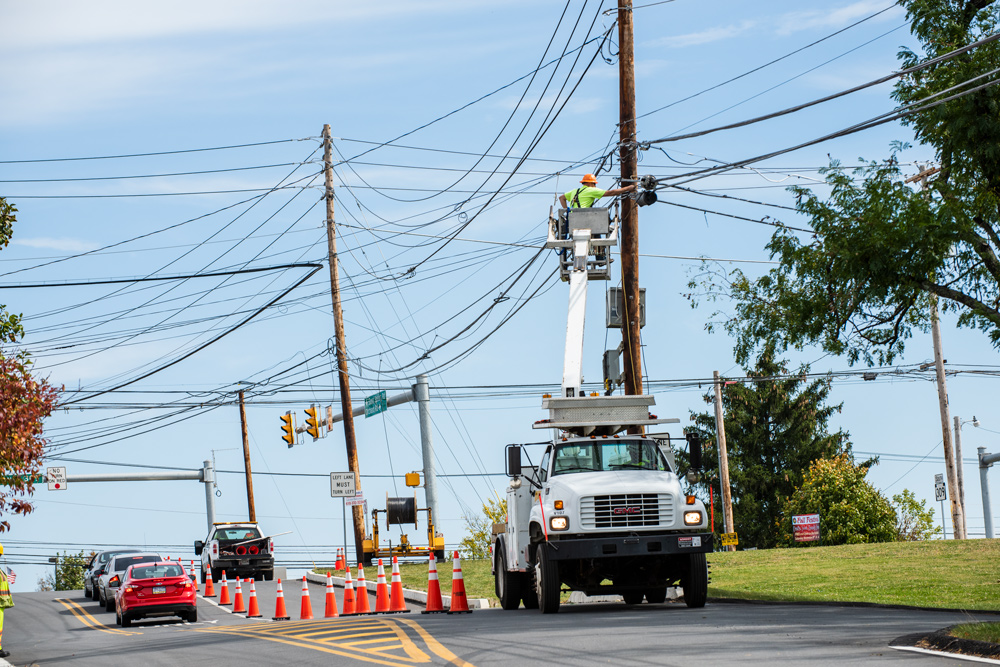
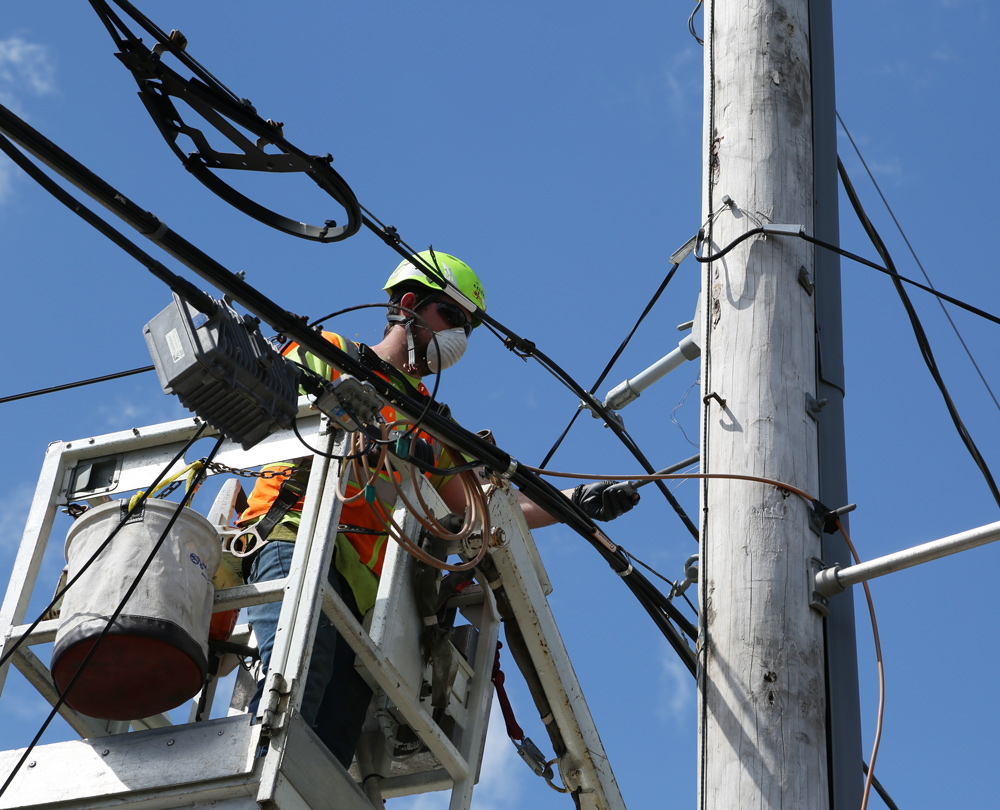
Aerial construction refers to installing communications infrastructure on overhead utility poles instead of burying it underground. Fiber optic cables, coaxial lines, and support hardware attach to existing poles that already carry power and telephone lines. The approach takes advantage of infrastructure that communities have built over decades. Rather than tearing up roads and sidewalks, crews work above ground level to extend network reach.
Aerial construction projects typically involve several key components:
- Messenger strand: A steel cable that supports the fiber optic cable between poles
- Lashing wire: Spiral-wrapped wire that secures fiber to the messenger strand
- Pole hardware: Brackets, anchors, down-guys, and attachments
- Fiber optic cable: The actual data-carrying infrastructure
According to the Fiber Broadband Association's 2024 Fiber Deployment Cost Report, the median cost to deploy aerial fiber was $6.55 per foot compared with $18.25 per foot underground, making aerial construction roughly one-third the cost on a labor-and-materials basis. The association's 2025 report, released in January 2026, shows the gap narrowing to $8.00 versus $18.00 per foot. Both figures reflect deployment cost alone and exclude make-ready, permitting, and engineering, which together account for a substantial share of total project cost and fall disproportionately on aerial builds.
Why Aerial Deployment Dominates Modern Telecom Builds
Speed and cost drive most construction decisions. Aerial deployment delivers on both fronts.
Faster Time to Service
Underground construction requires permits for excavation, traffic control plans, and coordination with every utility that has buried lines in the area. A single missed location can shut down a project for days. Aerial builds skip most of that complexity. When poles already exist along the route, crews can complete strand placement, cable lashing, and testing in a fraction of the time.
Moving reel installations typically complete two to three miles per day with a four-person crew under ideal conditions. That pace allows providers to light up new service areas weeks or months ahead of underground alternatives.
Easier Maintenance Access
When something goes wrong with buried fiber, crews must excavate to find and fix the problem. Aerial infrastructure remains visible and accessible. Technicians can identify damage, perform splices, and restore service without heavy equipment or road closures.
The Aerial Construction Process: From Survey to Service
Successful aerial deployment follows a structured workflow. Skipping steps or rushing through phases creates problems that surface months or years later.
Step 1: Route Survey and Permitting
Every project starts with boots on the ground. Field crews walk the proposed route to document:
- Pole ownership and condition
- Existing attachments and available space
- Clearances to power lines, roads, and other utilities
- Potential obstacles like trees, guy wires, and structures
This survey determines what make-ready work the project will require and identifies any poles that need replacement before construction begins.
Step 2: Pole Loading Analysis
Not every pole can support additional attachments. Engineers perform structural analysis to confirm that each pole along the route can safely carry the new fiber load under applicable safety standards.
- Poles near their load limits may require reinforcement
- Some need guy wire installation to handle the added stress
- Others require complete replacement
- Findings from this analysis shape the make-ready scope and timeline
Step 3: Make-Ready Work
Make-ready is the engineering and field work required to prepare poles for new attachments. This phase often determines whether a project runs on schedule or falls months behind. Common make-ready activities include:
- Rearranging existing cable attachments to create space
- Installing new brackets, anchors, and down-guys
- Replacing poles that cannot safely support added load
- Coordinating with pole owners and other attachers
Make-ready work remains the least predictable cost in aerial deployment. A 2025 study found make-ready estimates reaching as much as 150% of the construction budget on some projects, severe enough that several respondents shifted planned builds from aerial to underground, and 46% of respondents faced material project delays. In comments to the FCC, NCTA reported that utility-supplied figures show actual costs exceeding estimates between 50 and 90% of the time, creating a major obstacle to predictable planning. Projects that underestimate make-ready scope face budget overruns and schedule delays as a result.
Step 4: Strand and Cable Placement
With poles ready, construction crews install the messenger strand and fiber optic cable. This work requires careful attention to:
- Tension and sag: Cables must maintain proper tension across spans without overstressing hardware or violating clearance requirements
- Bend radius: Fiber optic cable has minimum bend radius limits that crews must observe during installation
- Attachment sequencing: Proper installation order prevents damage and ensures secure placement
Experienced crews use manufacturer specifications and local regulations to plan each span before installation begins.
Step 5: Splicing and Testing
Once cable hangs on the poles, splicing technicians connect fiber segments and terminate at equipment locations.
- OTDR (Optical Time Domain Reflectometer) testing: verifies signal quality across the route
- Identifies: any faults before the network goes live
- Test Runs: during or immediately after placement catches problems while the route remains accessible
- Urgency: waiting until later stages makes troubleshooting far more difficult and expensive
Step 6: Documentation and Closeout
Modern deployments rely on detailed records:
- GIS data and route geometry
- Attachment locations
- Make-ready status
- QA/QC results
- As-built documentation
These records support future maintenance, capacity planning, and regulatory compliance.
Common Challenges in Aerial Telecom Construction
Aerial construction offers clear advantages, but projects still face obstacles that require experienced management.
Utility Coordination Delays
Multiple parties often share the same poles: electric utilities, telephone companies, cable providers, and municipal systems. Coordinating make-ready work across these organizations takes time and persistent communication. Projects that build strong relationships with pole owners and establish clear communication protocols move faster than those that treat coordination as an afterthought.
Weather Exposure
Unlike buried infrastructure, aerial cables face direct exposure to wind, ice, lightning, and falling debris. Proper hardware selection, installation techniques, and ongoing maintenance programs mitigate these risks. Routine inspection and proactive vegetation management keep aerial networks performing reliably for decades.
Permitting Complexity
Even aerial projects require permits and right-of-way agreements. Navigating municipal requirements, utility easements, and environmental regulations demands expertise that general contractors often lack.
Why Partner with an Experienced Telecom Construction Provider
The difference between a smooth aerial build and a troubled one often comes down to the construction partner. Experienced telecom contractors bring:
- Established utility relationships that accelerate make-ready coordination
- Trained field crews who understand pole work, fiber handling, and safety requirements
- Engineering expertise for route design, pole loading analysis, and permit applications
- Quality control processes that catch problems before they become expensive fixes
- Emergency response capability for storm damage and service restoration
Celerity Integrated Services has built its reputation on delivering telecom network construction projects that meet deadlines and budgets. The company's field crews handle aerial construction, underground builds, fiber splicing, OTDR testing, and emergency restoration across the Mid-Atlantic region. From campus fiber networks to rural broadband expansion, Celerity brings the expertise and equipment that complex telecom projects demand.
Aerial construction and deployment have become essential tools for telecom providers racing to expand coverage and upgrade capacity. When existing pole infrastructure lines the route, overhead installation delivers faster timelines, lower costs, and easier long-term maintenance than underground alternatives. Success requires more than just hanging cable on poles. It demands careful planning, thorough make-ready work, skilled installation, and rigorous testing. The right construction partner makes that process predictable instead of painful.
Ready to discuss your next telecom network construction project? Reach out to Celerity to explore how aerial construction can accelerate your deployment timeline and protect your budget.
—Frequently Asked Questions
What is aerial construction in telecom?
- Aerial construction is the installation of fiber optic cables and communications infrastructure on overhead utility poles rather than underground. This method leverages existing pole infrastructure to deploy networks faster and at lower cost than buried alternatives.
How much does aerial fiber construction cost?
- According to 2024 industry data, the median cost for aerial fiber deployment is approximately $6.55 per foot, compared to $18.25 per foot for underground installation. Actual costs vary based on make-ready requirements, pole density, and regional factors.
What is make-ready work in telecom construction?
- Make-ready is the engineering and field work required to prepare utility poles for new fiber attachments. It includes surveying existing attachments, analyzing pole loading capacity, rearranging cables to create space, and replacing poles that cannot safely support additional load.
How long does aerial fiber installation take?
- Under ideal conditions, moving reel installations can complete two to three miles per day with a four-person crew. However, make-ready work, permitting, and utility coordination often extend overall project timelines significantly.
What services does Celerity offer for telecom construction?
- Celerity Integrated Services provides comprehensive telecom network construction services including aerial construction, underground builds, fiber optic splicing, OTDR testing, OSP engineering, permitting support, and emergency restoration services throughout the Mid-Atlantic region.
Is aerial fiber as reliable as underground fiber?
- Both methods deliver reliable connectivity when properly installed and maintained. Aerial fiber faces more weather exposure but offers easier access for repairs and upgrades. Underground fiber provides better physical protection but requires excavation for maintenance.
What is the difference between ADSS and lashed fiber cable?
- ADSS (All-Dielectric Self-Supporting) cable installs without a separate messenger strand, while lashed cable attaches to a steel messenger wire using spiral-wrapped lashing. ADSS works well near power lines since it contains no metal components.