November 11, 2026

National Electrical Safety Code & One-Touch Make-Ready: Anatomy of the Communications Space

The NESC is the safety standard for electric supply and communications lines. IEEE publishes it exclusively and updates it every five years. The current edition is the 2023 NESC. According to IEEE's NESC overview, the American National Standards Institute approves each edition, and the code has been in continuous use since the first edition in 1915.

The NESC is a safety code, not a design manual. It does not give step-by-step instructions. It sets ground rules for safe clearances, grounding, pole loading, and work practices, and it treats hazard avoidance as the main goal.

Many people confuse it with the National Electrical Code, which governs wiring inside buildings. The NESC covers the utility side of the service point. IEEE notes that the NESC is a voluntary standard. Even so, state legislatures and public utility commissions typically adopt it into law, and it applies to cooperatives financed by the USDA Rural Utilities Service. IEEE also reports that more than 100 countries use it as an authoritative reference.

Anatomy of the Communications Space

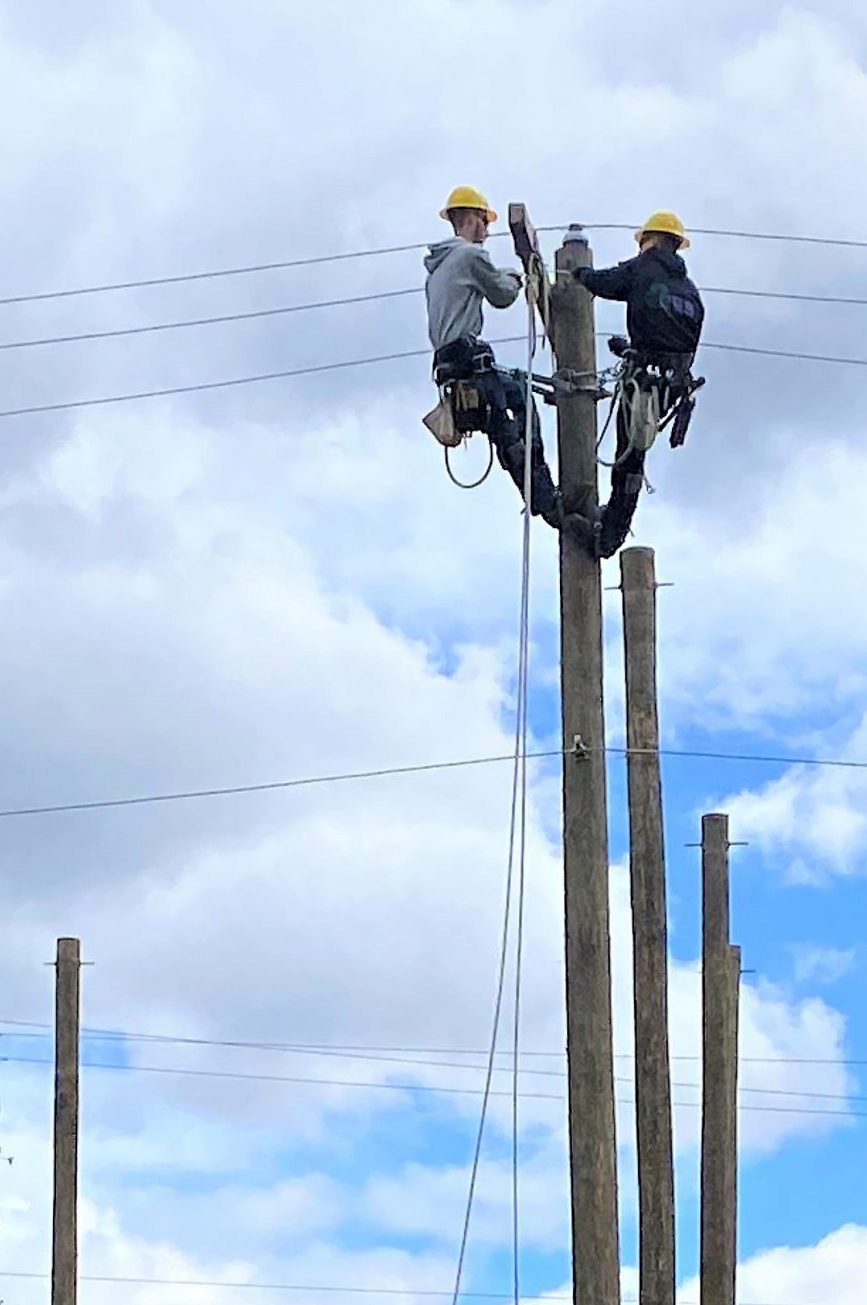
Think of a utility pole as an apartment building. Power lines live on the top floors. Communications lines live lower down. A safety gap sits between them, and workers depend on that gap.

From top to bottom, a typical pole holds these layers:

  • Supply space: High-voltage power conductors and equipment sit at the top.
  • Safety space: This buffer separates power from communications. Utilities commonly work with a 40-inch separation here under NESC clearance rules. The exact requirement depends on the situation, so crews confirm it against the current code edition and the pole owner's standards.
  • Communications space: Cable TV, telephone, and fiber attachments sit in this lower zone. A new fiber line usually goes here.

Why the Space Between Wires Matters

Communications workers do not train to work near energized power conductors. The NESC keeps the two groups apart so each can work safely. That is why pole work is rarely "just hang a cable." A new attachment can force other companies to move their lines up or down to restore proper clearances. That adjustment work has a name: make-ready.

Why Make-Ready Slows Down Fiber Builds

Make-ready is the work that prepares a pole for a new attachment. It can mean moving existing wires, replacing a pole, or correcting old violations. Under the traditional process, each company with equipment on the pole sends its own crew to move its own lines. One pole can need several separate visits. That creates delay. Every visit needs scheduling, notices, and coordination. One company's crew waits on another's. Across thousands of poles, the waiting adds up fast.

The FCC sets timelines to limit that delay. Under the standard process in 47 CFR 1.1411, the key deadlines look like this:

  • Application review and survey: A utility has 45 days after it receives a complete application. Mid-sized orders get 60 days, and large orders get 90.
  • Communications space make-ready: Work must finish within 30 days of notice. Mid-sized orders get up to 75 days, and large orders get up to 120.
  • Make-ready above the communications space: Work can take up to 90 days after notice, with longer periods for larger orders.

In Celerity's field work on aerial fiber projects, the biggest schedule risk usually comes from coordination, not construction. A crew can often finish a pole in hours. Getting every party to the same pole at the right time can take weeks.

How One-Touch Make-Ready Changes the Process

One-Touch Make-Ready, often shortened to OTMR, targets that coordination problem. Instead of many crews making many trips, one qualified contractor completes all the simple work in a single visit.

The FCC rule lets a new attacher choose this option for simple make-ready. The process runs in six steps:

  1. Election in the application. The new attacher chooses OTMR in writing and identifies the simple make-ready it plans to perform.
  2. Faster utility review. The utility has 15 days to grant or deny a complete application. Mid-sized orders get 30 days, and large orders get 45.
  3. Attacher-run surveys. The new attacher handles the surveys with a qualified contractor. The utility and existing attachers may attend.
  4. Advance notice. The attacher gives 15 days of written notice before work begins.
  5. Stop rule. If crews find that the work is complex, they halt that make-ready and move it to the standard process.
  6. Post-work inspection. The attacher reports completion within 15 days. Utilities and existing attachers then have 90 days to inspect and 14 more days to report damage or code violations.

The rule also protects the pole owner. A utility can object in writing, with evidence, if it believes the work is not simple. That objection is final when the utility makes it in good faith. The rule also makes the new attacher responsible for any damage its crew causes.

Why the NESC Matters Even More Under OTMR

OTMR puts more responsibility on the contractor. The engineering firm or contractor has to decide whether a job is truly simple. It also has to know how NESC clearances, loading, and grounding apply to every pole. A wrong call can create a safety hazard, a code violation, and rework at the attacher's expense.

Contractor choice therefore matters. A crew that knows the NESC can spot a complex pole before work begins. It can also document the work so utilities can inspect it quickly.

Celerity provides engineering, aerial and underground construction, splicing, testing, and maintenance. One team can carry a project from design through closeout, which keeps the engineering assumptions and the field work aligned.

What This Means for the Next Fiber Project

Three habits help projects move faster:

  • Plan routes with the communications space in mind. Early design choices decide how much make-ready a route needs.
  • Run pole loading and clearance checks before applying. Clean applications clear the completeness review sooner.
  • Choose OTMR when the work qualifies as simple. Fewer visits mean fewer delays.

The result is fewer truck rolls, fewer handoffs, and a clearer path to a live network. Rules also change. The FCC amended these pole attachment rules in 2025, so project teams should confirm current requirements before every build.

Plan Your Pole Attachment Project With Celerity

Successful fiber construction starts with careful planning, a clear understanding of regulatory requirements and the experience to navigate challenges in the field. From pole attachment applications and make-ready work to construction coordination and project timelines, every step requires attention to detail to keep projects moving forward.

Celerity's experienced team understands the National Electrical Safety Code (NESC), FCC pole attachment timelines and the day-to-day realities of communications infrastructure projects. The team helps clients navigate complex requirements, identify potential obstacles early and coordinate the work needed to support efficient, compliant fiber deployment.

Whether you're planning a new aerial fiber network, expanding existing infrastructure or preparing for make-ready construction, Celerity brings the technical knowledge and hands-on experience to help move your project from planning to execution.  Contact Celerity to discuss the next aerial fiber or make-ready project.

—--

FAQs

What is the National Electrical Safety Code?

  • The National Electrical Safety Code is the IEEE safety standard for electric supply and communications lines. It covers clearances, grounding, loading, and work practices for utility systems. Utilities, contractors, and regulators use it, and many states adopt it into law.

What is the communications space on a utility pole?

  • The communications space is the section of the pole below the power lines. Cable, telephone, and fiber attachments sit there. A safety space separates it from the power conductors so communications workers stay clear of energized equipment.

What is make-ready work?

  • Make-ready is the work that prepares a pole for a new attachment. It can include moving existing lines, adjusting clearances, correcting violations, or replacing the pole.

What is one-touch make-ready?

  • One-touch make-ready lets one qualified contractor perform all simple make-ready work in a single visit. It replaces the traditional process, where each attacher sends its own crew.

Who decides whether make-ready is simple?

  • The Engineering Firm tasked with Make Ready Engineering or the contractor, makes the first call. The utility can object in writing with supporting evidence. If it does, the work becomes complex and follows the standard timeline.

Does the NESC apply to fiber attachments?

  • Yes. The NESC covers overhead communications lines, so it applies to fiber on utility poles. Clearances, loading, and grounding rules all affect where and how crews attach new cable.
September 24, 2026

Understanding Current FCC Pole Attachment Rules and How They Relate to One-Touch Make-Ready


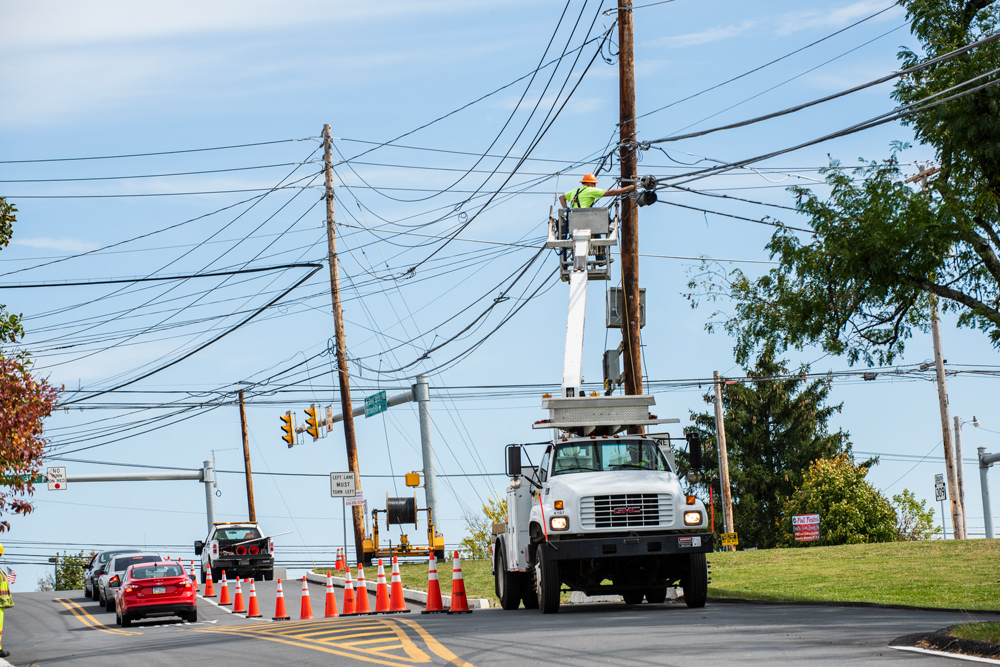
Broadband expansion depends on one critical resource that most people never think about: utility poles. These wooden structures carry power lines, cable TV, telephone wires, and fiber optic cables. When a telecommunications provider wants to add new fiber to a pole, it must navigate a complex process governed by federal regulations.

The Federal Communications Commission (FCC) sets the rules for pole attachments under Section 224 of the Communications Act. These rules determine how quickly broadband providers can access utility poles and how much they pay for that access. For contractors, engineers, and project managers working in telecom infrastructure, understanding these regulations is essential to keeping projects on schedule and within budget.

Recent updates to FCC pole attachment rules took effect on May 7, 2026, bringing significant changes to timelines and processes. These changes directly impact how One-Touch Make-Ready works in practice and create new opportunities for faster broadband deployment.

What Are FCC Pole Attachment Rules?

FCC pole attachment rules establish the framework for how telecommunications companies access utility poles owned by electric utilities and other pole owners. The rules cover everything from application procedures to pricing formulas to dispute resolution.

Under Section 224 of the Communications Act, the FCC has authority to regulate pole attachments to ensure that broadband providers have fair and reasonable access to utility infrastructure. This matters because approximately 70% of broadband networks in the United States rely on aerial construction using existing utility poles.

The core principle behind these regulations is simple: pole owners cannot unreasonably deny access or charge excessive fees. However, the practical application involves detailed timelines, notification requirements, and technical standards that govern every step of the attachment process.

Key Timeline Requirements Under Current Rules

The FCC's Fifth Report and Order, adopted in July 2025, established specific deadlines for each phase of the pole attachment process:

  • Application review: Utilities have 10 business days to determine if an application is complete
  • Survey completion: 45 days for standard orders; 90 days for large orders (over 300 poles)
  • Make-ready estimates: 14 days after survey completion for standard orders; 29 days for large orders
  • Make-ready work: 30 days in the communications space; 90 days in the power space for standard orders
  • Large order make-ready: 120 days in communications space; 180 days in power space

Federal rules now impose firmer timelines on the pole attachment process. The FCC's July 2025 order established a timeline for large pole attachment requests, accelerated contractor approval, and adopted measures to foster collaboration between utilities and attachers. Whether those changes will meaningfully speed deployment is not yet established. 

The Congressional Research Service notes that some states have reported timelines running up to five years in total for pole survey results and make-ready completion, and concludes that the effect of pole attachment issues on federally funded build-out deadlines remains to be seen. Regulatory fragmentation compounds the difficulty, with 23 states and the District of Columbia administering their own pole attachment rules rather than deferring to the FCC.

The Make-Ready Challenge

Make-ready work refers to the modifications needed on a utility pole before a new attachment can be installed. This might include moving existing cables, replacing hardware, or even replacing the entire pole if it cannot support additional load.

The traditional make-ready process creates a major bottleneck in broadband deployment. Here is why: each existing attacher on a pole must move its own equipment before the new attacher can install fiber. If a pole has cables from an electric utility, a telephone company, and a cable TV provider, each entity must schedule and complete its own work in sequence.

This sequential approach leads to significant delays. Industry data shows that make-ready timelines can stretch from 135 to 225 days before construction crews can install a single strand of fiber. The costs add up quickly too. Simple rearrangements typically cost $380 to $900 per pole, while complex work involving multiple parties can reach $2,100 per pole or more. Pole replacements can cost $3,400 to $6,500 per pole.

For a project involving hundreds or thousands of poles, these delays and costs can derail deployment schedules and strain budgets.

How One-Touch Make-Ready Changes the Game

One-Touch Make-Ready (OTMR) offers a solution to the sequential make-ready problem. Under OTMR, a single qualified contractor can perform all necessary rearrangement work in one coordinated visit, rather than waiting for each existing attacher to complete its portion separately.

The FCC adopted OTMR rules in 2018 for "simple make-ready" work in the communications space. Simple make-ready includes routine tasks like moving cables or adjusting attachment heights that do not require specialized skills or create safety concerns.

How OTMR Works in Practice

  1. Application submission: The broadband provider applies to attach to the pole
  2. Eligibility determination: The pole owner reviews the request and determines if OTMR applies
  3. Advance notice: The new attacher provides notice to the pole owner and existing attachers
  4. Single-crew execution: A qualified contractor performs all rearrangements in one mobilization
  5. New attachment installation: The fiber or communications equipment is installed

OTMR can compress make-ready timelines by 30 to 60 days on eligible projects. This acceleration is critical for meeting deployment deadlines, especially for projects funded through programs like the Broadband Equity, Access, and Deployment (BEAD) Program.

The 2026 FCC rule updates expanded self-help and OTMR rights for broadband builders. Utilities must now notify attachers within 15 days if they cannot meet survey or make-ready deadlines. This early warning allows attachers to invoke self-help remedies, including using their own qualified contractors to complete the work.

Connecting Pole Attachment Rules to OTMR Success

Understanding how FCC pole attachment rules relate to OTMR is essential for maximizing deployment efficiency. The regulations work together in several important ways.

Contractor Approval Timelines

The 2026 rules require utilities to respond within 30 days to requests from broadband providers seeking approval for new contractors to perform survey, estimate, and make-ready work. Previously, contractor approval could take months, creating a hidden bottleneck before OTMR could even begin.

Large Order Provisions

For large attachment requests (over 300 poles), the FCC created new advance notice and coordination requirements. Attachers must provide 15 days advance notice for mid-size orders (300 to 3,000 poles) and 30 days for very large orders (over 3,000 poles). These provisions help utilities plan resources while maintaining predictable timelines.

Restrictions on Utility Delays

The FCC prohibited utility-imposed limits that effectively cap how many pole attachments an attacher may seek in a given period. This prevents utilities from artificially slowing large-scale deployments by limiting application volume.

BEAD Program Compliance

Cooperatives and municipal utilities participating in the BEAD Program as subgrantees must now comply with FCC pole attachment rules as a condition of accepting funding. This extends federal protections to attachers working with entities that were previously exempt from Section 224 requirements.

Practical Implications for Telecom Infrastructure Projects

For organizations involved in broadband deployment, these regulatory changes create both opportunities and responsibilities.

Planning and Engineering

  • Accurate make-ready assessments are more important than ever. With tighter timelines, there is less room for surprises during construction. Comprehensive pole loading analysis and field surveys help identify potential issues before they cause delays.

Contractor Qualifications

  • OTMR eligibility depends on using qualified contractors approved by the pole owner. Organizations should maintain relationships with approved contractors and understand the approval process for new contractors in each utility territory.

Documentation and Compliance

  • The new rules include specific notification requirements and deadlines. Missing a deadline can forfeit self-help rights or trigger disputes. Robust project management systems help track applications, notices, and responses across large deployments.

Cost Management

  • Understanding make-ready cost allocation is critical for accurate budgeting. The FCC has clarified that new attachers cannot be forced to pay for pre-existing safety violations on poles. This ruling, issued in early 2026, protects attachers from bearing costs that should fall on pole owners.

Looking Ahead

The FCC continues to consider additional pole attachment reforms. A Fourth Further Notice of Proposed Rulemaking, released alongside the 2025 order, seeks comment on expanding OTMR to complex work and other streamlining measures. 

While no timeline exists for final action, the direction is clear: regulators want to remove barriers to broadband deployment. For telecom infrastructure professionals, staying current on these regulations is not optional. The rules directly impact project timelines, costs, and feasibility. Organizations that understand and leverage the regulatory framework will have a competitive advantage in winning and executing broadband projects.

Navigating FCC pole attachment rules and OTMR requirements takes specialized knowledge and experience. From OSP engineering and make-ready assessments to aerial construction and fiber splicing, having the right partner makes the difference between a project that stays on schedule and one that stalls in regulatory limbo.

Celerity Integrated Services brings decades of experience in telecommunications infrastructure, serving carriers, utilities, and organizations across the full project lifecycle. Whether you need engineering support for pole applications, One-Touch Make-Ready construction services, or ongoing maintenance, Celerity has the expertise to keep your project moving.

Ready to discuss your next broadband deployment? Contact Celerity to learn how our team can help you navigate pole attachment requirements and accelerate your timeline.

—Frequently Asked Questions

What are FCC pole attachment rules?

  • FCC pole attachment rules are federal regulations under Section 224 of the Communications Act that govern how telecommunications companies access utility poles. These rules establish timelines for application review, surveys, make-ready work, and pricing. They ensure broadband providers have fair and reasonable access to pole infrastructure for deploying fiber and other communications networks.

What is One-Touch Make-Ready?

  • One-Touch Make-Ready (OTMR) is a pole attachment process that allows a single qualified contractor to perform all necessary rearrangement work on a utility pole in one visit. Instead of waiting for each existing attacher to move its equipment separately, OTMR consolidates the work, reducing make-ready timelines by 30 to 60 days on eligible projects.

How long does the pole attachment process take under current FCC rules?

  • Under the FCC's 2026 rules, standard pole attachment requests follow a 148-day framework from application to construction authorization. This includes 10 business days for application review, 45 days for surveys, 14 days for estimates, and 30 to 90 days for make-ready work depending on the space involved. Large orders have extended timelines of up to 90 days for surveys and 120 to 180 days for make-ready.

What services does Celerity provide for pole attachment projects?

  • Celerity Integrated Services provides comprehensive telecommunications infrastructure services including OSP engineering, make-ready assessments, pole application processing, aerial and underground construction, fiber splicing and testing, and One-Touch Make-Ready construction. The company serves telecommunications carriers, electric utilities, and organizations throughout all project phases from planning through maintenance.

How do the 2026 FCC pole attachment rules affect BEAD-funded projects?

  • The 2026 rules extend FCC pole attachment protections to cooperatives and municipal utilities participating in the BEAD Program as subgrantees. This means BEAD-funded projects benefit from federal timeline requirements and self-help remedies, even when working with pole owners that were previously exempt from Section 224 regulations.

What is make-ready work and why does it cause delays?

  • Make-ready work includes any modifications needed on a utility pole before a new attachment can be installed, such as moving existing cables, replacing hardware, or replacing poles. Delays occur because traditional processes require each existing attacher to complete its work sequentially. Industry data shows make-ready can take 9 to 16 months, with some projects experiencing delays of up to five years.

Contact Us

Name

1 2 … 40
footer-logo

Subscribe to our newsletter to stay Well Connected with Celerity Integrated Services, Inc.

Contact Us

3500 AM Drive,
Quakertown, PA 18951

P 215 538 1600
F 215 538 1602

info@nextmiletech.com

proview

© 2025 Celerity Integrated Services. Privacy Policy. Site by Smith & Howell Design Co.

Back to top Arrow