November 18, 2026

Why a Telecom Network Feasibility Study Is Important to Define Your Fiber Build Budget

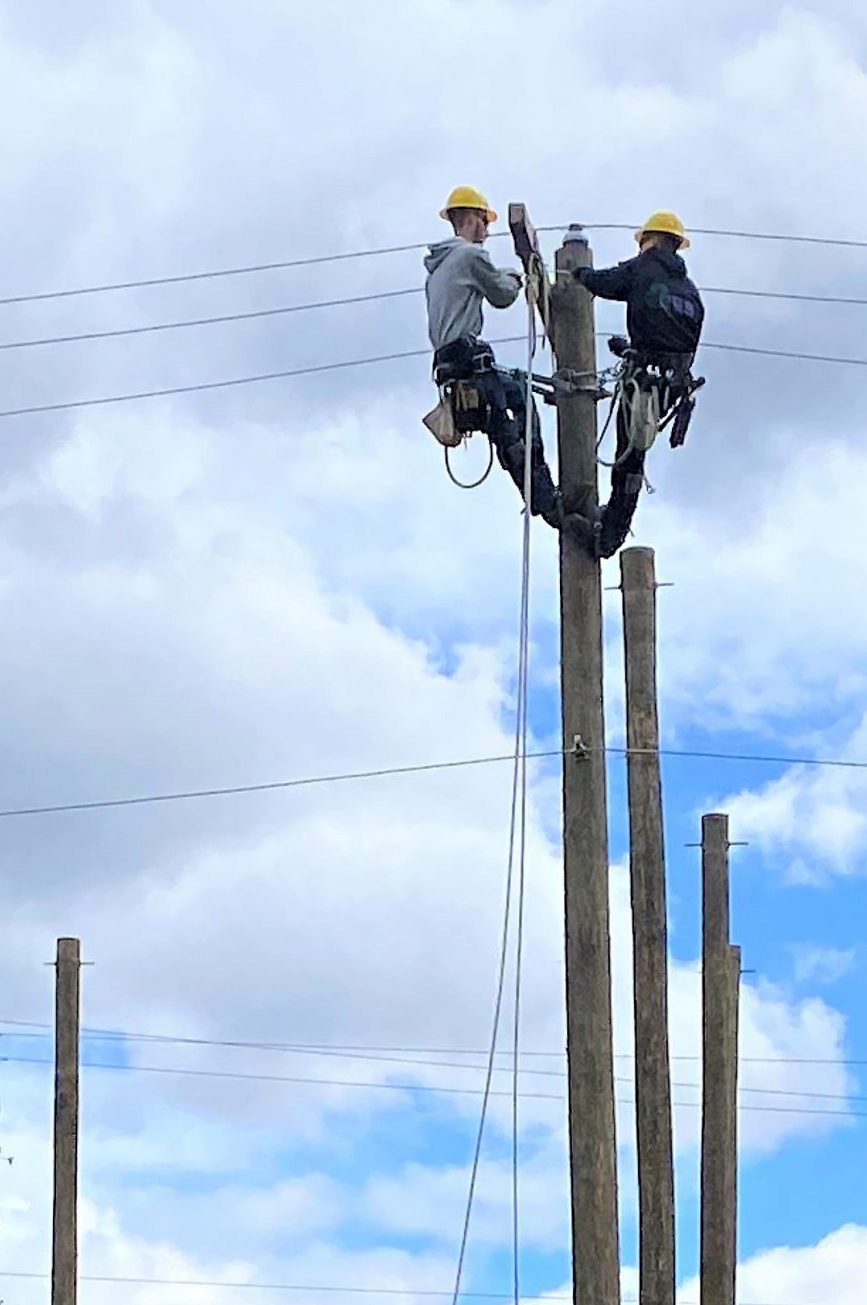
A fiber project looks simple on a map. A line runs from point A to point B, and a budget follows. Then the field crew arrives. Poles fail inspection. Utilities request make-ready work. A permit stalls at a county office. The budget that looked firm in the boardroom starts to move.

This pattern is common, and owners can prevent much of it. A telecom network feasibility study gives decision makers a clear view of cost, schedule, and risk before design and construction begin. We explain what the study covers, how it shapes a fiber build budget, and why owners who skip it often pay more later.

Why Fiber Budgets Break Before Construction Starts

Many early fiber budgets rely on a per-mile average. Averages hide the details that drive real cost. Terrain changes from one mile to the next. Pole ownership changes from one utility to another. One road offers open strand space, and the next road has crowded poles that need work.

Three areas cause most of the surprises:

  • Make-ready costs. Crews may need to move existing wires or modify poles before a new cable can attach.
  • Pole replacement. A pole that fails a loading review needs replacement, and the new attacher frequently carries that cost.
  • Permits and right-of-way. Railroad, state road, and municipal permits each bring fees and review timelines.

Poles deserve special attention because most aerial builds depend on them. The FCC adopted one-touch make-ready rules to speed up pole access. In its announcement of the reform, the agency said that "access to poles must be swift, predictable, safe, and affordable." The FCC also noted that, by some estimates, the change alone could result in about 8.3 million incremental premises passed with fiber and about $12.6 billion in incremental fiber capital expenditures.

Faster rules do not remove the need for engineering review. The process does not apply to more complicated attachments or to work above the communications space of a pole. Each pole still needs a check. A budget built without pole data leaves owners exposed.

What a Telecom Network Feasibility Study Covers

A Telecom Network Feasibility Study evaluates project viability, anticipated cost, schedule, and construction and make-ready risk. It also looks at long-term maintenance needs. It is an early-stage review of a proposed fiber build, conducted before detailed design and construction begin. Engineers assess the outside plant route, pole condition and ownership, make-ready requirements, permitting and right-of-way needs, and overall construction risk. 

Celerity’s studies also recommend an optimal route and construction methodology, and they include make-ready assessments that estimate the work and charges required to prepare each pole for a new attachment. The study produces cost, schedule, and risk estimates that allow owners to set a realistic fiber build budget and make sound financial decisions before committing to design and construction. Key study highlights may include:

OSP Route Review

Outside plant (OSP) engineers review the proposed route first. They map strand and conduit, mark aerial and underground segments, and flag road crossings, bridges, rail lines, and water. Each segment receives a build method and a cost range. This step replaces the per-mile guess with a route-specific number.

Pole Condition, Make-Ready, and Replacement

Engineers check pole height, loading, and available space. They identify poles that need make-ready work and poles that need replacement. Experienced OSP engineers know that pole condition often drives cost more than route length does. The count of poles that need work can move a budget more than any other input.

Permits and Right-of-Way

The team lists every agency and pole owner involved. It records application requirements, fees, and review times. Early permit planning protects the schedule, and a protected schedule protects the budget. Delays add labor standby, rework, and financing costs.

Engineering and Splicing Estimates

The study also estimates design hours, drawings, and closeout documentation. It estimates splice counts, splice types, and testing needs. Fusion splicing and OTDR testing add real labor, so owners should price them before construction starts.

How a Feasibility Study Turns Unknowns Into a Fiber Build Budget

A good study converts open questions into line items. The process follows a clear order:

  1. Define the scope. The team confirms the goals, the service area, and the desktop route.
  2. Verify in the field. Crews inspect poles, conduit paths, and obstacles along the route.
  3. Estimate the costs. Engineers price make-ready, pole replacement, permits, construction, and splicing.
  4. Report and recommend. The owner receives budget ranges, risks, and a proposed schedule.

The ROI of Studying Before You Build

A study costs far less than a major change order. It also gives owners several advantages:

  • Fewer change orders. Known pole and permit issues do not appear as surprises mid-build.
  • Stronger funding applications. Lenders and grant reviewers want credible numbers. The U.S. Government Accountability Office reports that the BEAD program exceeds $42 billion, and some federal broadband programs expect to finish builds in 2030 and beyond. Applicants with sound cost data stand out in that field.
  • Better scheduling. Permit and make-ready timelines feed the construction plan from day one.
  • A clear go or no-go decision. Sometimes a study shows that a route costs too much. Owners can then choose a new path before they spend design and construction dollars.

Owners also gain a shared baseline. Finance, operations, and engineering teams can work from the same numbers. That alignment reduces debate and speeds approvals.

Start With the Right Study

A fiber build budget is only as strong as the data behind it. Celerity supports projects from pre-planning through engineering, permitting, construction, splicing, testing, and closeout. Its well-planned engineering services include OSP engineering, make-ready assessments, and pole-attachment design. Its aerial construction team handles strand-and-lash work, make-ready construction, and pole transfers. You can also review the full list of Celerity services. Ready to define your budget? Request a Telecom Network Feasibility Study before your next fiber build, and move forward with numbers you can trust.

—--

FAQs

What is included in a telecom network feasibility study?

  • A study typically includes route review, pole and conduit assessment, make-ready and pole replacement estimates, permit and right-of-way planning, engineering and splicing estimates, and a schedule. It also covers risks and long-term maintenance needs.

What is make-ready work?

  • Make-ready is the modification or replacement of a utility pole, or of the lines and equipment on it, to make room for additional facilities. The FCC defines make-ready in its pole attachment rules.

How long does a feasibility study take?

  • Timelines vary with route length, field access, and how fast pole owners respond. A short route may take a few weeks. A large regional build may take longer.

Does a feasibility study replace final engineering?

  • No. The study sets scope, budget ranges, and risks. Final engineering follows with detailed drawings, pole-attachment design, and permit packages.

Who needs a telecom network feasibility study?

  • Telecom operators, electric utilities, municipalities, universities, and healthcare organizations all benefit. Any owner who plans a new fiber route, a large expansion, or a grant-funded build should consider one.

May 27, 2026

The True Cost of Leasing vs. Owning Fiber: A Financial Analysis for Hospitals

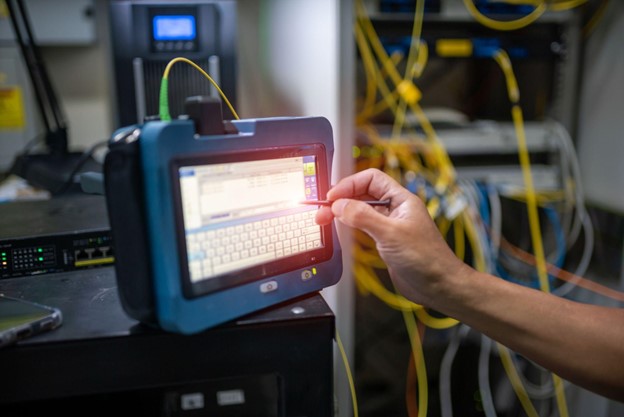
When a hospital's network goes down, the stakes are measured in more than dollars. Patient records freeze. Imaging systems stall. Telemedicine appointments disconnect. According to the Ponemon Institute, healthcare network downtime costs an average of $7,500 per minute and that's before factoring in the regulatory fallout.

When hospital CFOs and IT directors evaluate fiber infrastructure, they're not just comparing line items on a spreadsheet. They're weighing patient safety, HIPAA compliance, and long-term operational resilience against upfront capital and ongoing expenses.

The question isn't whether a hospital needs reliable fiber connectivity. It's whether it should lease that connectivity from a carrier or own the infrastructure yourself. Let's break down the real costs of each approach.

Why Hospital Fiber Infrastructure Decisions Matter More Than Ever

Modern hospitals run on data. Electronic health records (EHRs) now exist in more than 96% of non-federal acute care hospitals, according to the Office of the National Coordinator for Health IT. High-resolution medical imaging, real-time patient monitoring, and telehealth services all demand bandwidth that legacy copper networks simply can't deliver.

But here's what many hospital administrators miss: the type of fiber connection chosen shapes costs for the next decade or more. In our work with healthcare clients we've seen hospitals locked into expensive leased fiber contracts that seemed affordable at signing only to watch those monthly fees compound into millions over time. We've also seen facilities invest in owned fiber infrastructure and achieve payback within five to seven years.

The right choice depends on your hospital's size, growth trajectory, and appetite for managing infrastructure. Let's examine both models.

Understanding the Two Options: Leased vs. Owned Fiber

Leased Fiber:

With leased fiber, a telecommunications carrier owns the physical cables and the equipment that "lights" them. Your hospital pays a monthly fee for a set amount of bandwidth. This model provides plug-and-play connectivity with minimal setup requirements. The carrier manages maintenance, monitoring, and repairs, while the hospital benefits from predictable monthly operating expenses.

In exchange, it gives up a degree of control over network performance and security. It may also face limited flexibility when scaling bandwidth, as increases often require contract renegotiation. Over time, long-term cost efficiency can decline because the recurring monthly fees continue indefinitely.

With owned fiber, the hospital leases or purchases the raw cable infrastructure and installs its own optical equipment to light the network. This approach gives the organization complete control over bandwidth, security, and overall network design. It also provides substantial scalability, since capacity can expand through equipment upgrades rather than carrier negotiations. Over time, owned fiber can deliver a lower total cost of ownership.

In return, the hospital assumes higher upfront capital expenses and takes responsibility for maintenance, operations, and technical expertise. Deployment timelines may also run longer due to the added planning and implementation requirements.

The 5-7 Year Crossover Point: When Ownership Pays Off

Industry analysis consistently shows that dark fiber becomes more cost-effective than leased services after five to seven years of operation. For hospitals planning to occupy their facilities for decades, this crossover point represents a critical financial milestone.

Consider a regional hospital connecting its main campus to an outpatient surgery center two miles away. A leased 10 Gbps connection might cost $5,000 per month or $600,000 over 10 years. Installing owned fiber for that same route might cost $200,000 upfront, plus $1,000 monthly for maintenance or $320,000 total over the same period. That's a $280,000 savings, which is money that could fund additional clinical staff, equipment upgrades, or facility improvements.

But the financial benefits extend beyond direct cost savings:

  • Scalability without renegotiation: When a hospital adds a new imaging wing or expands telemedicine services, it upgrades its own equipment rather than paying the carrier for more bandwidth.
  • Enhanced security: A dedicated fiber network reduces exposure to shared infrastructure vulnerabilities, critical for HIPAA compliance. The average healthcare data breach now costs $9.77 million, according to the HIPAA Journal's 2024 report.
  • Operational resilience: Owning your infrastructure means faster response times when issues arise and no dependency on carrier support queues.

Which Model Fits Your Hospital's Needs?

A hospital should consider leased fiber when it wants reliable connectivity without making a large upfront infrastructure investment. This model often makes sense for organizations with limited capital budgets or those prioritizing operating expenses over major capital projects. It is also a strong option when the hospital needs service deployed quickly, often within weeks rather than months.

Leased fiber can be especially practical when the internal IT team does not have deep experience managing fiber networks, optical equipment, or carrier-grade infrastructure. Because the provider handles maintenance, monitoring, and repairs, internal staff can stay focused on core technology priorities. This approach also works well when bandwidth needs remain stable and predictable, reducing the need for frequent upgrades or custom network changes.

A hospital should consider owned fiber when it plans to remain at its current facilities for the long term and wants to build infrastructure that supports growth over the next decade or more. This approach is often the strongest fit for organizations experiencing rapidly increasing bandwidth demands driven by imaging systems, cloud platforms, connected devices, telehealth, and data-intensive clinical applications.

Owned fiber also becomes more attractive when security, privacy, and HIPAA compliance rank among the organization’s highest priorities. Greater control over the network can help hospitals strengthen oversight, customize protections, and align infrastructure with internal governance standards. This model works best when the organization already has skilled network engineering support in place or is prepared to invest in that expertise.

Many hospitals ultimately find that a hybrid strategy delivers the best balance. They may lease fiber for smaller satellite clinics or lower-demand sites while owning infrastructure for high-traffic connections between major campuses, data centers, and core clinical facilities.

How to Get Started with a Fiber Feasibility Study

Before committing to either model, hospital administrators should conduct a thorough feasibility study that examines:

  • Current and projected bandwidth requirements
  • Physical route options (aerial vs. underground)
  • Permitting and right-of-way considerations
  • Total cost of ownership over 10, 15, and 20 years
  • Maintenance and emergency response capabilities

At Celerity, we've helped healthcare facilities navigate these decisions. Our OSP engineering and fiber optic testing services ensure that whatever path you choose, your network performs reliably for decades. Contact our team for a consultation on your hospital's fiber infrastructure needs.

Contact Us

Name

1 2 … 40
footer-logo

Subscribe to our newsletter to stay Well Connected with Celerity Integrated Services, Inc.

Contact Us

3500 AM Drive,
Quakertown, PA 18951

P 215 538 1600
F 215 538 1602

info@nextmiletech.com

proview

© 2025 Celerity Integrated Services. Privacy Policy. Site by Smith & Howell Design Co.

Back to top Arrow